
Your Mazda’s SkyActiv transmission is a precision-engineered component that generic repair shops often misunderstand. While many drivers focus solely on the engine, neglecting the specialized fluids in your gearbox can lead to the very repair bills you’re trying to avoid. Because heat is the primary enemy of both your engine and transmission, staying current with Mazda cooling system repair Aurora is just as vital as checking your gears. A healthy cooling system ensures your transmission fluid doesn’t break down prematurely under the stress of high-altitude Colorado driving.
It’s natural to feel overwhelmed by technical requirements or distrustful of shops that treat every car the same way. You deserve a maintenance plan that provides confidence rather than confusion. This guide will help you master the essentials of Mazda transmission care to ensure smooth shifting and long-term reliability on our local roads. We’ll examine the specific 2026 maintenance checklist, explain the critical difference between a fluid change and a flush, and help you identify what a true local specialist looks for during a thorough inspection.
Key Takeaways
- Understand how the unique SkyActiv-Drive system combines automatic and dual-clutch technology for a more connected and efficient driving experience.
- Identify early warning signs like delayed engagement or harsh shifting during highway merging to catch issues before they become expensive.
- Learn the critical differences between a standard fluid change and a full machine flush to protect your SkyActiv components.
- Discover how Aurora’s high altitude affects fluid health and why coordinating these services with Mazda cooling system repair Aurora prevents overheating.
- Benefit from the expertise of an independent specialist with over 20 years of experience in Japanese vehicle maintenance right here in Aurora.
Understanding the Mazda SkyActiv-Drive Transmission System
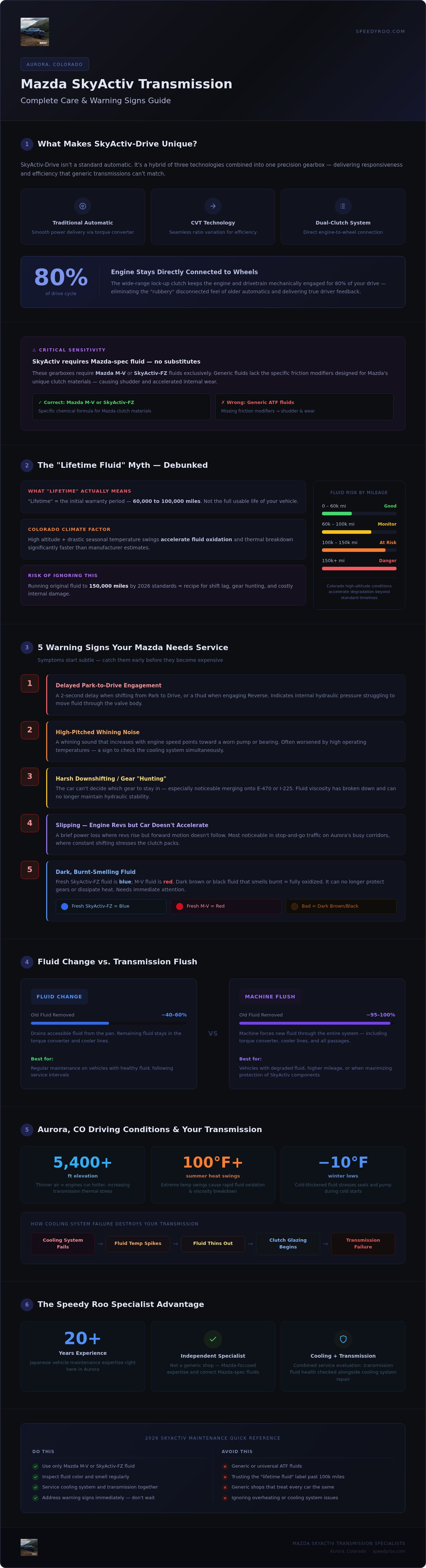
Mazda’s SkyActiv-Drive isn’t your standard automatic gearbox. It’s a sophisticated hybrid that merges the best traits of traditional automatics, continuously variable transmissions (CVTs), and dual-clutch systems. By utilizing a wide-range lock-up clutch, Mazda ensures the engine remains directly connected to the wheels for roughly 80% of the drive cycle. This design choice results in the responsive, tactile feedback that Aurora drivers appreciate when navigating city traffic or heading into the foothills. It eliminates the “rubbery” feel often associated with older automatics, providing a more connected driving experience.
Maintaining this mechanical connection requires a stable thermal environment. Overheating is the primary cause of premature transmission failure. This is why we often evaluate Mazda cooling system repair Aurora as a foundational part of transmission health. If your radiator or cooling lines are compromised, your transmission fluid temperature will spike. High heat causes the fluid to thin out, leading to internal clutch glazing and eventual slipping. Proactive care ensures your SkyActiv system operates within its intended temperature range.
SkyActiv-Drive vs. Traditional Automatics
Mazda engineers prioritized fuel efficiency without sacrificing the joy of driving. By reducing torque converter slip through a specialized multi-plate clutch, they’ve improved efficiency significantly compared to older five-speed designs. However, this precision comes with a trade-off: extreme sensitivity to fluid quality. These gearboxes require Mazda-spec M-V or SkyActiv-FZ fluids. These aren’t just marketing labels; they’re specific chemical formulas designed to interact with Mazda’s unique clutch materials. Generic fluids often lack the necessary friction modifiers, which can lead to “shudder” or accelerated wear on the sensitive internal components.
The Lifetime Fluid Controversy for Mazda Owners
The term “lifetime fluid” causes significant confusion for many Mazda owners. In the automotive industry, “lifetime” typically refers to the initial warranty period, which is usually 60,000 to 100,000 miles. It doesn’t mean the fluid is designed to last for the entire usable life of the vehicle. By 2026 standards, relying on the original fluid for 150,000 miles is a recipe for trouble. Our Colorado climate is particularly demanding. High altitudes and drastic seasonal temperature swings accelerate fluid oxidation and thermal breakdown. This chemical degradation is the leading cause of shift lag and “hunting” for gears. Regular fluid inspections, performed alongside Mazda cooling system repair Aurora, help identify when your fluid has lost its protective properties before it causes a breakdown.
5 Warning Signs Your Mazda Needs Transmission Service
Your Mazda is designed to be intuitive and responsive. When that connection starts to fade, the symptoms are usually subtle at first. You might notice a two-second delay when shifting from Park into Drive or a slight thud when engaging Reverse. These aren’t just quirks of an aging vehicle; they’re indicators that the internal hydraulic pressure is struggling to move fluid through the valve body. If you hear a high-pitched whining sound that increases with engine speed, it often points toward a worn pump or bearing. Because the transmission shares cooling resources with the engine, these mechanical noises can sometimes be exacerbated by high operating temperatures, making Mazda cooling system repair Aurora a vital consideration for overall drivetrain health.
Harsh downshifting or gear “hunting” when trying to merge onto E-470 or I-225 is another major red flag. If the car feels like it can’t decide which gear to be in, the fluid viscosity has likely broken down. Finally, checking the fluid itself remains a gold standard for diagnostics. Fresh SkyActiv-FZ fluid is a distinct blue color, while older M-V fluid is red. If you inspect the fluid and see a dark brown or black liquid that smells like burnt toast, it has oxidized. This means it can no longer protect the gears or dissipate heat effectively, necessitating immediate professional attention.
Identifying Shifting Hesitation and Lag
Slipping in a SkyActiv unit often feels like a brief loss of power. The engine revs, but the car doesn’t accelerate proportionally. This is particularly noticeable during stop-and-go traffic on Aurora’s busy corridors, where constant shifting puts immense stress on the internal clutch packs. In some instances, the hardware is still healthy, but the software requires a recalibration. A Transmission Control Module (TCM) reflash can sometimes solve these “ghost” shifting issues. This is why a thorough diagnostic process by a specialist is far more valuable than a simple fluid swap.
Dashboard Alerts and Diagnostic Codes
If the “AT” (Automatic Transmission) light illuminates on your instrument cluster, your Mazda has detected a specific fault in the gear management system. While a basic parts-store scanner might give you a generic code, specialized Japanese diagnostic tools can pinpoint specific P07xx series codes. These codes help us differentiate between a simple pressure sensor failure and a more complex internal solenoid issue. It’s also possible for a transmission fault to be triggered by engine temperature irregularities. Keeping up with Mazda cooling system repair Aurora ensures that thermal-related sensor errors don’t lead to unnecessary and expensive transmission teardowns.
Fluid Change vs. Transmission Flush: Which Is Right for Your Mazda?
Choosing between a fluid change and a flush is a common point of confusion for Mazda 3, CX-5, and CX-9 owners. It isn’t a one-size-fits-all decision. The right choice depends on your vehicle’s mileage, previous maintenance history, and current fluid condition. Because transmission health is fundamentally tied to temperature regulation, ensuring your radiator and lines are functional through Mazda cooling system repair Aurora is a prerequisite for any fluid service. If your car is running hot, the best fluid in the world won’t prevent internal wear.
The Case for the Drain and Fill
A drain and fill is a gravity-based process where we remove about 30% to 50% of the fluid currently in the system. This method is exceptionally safe for older Mazda transmissions that haven’t had regular service. It introduces fresh detergents gradually, preventing the sudden dislodging of large deposits that could clog narrow passages in the valve body. We also take this opportunity to inspect the transmission filter. If the filter is restricted, even the freshest fluid won’t circulate correctly. For drivers wanting a cleaner system without the risks of a flush, we often recommend performing three drain-and-fills over several months. This safely refreshes nearly all the fluid without shocking the system.
When a Full Flush Is Appropriate
A full transmission flush uses a specialized machine to exchange 100% of the old fluid for new SkyActiv-FZ or M-V fluid. This is ideal for younger vehicles or those that have followed a strict maintenance schedule. We use low-pressure machines to ensure we don’t damage internal seals or sensitive valve bodies. This thorough approach is excellent for CX-9 owners who tow or CX-5 drivers who frequent the mountains, as it removes all oxidized fluid and contaminants. Before recommending a flush, we perform a methodical inspection to ensure your Mazda is a healthy candidate for a total exchange.
Mazda 3 owners often see the best results from regular drain and fills, while the heavier CX-9 benefits from the total thermal protection of a full exchange. Understanding these nuances helps you avoid unnecessary repairs. You can learn more about common misconceptions in our guide on Japanese Import Repair in Aurora: 5 Common Myths Debunked. Just as we prioritize precision in Mazda cooling system repair Aurora, we apply that same technical rigor to your transmission service. We never push for a flush if a simple change is the safer path for your specific car.
Aurora Driving Conditions: Protecting Your Mazda Transmission
Aurora’s environment is notoriously difficult on Japanese engineering. Driving at 5,400 feet means your Mazda’s cooling system works harder to dissipate heat because the air is thinner. This elevated operating temperature directly impacts your transmission fluid. When the engine runs hot, the transmission fluid follows. This makes staying current with Mazda cooling system repair Aurora a non-negotiable part of your vehicle’s longevity. If your radiator isn’t performing at 100%, your transmission is essentially cooking in its own housing during summer climbs.
Standard maintenance schedules often assume “normal” driving conditions. In Colorado, we almost always fall under the “severe service” category. Frequent trips into the Rockies via I-70 involve long, steep grades that generate massive internal heat. For these conditions, we recommend shortening your fluid inspection intervals. Waiting for the 100,000-mile mark is often too late for Aurora drivers who frequent the mountains. For those navigating our local landscape, we suggest these adjusted intervals:
- Fluid Inspection: Every 30,000 miles to check for oxidation.
- Full Exchange: Between 60,000 and 75,000 miles for frequent mountain drivers.
- System Pressure Test: Included with every major service to identify internal leaks.
Temperature Extremes and Fluid Breakdown
Our local temperature swings are some of the most drastic in the country. A cold start on a January morning in Aurora requires patience. The fluid in your SkyActiv-Drive system is thick and sluggish until it reaches operating temperature. Driving aggressively before the car warms up causes unnecessary wear on the multi-plate clutch. Conversely, the summer heat in the Denver Metro area accelerates fluid oxidation. For those using a Mazda CX-5 or CX-9 for towing, we often recommend installing an auxiliary transmission cooler. This addition helps manage the thermal load that standard systems might struggle with during a July heatwave. Just as with Mazda cooling system repair Aurora, preventing heat buildup in the gearbox is the secret to a 200,000-mile car.
Navigating Aurora Traffic Stress
Stop-and-go commuting on E-470 and I-225 is significantly harder on a gearbox than a cross-country highway cruise. Every time you crawl forward in traffic, your transmission is engaging and disengaging its clutch packs. This creates friction and fine metallic debris over time. City miles in Aurora are “hard” miles. If you also own an all-wheel-drive vehicle from another brand, you know that specialized care is essential for these complex drivetrains. Our expertise extends across the Japanese market, including Subaru repair in Aurora, where we apply the same precision to AWD systems as we do to Mazda transmissions.
Don’t wait for a warning light to address shifting issues. If you’ve noticed a change in how your car handles the daily commute, schedule a comprehensive diagnostic with our team to ensure your Mazda is ready for the road ahead.
The Speedy Roo Advantage for Mazda Transmission Service
Since 2002, Speedy Roo Motorsports & Repair Inc has served the Aurora community as an independent specialist for Japanese vehicles. We’ve spent over 20 years refining our technical precision with Mazda’s unique engineering, ensuring your car receives the meticulous care it deserves. Generalist shops often struggle with the specific fluid requirements and hydraulic pressures of the SkyActiv-Drive system. We avoid these pitfalls by utilizing advanced diagnostics that provide a deeper look into your vehicle’s health than a standard code reader ever could. This specialized focus is why we also emphasize Mazda cooling system repair Aurora, as we understand that a transmission is only as reliable as the system that keeps it cool.
Our “Honest Specialist” philosophy means we prioritize your vehicle’s long-term health over short-term sales targets. We don’t recommend a full transmission flush if a simple drain and fill is the safer option for your high-mileage Mazda. By using only OEM-spec parts and high-quality fluids like SkyActiv-FZ, we ensure that every service meets the exacting standards set by the manufacturer. This commitment to quality prevents the premature wear and shift lag that often follow a “generic” service at a chain shop.
Why Specialization Matters for Your Mazda
Deep knowledge of Mazda’s multi-plate clutch technology allows our technicians to spot potential issues before they lead to a breakdown on I-225. We understand the nuances of these systems, from the specific friction modifiers required in the fluid to the software updates that can resolve shifting hesitation. As an independent shop, we value the trust of our neighbors in Denver, Centennial, and Parker. If you’re considering a used vehicle, we even offer a Pre-Sale Vehicle Evaluation in Aurora to help you avoid inheriting someone else’s transmission troubles.
Getting Started with Your Mazda Service
Your first visit to Speedy Roo Motorsports & Repair Inc starts with a comprehensive transmission health check. We don’t just look at the fluid level; we evaluate its color, smell, and viscosity while checking for any stored diagnostic codes. Our communication process is entirely transparent. We explain our findings in plain English so you can make an informed decision about your car’s maintenance. Whether you need a routine fluid exchange or a complex Mazda cooling system repair Aurora, we’re here to be your dedicated partner in vehicle longevity. Schedule your Mazda transmission service at Speedy Roo Motorsports & Repair Inc today!
Securing Your Mazda’s Performance for the Road Ahead
Your Mazda’s SkyActiv transmission is a masterpiece of engineering that deserves more than generic maintenance. By staying alert to shifting delays and choosing specialized fluids over universal alternatives, you protect your vehicle’s longevity and your own peace of mind. Remember that thermal management is the foundation of gearbox health; staying current with Mazda cooling system repair Aurora ensures your transmission doesn’t fail under the stress of high-altitude Colorado summers. Whether you opt for a methodical drain and fill or a full fluid exchange, technical precision is the key to smooth shifting on I-225.
At Speedy Roo, we’ve been your A+ rated local independent shop since 2002. Our specialized Japanese import technicians are dedicated partners in your car’s health, providing the expert care a dealership offers with the transparency of a trusted neighbor. Don’t wait for a warning light to address your maintenance needs. Book your Mazda transmission diagnostic at Speedy Roo today to ensure your car remains reliable for years to come. We’re here to help you drive with confidence across every mile of the Front Range.
Frequently Asked Questions
How often should I change my Mazda transmission fluid in Colorado?
We recommend a full transmission fluid exchange every 60,000 miles for vehicles driven in the Denver Metro area. Colorado’s high altitude and steep mountain grades qualify as “severe service” conditions, which generate more internal heat than flat-land driving. Professional inspections should occur every 30,000 miles to check for fluid oxidation. Coordinating these checks with your Mazda cooling system repair Aurora ensures your drivetrain remains protected from thermal breakdown during summer heatwaves.
Does Mazda really use lifetime transmission fluid?
The term “lifetime” typically refers to the duration of the original factory warranty rather than the actual lifespan of the car. While the fluid is designed to be durable, it isn’t immortal. By 2026, many Mazda owners find that proactive fluid changes at 60,000 or 75,000 miles prevent the shift lag and shuddering that occur as the fluid’s chemical additives naturally degrade over time and mileage.
What is the average cost of a Mazda transmission service in Aurora?
The total cost for service depends on whether your vehicle requires a basic drain and fill or a comprehensive machine exchange. Your specific model’s fluid capacity and the requirement for specialized SkyActiv-FZ fluid also play a role in the final estimate. We provide clear, transparent quotes after evaluating your vehicle’s current fluid condition. This ensures you receive the exact level of maintenance your Mazda needs without unnecessary upselling.
Can a transmission flush fix a car that is already slipping?
A flush is a preventative measure and cannot repair mechanical damage like worn clutch plates. If your transmission is already slipping, fresh fluid might actually worsen the problem by removing the suspended friction material that was helping the gears engage. In these scenarios, a technical diagnostic is necessary. We’ll help you determine if the issue is a simple electronic sensor or a more complex internal mechanical failure.
What is the difference between SkyActiv-FZ and regular ATF?
SkyActiv-FZ is a specialized, low-viscosity fluid designed specifically for the unique multi-plate clutch system in Mazda gearboxes. Regular ATF often lacks the precise friction modifiers required to maintain the responsive, connected feel of a SkyActiv-Drive unit. Using an incorrect or “universal” fluid can lead to increased internal friction and accelerated wear. We always utilize OEM-spec fluids to maintain the engineering standards your Mazda was built with.
Will servicing my transmission at an independent shop void my Mazda warranty?
No, choosing an independent specialist for your maintenance does not void your manufacturer’s warranty. Federal law protects your right to have your vehicle serviced at the facility of your choice. As long as the work is performed according to professional standards using the correct fluids, your coverage remains valid. We’ve provided this expert, specialized care to drivers in Aurora, Parker, and Centennial since 2002.
How long does a typical Mazda transmission service take at Speedy Roo?
Most transmission services are completed within two to four hours. A standard drain and fill is faster, while a full system exchange and diagnostic check require more time to ensure fluid levels are precisely calibrated. We work efficiently to respect your schedule but never rush the process. We’ll provide a specific time estimate when you drop off your vehicle at our Aurora shop for your appointment.
What are the signs of a failing Mazda TCM (Transmission Control Module)?
Signs of a failing TCM include “ghost” shifting, where the car shifts unexpectedly, or the transmission entering “limp mode” and getting stuck in a single gear. You may also see the “AT” light on your dashboard. These electronic faults are often triggered by excessive heat. During a Mazda cooling system repair Aurora, we often inspect the surrounding components to ensure that heat soak isn’t compromising your vehicle’s sensitive electronic control modules.