
A 30,000-mile service isn’t one identical checklist for every Subaru. A Subaru 30k service in Centennial should follow the maintenance schedule for the vehicle’s model year, so the items due at that visit, including oil and filter replacement, depend on the applicable schedule. The mileage is a useful checkpoint, but it doesn’t mean every Subaru needs the same parts replaced at exactly that point.
It’s reasonable to want a clear answer before booking maintenance, especially when oil changes and filter replacements may follow different intervals. This guide explains what the 30,000-mile service involves, how to understand the oil and filter details, and why the model year matters.
You’ll also learn how a careful maintenance visit can distinguish scheduled work from items that need attention based on your Subaru’s condition. That makes it easier to understand what’s due and plan the next step with confidence.
Key Takeaways
- Use the 30,000-mile mark as a maintenance checkpoint, then match the work to your Subaru’s scheduled service plan.
- Learn why oil and filter replacement timing depends on the vehicle’s maintenance schedule rather than mileage alone.
- Use your Subaru’s model year to identify which maintenance items are due at this interval.
- Understand what a thorough service visit can cover and when Subaru-focused maintenance and repair can help.
30,000-Mile service intervals
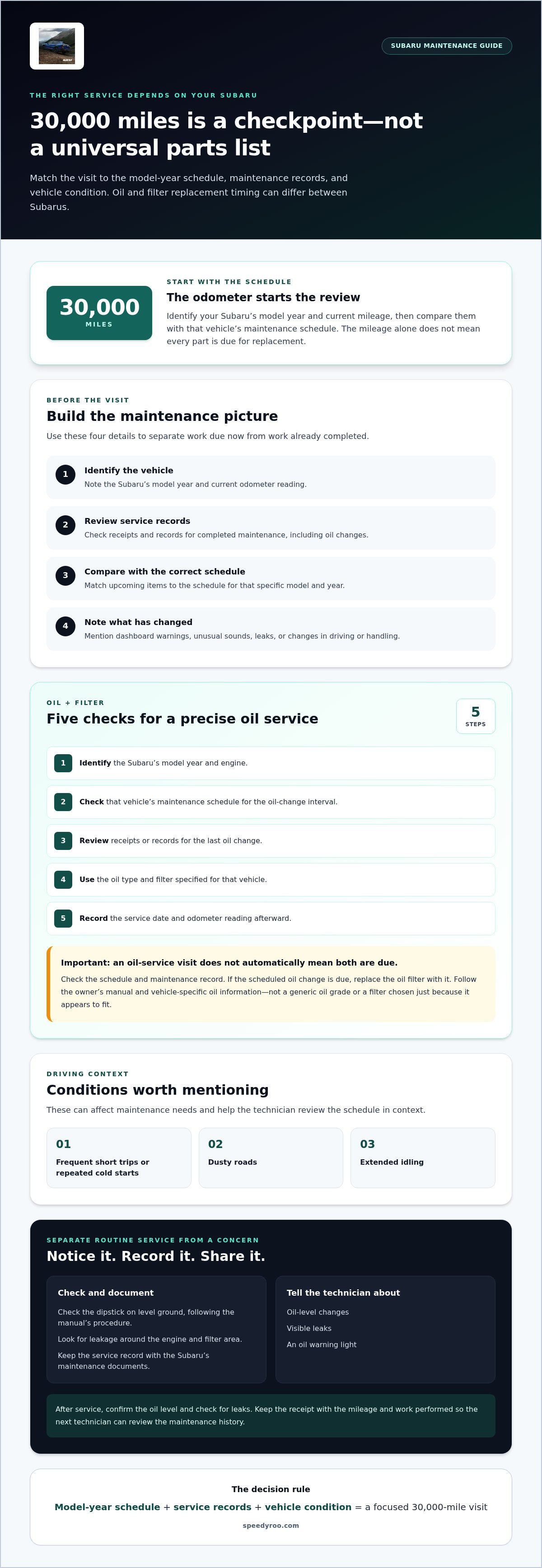
The 30,000-mile mark is a maintenance checkpoint, not a universal parts-replacement list. Subaru schedules vary by model year, so match the odometer reading to the maintenance schedule for that specific vehicle. A 30,000-mile visit should begin by identifying the model year, current mileage, and available service records. That helps separate work due now from items already completed.
Use this simple sequence before booking:
- Find the Subaru’s model year and current odometer reading.
- Review records for completed maintenance, including oil changes.
- Compare upcoming service items with the schedule for that model.
- Note dashboard warnings, unusual sounds, or changes in driving.
Driving patterns also matter. Frequent short trips, dusty roads, or extended idling can affect maintenance needs. Your Subaru’s schedule and condition help determine what belongs at this visit. Service records can prevent duplicate work and make future maintenance easier to track.
Which 30,000-mile maintenance items can an independent shop do? An independent shop can perform routine scheduled maintenance and inspections, including the work listed for the Subaru’s model year. The exact service plan should follow that vehicle’s schedule and documented history.
Is Subaru 30,000-mile service required to maintain the warranty? The mileage label alone doesn’t explain warranty coverage. Follow the maintenance schedule for the specific Subaru and keep dated records of completed work, so its maintenance history is clear.
Are there Subaru service specials or coupons in Centennial? Specials and coupons are separate from the maintenance schedule and can vary. Read the terms carefully, especially which services a promotion covers and whether exclusions apply.
How long does the service take, and are loaner cars or shuttles offered? Time depends on the scheduled items, inspection results, and any additional work identified. Loaner cars and shuttles vary by shop, so they aren’t part of the 30,000-mile interval itself.
For a Subaru 30k service in Centennial, use the model year and service records to build the right checklist. That approach keeps the visit focused on what’s due, rather than treating every Subaru as if it follows an identical plan.
Engine oil and filter replacement
Oil and filter timing follows the schedule for your Subaru’s model year. A scheduled service visit doesn’t necessarily mean both the oil and filter are due. Check the maintenance record first. If the scheduled oil change is due, replace the oil filter with it. A fresh filter helps trap contaminants as oil circulates through the engine.
Use this sequence to keep the service precise:
- Identify the Subaru’s model year and engine.
- Check its maintenance schedule for the oil-change interval.
- Review receipts or records for the last oil change.
- Use the specified oil type and filter for that vehicle.
- Record the service date and odometer reading afterward.
The correct oil specification matters more than choosing by habit. Different Subaru models and years can have different requirements. Follow the owner’s manual and the vehicle’s oil-change information. Don’t rely on a generic oil grade or a filter that merely appears to fit. The right parts support proper lubrication and fit.
Short trips, repeated cold starts, and dusty driving can affect engine-oil service needs. Note those conditions when reviewing the schedule. Also mention oil-level changes, visible leaks, or an oil warning light. These details help distinguish routine replacement from a concern that needs diagnosis, but they don’t replace the vehicle’s maintenance instructions.
- Check the dipstick on level ground, following the manual’s procedure.
- Look for signs of leakage around the engine and filter area.
- Keep the service record with the Subaru’s other maintenance documents.
After service, confirm the oil level and check for leaks. Keep the receipt with the mileage and work performed. That record helps the next technician determine whether the next scheduled change is due. For help following the correct schedule, explore Subaru oil and filter service as part of a model-specific maintenance visit.
Model-year-specific maintenance
Your Subaru’s model year helps determine its maintenance schedule. Similar-looking vehicles may have different engines, components, or service requirements. Use the owner’s manual for the exact year and model, not a checklist copied from another Subaru. For example, the schedule for one Outback model year may not match that of a Forester from another year.
Start with the vehicle identification information and maintenance records. Compare the odometer reading with the schedule’s mileage intervals, then note which listed items were completed and when. This helps prevent previously completed work from being repeated automatically. If records are incomplete, tell the technician what you know, such as whether the oil was recently changed or a filter replaced.
- Match the schedule to the Subaru’s model year and model.
- Bring receipts or records showing completed maintenance.
- Note warning lights, leaks, noises, or changes in handling.
- Separate scheduled maintenance from repairs based on inspection.
Driving conditions provide useful context. Frequent short trips, dusty roads, or long periods of idling help describe how the vehicle is used. Share those details during the service discussion. They help explain why a technician may review certain maintenance items closely, while the model-specific schedule remains the reference point.
What should Subaru owners check before approving a 30,000-mile service estimate? Compare each listed item with the maintenance schedule for your model year and your service records. Ask for a clear distinction between scheduled work, completed work, and additional repairs based on inspection.
Read the estimate line by line before approving work. Confirm that the listed parts and services relate to your Subaru’s year and documented needs. If the estimate includes a service you recently completed, provide the receipt and ask how that history affects the recommendation. Accurate records make the next maintenance visit easier to plan and keep the vehicle’s service history organized.
What is included in Subaru’s 30,000-mile service?
A Subaru’s 30,000-mile checklist follows its model-year maintenance schedule. It isn’t one identical package for every vehicle. Start with the owner’s manual and service history. Compare scheduled items with completed work before approving the visit. This keeps the estimate tied to the specific Subaru, rather than a generic mileage-based bundle.
A service visit can combine scheduled maintenance with a review of the vehicle’s condition. The schedule identifies due tasks; an inspection identifies wear or concerns that may need attention. For example, a technician can document visible tire wear or a fluid leak, then explain whether it relates to scheduled work or needs separate repair. The estimate should clearly distinguish these items.
- Match each scheduled item to the Subaru’s model year.
- Compare the list with receipts and prior service records.
- Separate routine maintenance from condition-based repair recommendations.
- Request a written explanation for each additional item.
At the 30,000-mile point, ask how each task appears in the maintenance plan. If the estimate lists a replacement, ask whether the schedule calls for it or inspection found a specific concern. For example, “replace” and “inspect” describe different work. Clear wording helps you understand what the technician plans to do and why.
Before authorizing work, review your Subaru’s year, odometer reading, and maintenance records. Confirm that completed tasks aren’t being repeated without a reason. Keep the final invoice with earlier records so the next visit can build on a clear service history, not memory.
For a model-specific review of scheduled maintenance and inspection findings, schedule a Subaru maintenance visit. Bring the vehicle’s service records and note any warning lights or changes you’ve noticed. Those details help connect the 30,000-mile checklist with the Subaru’s actual condition.
Speedy Roo Motorsports & Repair: Subaru Repair and Service
Speedy Roo Motorsports & Repair Inc provides Subaru repair and service for owners planning scheduled maintenance or addressing a concern found during an inspection. Bring your Subaru’s maintenance records and note any warning lights, leaks, or changes in how it drives. These details help connect the service schedule with the vehicle’s history and current needs.
If an estimate includes work beyond scheduled maintenance, review which items follow your model-year schedule and which address a specific inspection finding. Clear records also help prevent recently completed work from being repeated. The goal is a service plan that reflects your Subaru, not a generic mileage checklist.
For Subaru maintenance or repair, contact Speedy Roo Motorsports & Repair Inc to discuss your vehicle’s service needs.
Plan the next step for your Subaru
Make your next maintenance visit easier by keeping a record of completed work with the vehicle. After service, note the odometer reading and save the invoice. That gives you a practical starting point for future planning, especially if ownership changes or records become separated.
For Subaru 30k service in Centennial, Speedy Roo Motorsports & Repair Inc offers Subaru Repair and Service. The shop also provides Toyota Repair and Service and Honda Repair and Service. Whether you’re arranging scheduled maintenance or need help understanding a repair concern, bring the vehicle’s history and describe what you’ve noticed. Clear details help the service conversation stay focused on your car’s needs.
Contact Speedy Roo Motorsports & Repair Inc to discuss Subaru service. A thoughtful maintenance plan can make it easier to care for your vehicle mile after mile.
Frequently Asked Questions
What does Subaru recommend at 30,000 miles for each model and year?
Subaru’s maintenance recommendations depend on the vehicle’s model and year, so use the matching owner’s manual and schedule. Identify whether your vehicle is an Outback or Forester, then consult the schedule for its specific model year. Compare the listed work with your service records before booking. This helps distinguish maintenance due now from work already completed.
Which Subaru dealers and repair shops near Centennial offer 30,000-mile service?
Speedy Roo Motorsports & Repair Inc offers Subaru Repair and Service for drivers in Centennial and nearby Aurora, Denver, Parker, and Lone Tree. For a Subaru 30k service in Centennial, bring your maintenance records and vehicle details so the visit can focus on your car’s service needs. The shop also provides Toyota Repair and Service and Honda Repair and Service.