
A flashing check engine light is a stop-driving warning, not a reason to continue your trip. If the check engine light is flashing in your Subaru in Lone Tree, pull over safely as soon as possible. A misfire can send unburned fuel into the exhaust and damage the catalytic converter. If the light keeps flashing, arrange a tow instead of driving on.
It’s understandable to hope the warning is something simple, such as a loose gas cap. A loose cap can trigger a check engine light, but a flashing light can signal a more urgent engine problem. Don’t assume tightening the cap makes it safe to drive.
This article explains what to do when the light flashes, how misfires differ from gas-cap problems, and what diagnostic codes can and can’t tell you. You’ll also learn when Subaru diagnostics and repair are the sensible next step, so you can make an informed decision about your car.
Key Takeaways
- If the check engine light keeps flashing, pull over safely and arrange a tow rather than continuing to drive.
- A misfire can send unburned fuel into the exhaust and damage the catalytic converter, so rough running or shaking adds urgency.
- A loose gas cap can trigger a warning, but it shouldn’t be assumed to explain a flashing light.
- An OBD-II code can point toward a system or fault, but it doesn’t always identify the underlying problem by itself.
- Subaru diagnostics can help connect the warning code with the symptoms and determine what repair is needed.
Engine misfires and catalytic converter damage
A flashing check engine light in a Subaru typically signals an engine misfire. This happens when a cylinder doesn’t burn its fuel-and-air mixture correctly. The engine may feel uneven, lose power, or shake at idle. In Lone Tree, these symptoms matter because continued driving can send unburned fuel into the exhaust system.
Unburned fuel can overheat and damage the catalytic converter, which helps control exhaust emissions. Damage can develop quickly while a misfire continues, so a flashing warning deserves more urgency than a steady light. If your Subaru is shaking or running roughly, pull over somewhere safe instead of driving on to see whether the symptoms go away.
Worn spark plugs are one possible cause of misfires. A Subaru with worn plugs may idle roughly, perform poorly, and use fuel less efficiently. Ignition problems can also disrupt combustion and cause the vibration drivers notice. These symptoms call for diagnosis, but they don’t identify the failed part on their own.
Fuel delivery can also affect combustion. Clogged or malfunctioning fuel injectors may create a mixture that is too lean or too rich, affecting how the engine runs. A failing oxygen sensor can reduce fuel economy and eventually harm the catalytic converter. Because these components affect different parts of engine operation, replacing one based on a symptom alone can miss the underlying cause.
Pay attention to what happens when the light flashes. Note whether your Subaru shakes at idle, sputters during acceleration, or loses power. A severe misfire can cause rough performance and potential engine damage. This symptom pattern helps explain the concern during diagnosis, while the flashing light itself warns that continued operation may worsen exhaust-system damage.
With a flashing warning, the priority is to limit further driving and arrange an assessment. Don’t treat a smoother idle or a pause in flashing as proof that the misfire has ended. The underlying fault may still affect combustion. A technician can assess the engine and exhaust system to determine whether spark plugs, fuel delivery, an oxygen sensor, or another issue needs attention.
- Rough idle or shaking: Describe when it happens, such as at startup or while stopped.
- Sputtering or lost power: Note whether acceleration changes the symptom.
- Flashing light: Avoid continuing the trip if the engine is running poorly.
Loose or faulty gas cap
A loose or damaged gas cap can trigger a Subaru check engine light by allowing a leak in the fuel system. The cap seals the fuel tank, and a poor seal can interfere with the system’s ability to contain fuel vapors. If the warning appears after refueling and the engine otherwise runs normally, checking the cap is a sensible first step.
Park safely, switch off the engine, and inspect the cap. Make sure it sits squarely on the filler opening and is tightened securely as designed. Look for visible damage to the cap or its sealing surface. If the cap feels loose again or won’t seat properly, it may not be sealing the system.
Checking the cap is useful, but it doesn’t prove that the cap caused the warning. The light can have other causes, and a Subaru with rough running, shaking, or a flashing warning needs more attention than one with a steady light and no other symptoms. Don’t use a possible gas-cap issue to explain away a flashing light or signs of an engine problem.
After you secure a loose cap, the warning may take a few days of driving to turn off. That delay doesn’t necessarily mean the check failed. But if the light remains on or returns, or the cap is damaged, the fuel-system fault may still be present. Diagnostic codes can help identify which system needs investigation, though a code alone may not pinpoint the failed part.
Pay attention to how the warning behaves after you secure the cap. A steady check engine light without other symptoms differs from a flashing light accompanied by rough performance. If the light flashes, pull over safely and avoid continuing the trip. If the car runs normally but the warning persists, arrange Subaru diagnostics instead of repeatedly removing and tightening the cap.
- After refueling: Check that the cap is seated and secure.
- Visible cap damage: Treat a cracked or poorly fitting cap as a possible source of a fuel-system leak.
- Persistent warning: Have the stored codes and fuel-system fault assessed instead of assuming the cap resolved it.
- Flashing warning or rough running: Prioritize safe stopping over further cap checks.
If securing the cap doesn’t resolve a steady warning, Subaru fuel-system diagnostics can help distinguish a cap-sealing issue from another fault. A flashing light remains a separate safety concern, even when the cap appears loose.
Professional Subaru diagnostics and repairs
Subaru diagnostics connect stored fault codes with how the engine behaves. This matters because a code can point to a system without naming the failed part.
OBD-II Scanner Findings
An OBD-II scanner reads diagnostic codes stored by the Subaru’s onboard computer. Those codes give a technician a starting point, but they don’t always identify the underlying problem directly. For example, a forum participant reported a P0328 code described as a knock or combustion vibration sensor A circuit high. That description identifies a circuit concern, not necessarily the specific part that needs replacement.
The same participant reported a C1411 code and described it as an ECU code. A code’s meaning must be considered alongside the vehicle’s symptoms and other diagnostic findings. A Subaru that sputters during initial acceleration, for example, presents a different clue from one that runs smoothly after the warning appears. The combination helps narrow the investigation without treating one code as a complete diagnosis.
A scanner can retrieve stored codes even after the check engine light turns off. That history can help explain an intermittent warning, even when the dashboard looks normal. Recording the exact code and the conditions when it appeared gives the repair professional useful context. Avoid clearing codes before the cause is assessed, because doing so can remove information that helps guide diagnosis.
Think of the scanner result as a direction, not a verdict. A code related to combustion may lead to checks of ignition, fuel delivery, or sensor operation. A technician then compares the code with engine performance and further test results. This measured process helps avoid replacing a component simply because its name appears in a code description.
Professional Subaru Repair Work
Professional Subaru repair uses diagnostic findings and observed symptoms to locate and correct the fault. This matters because misfires, sensor problems, and fuel-delivery issues can produce overlapping symptoms, but each needs a different repair approach. Rough idle and poor fuel economy, for example, can occur with worn spark plugs or a malfunctioning mass airflow sensor.
A careful assessment considers the code, the Subaru’s driving behavior, and related systems. A failing oxygen sensor can reduce fuel economy and eventually harm the catalytic converter. Clogged or malfunctioning fuel injectors can also affect performance by creating a lean or rich fuel mixture. These possibilities show why a code should guide testing, not trigger an automatic part replacement.
Once the cause is identified, repair work should address it and its consequences. If a misfire has sent unburned fuel into the exhaust, the catalytic converter may also need assessment. If the evidence points to spark plugs, replacing unrelated sensors won’t resolve the ignition fault. Matching the repair to the findings helps restore proper operation and reduces the risk of leaving a related problem untreated.
If your Subaru has recurring codes, rough running, or a previous flashing warning, bring the code details and symptom history to the diagnostic appointment. Note when the light appeared, whether acceleration changed, and whether the engine shook at idle. These observations help connect scanner data with actual performance and support a more focused repair plan.
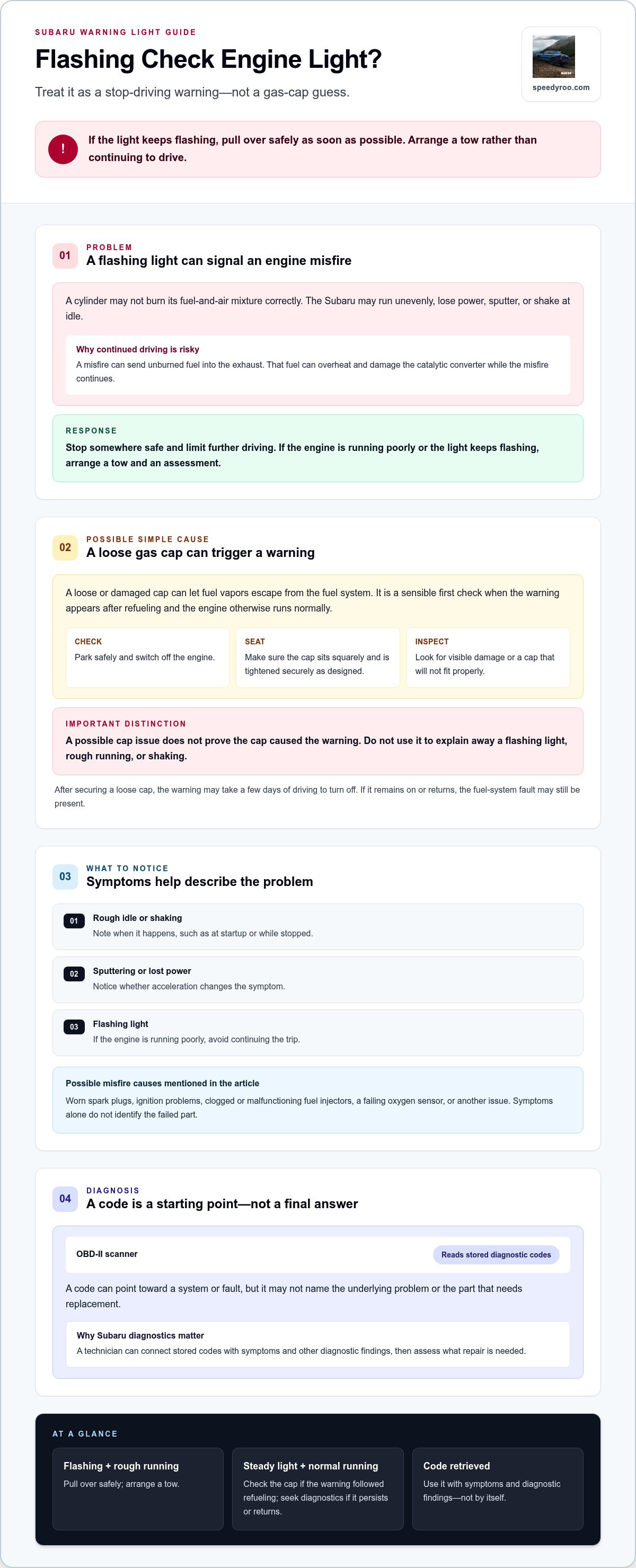
Actions to take for a flashing check engine light
A steadily flashing check engine light calls for an immediate safe stop. In a Subaru, continued driving during an active misfire can send unburned fuel into the exhaust and damage the catalytic converter. Don’t continue toward home or a repair shop to see whether the warning clears. In Lone Tree traffic, first focus on getting the vehicle safely out of moving lanes.
Once stopped, note whether the light continues flashing and how the engine behaves. Shaking, rough running, sputtering, or lost power gives the technician useful information. Avoid revving the engine to test it. Don’t repeatedly restart the Subaru to see whether the warning disappears, and don’t clear the fault before its cause has been assessed.
- Pull over safely: Stop as soon as you can without creating a hazard for yourself or other road users.
- Assess the symptoms: Record whether the engine shakes, idles roughly, sputters, or loses power.
- Arrange a tow: If a Subaru service center isn’t nearby, use a tow truck rather than driving there.
- Preserve the warning information: Leave the check engine light and stored codes uncleared until diagnosis.
A short drive with an active check engine light may be possible in some cases, but that doesn’t make a steadily flashing light safe to ignore. The flashing warning is the key distinction. Stop and tow a Subaru that runs roughly while the light flashes. A light that becomes steady still needs prompt attention, even if the engine seems to run normally.
Don’t treat a gas-cap check as a substitute for stopping when the light flashes. A loose cap can trigger a check engine warning, but it doesn’t establish the cause of a flashing light. Likewise, a warning that stops flashing doesn’t prove the underlying fault has been repaired. Keep any code readings and note when the warning started, such as after refueling or during acceleration.
When arranging a tow, explain that your Subaru’s check engine light is flashing and describe any change in engine performance. Mention whether the light stayed steady after flashing or went out, and whether the car shook at idle. These details help the repair professional understand the immediate concern. Keep the vehicle parked until its fault has been assessed, rather than risking further exhaust or engine damage on another trip.
Can an OBD-II scanner identify why a Subaru check engine light is flashing?
An OBD-II scanner retrieves diagnostic trouble codes stored by a Subaru’s onboard computer. Those codes can narrow the investigation, but they don’t always identify the failed component. A code is a useful clue, not a complete diagnosis. Scanner results make more sense when considered alongside how the engine runs and when the warning appeared.
For example, a reported P0328 code was described as a knock or combustion vibration sensor A circuit high. That wording points toward a circuit or sensor-related concern, but it doesn’t prove the sensor itself has failed. A Subaru that sputters during initial acceleration gives the technician another symptom to compare with the code. The code and the driving behavior provide different pieces of diagnostic information.
A reported C1411 code was described as an ECU code. A code label alone may not explain why the check engine light is flashing or what repair is needed. The technician considers the code alongside other stored information and the vehicle’s performance. If a Subaru also shakes at idle, that symptom adds context that a scanner cannot supply by itself.
Stored codes can remain available even after the dashboard light goes out. That history can help explain an intermittent warning, so note the exact code before it is cleared. Record when the warning appeared, whether acceleration changed, and whether the engine ran roughly. These details connect the scanner’s electronic reading with what happened on the road.
Use a scan result to guide the next diagnostic step, not to choose a replacement part immediately. A code associated with combustion vibration may prompt further checks, while sputtering or rough idle points to conditions that need evaluation. Similar symptoms can come from different faults. Replacing a sensor solely because a code mentions it may leave the actual issue unresolved.
With a flashing warning, scanning shouldn’t delay a safe stop or a tow. The code can help explain the problem after your Subaru reaches a repair facility, but it doesn’t make continued driving safe. Don’t erase codes before a professional assessment, since that can remove useful diagnostic information. If the light turns off, stored codes may still help identify the earlier fault.
Bring the code reading and symptom notes to Subaru diagnostics. Schedule Subaru repair and service to have the warning and related engine symptoms assessed together.
Speedy Roo Motorsports & Repair: Subaru Repair and Service
Speedy Roo Motorsports & Repair provides Subaru repair and service for drivers facing a flashing check engine light, rough running, or a stored diagnostic code. This is a practical next step after stopping safely, especially when the warning continues or symptoms return. A code can guide the investigation, while engine behavior helps clarify what needs attention.
Bring any scanner readings and note when the warning appeared, whether the engine shook, and how acceleration felt. These details can help connect your Subaru’s symptoms with the diagnostic findings and needed repair. If the engine is still running roughly, arrange a tow rather than driving it to the shop.
Contact Speedy Roo Motorsports & Repair to discuss Subaru service, or visit the shop online.
Make a Clear Plan for Your Subaru
A warning light can make every drive feel uncertain, but your next decision can be simple: prioritize the car’s condition over completing the trip. If your Subaru’s check engine light is flashing in Lone Tree, treat it as a reason to pause, not something to ignore until it becomes more disruptive. Once the vehicle is safe, have the cause understood before deciding what comes next.
That approach also makes repair conversations more useful. Explain what the Subaru was doing, share any diagnostic code you recorded, and ask how the findings relate to the recommended work. Clear information helps you stay involved without guessing which component is at fault.
Speedy Roo Motorsports & Repair Inc provides Subaru Repair and Service. Contact the shop to discuss your Subaru’s warning and the next diagnostic step. Contact Speedy Roo Motorsports & Repair Inc when you’re ready to move forward. A thoughtful assessment can help you approach the repair with greater confidence and make informed decisions about your car.
Frequently Asked Questions
Is it Safe to Drive my Subaru with the Light on?
It depends on whether the light is steady or flashing. A steady check engine light usually signals a problem that needs attention, but not an immediate emergency. If the check engine light is flashing in your Subaru in Lone Tree, treat it as urgent, especially if the car runs roughly. If you’re unsure which warning you’re seeing, avoid continuing your trip until you can stop safely.
What Does the Check Engine Light Mean?
The check engine light means the Subaru’s onboard system has detected a fault that needs attention. It may relate to engine operation or the fuel and emissions systems, so the light alone doesn’t identify the faulty part. For example, a warning after refueling may lead you to inspect the gas cap, while poor performance points to a need for diagnostic testing.
What does a flashing check engine light mean on a Subaru?
A flashing check engine light in a Subaru in Lone Tree typically signals an engine misfire, meaning a cylinder isn’t burning its fuel mixture correctly. The Subaru may shake, idle unevenly, or sputter as the fault affects engine operation. A flashing warning is more urgent than a steady one because continued misfiring can affect the exhaust system. The exact cause still requires diagnosis.
Is it safe to drive a Subaru with a flashing check engine light?
No, don’t continue driving normally with a flashing check engine light. If you’re in a dangerous spot, move only as far as needed to stop somewhere safe. Don’t take the Subaru onto a highway or continue across town to reach a repair facility. If the engine is shaking or losing power, arrange a tow instead.
What should I do immediately if my Subaru check engine light is flashing?
Ease off the accelerator, look for a safe place to stop, and switch off the engine once parked. Note whether the Subaru shook, sputtered, or lost power, and tell the tow operator about those symptoms. Don’t clear diagnostic codes or keep restarting the car to test the warning. If you’re stopped in an unsafe location, prioritize reaching a safer stopping point.
What commonly causes a flashing check engine light in Subaru models?
An engine misfire is the typical reason for a flashing warning. Possible causes include worn spark plugs, fuel injectors that aren’t working correctly, or problems affecting sensor readings. A faulty oxygen sensor can also reduce fuel economy and eventually harm the catalytic converter. A loose gas cap can trigger a check engine light, but don’t assume it explains a flashing warning.
Can a flashing check engine light damage a Subaru catalytic converter?
Yes. During a misfire, unburned fuel can travel through the exhaust and damage the catalytic converter. That’s why continuing to drive while the light flashes can turn an engine fault into an exhaust-system problem. If your Subaru is running unevenly, stop safely rather than driving farther to see if the warning disappears.
Does a Subaru dealership or independent mechanic near Lone Tree offer same-day diagnostics?
Same-day diagnostic appointments aren’t guaranteed, so don’t plan to drive a Subaru with a flashing light to find one. Speedy Roo Motorsports & Repair Inc offers Subaru Repair and Service. Contact the shop at (303) 400-0625 or visit 18355 E. Girard Ave. Unit B, Aurora, CO 80013. Its local service area includes Aurora, Denver, Centennial, Parker, and Lone Tree.