
Imagine you’re merging onto I-225 during the evening rush when your Honda suddenly hesitates, the RPMs climb, and that dreaded flashing “D” light appears on your dash. It’s a moment of pure stress that every Colorado driver fears, especially when you’re miles from home on E-470. You might worry that a slipping gear or a rough shift automatically means a massive replacement bill. We understand that frustration because we see it every day. You deserve an honest assessment of whether your vehicle needs a complex overhaul or just a targeted fix. For many local owners, finding reliable Honda transmission repair Aurora residents can trust is the first step toward peace of mind.
You’ll discover the specific causes of common Honda drivetrain issues and how specialized technicians provide precision repairs that often outlast factory replacements. We’ll explore the differences between a simple fluid service, solenoid failures, and internal mechanical wear in J-Series and K-Series engines. This guide breaks down the diagnostic process so you can tell if a fluid flush will solve the problem or if a deeper repair is necessary. By the end, you’ll have the technical insight needed to handle a transmission scare with confidence and find a solution that keeps your Honda on the road for years to come.
Key Takeaways
- Learn why Honda’s unique drivetrain engineering requires brand-specific diagnostics to avoid the common misdiagnoses found at general repair shops.
- Identify early warning signs like the “judder” in CVTs or torque converter issues in larger V6 models before they lead to an expensive breakdown.
- Understand how Aurora’s high altitude and steep mountain climbs create heat-related stress that demands specialized cooling and fluid maintenance.
- Discover how a targeted fix for sensors or solenoids can often provide a reliable Honda transmission repair Aurora drivers can trust without the cost of a total replacement.
- See how over two decades of Japanese import expertise allows for a transparent diagnostic process that prioritizes the long-term health of your vehicle.
Why Honda Transmission Repair Requires a Specialized Approach
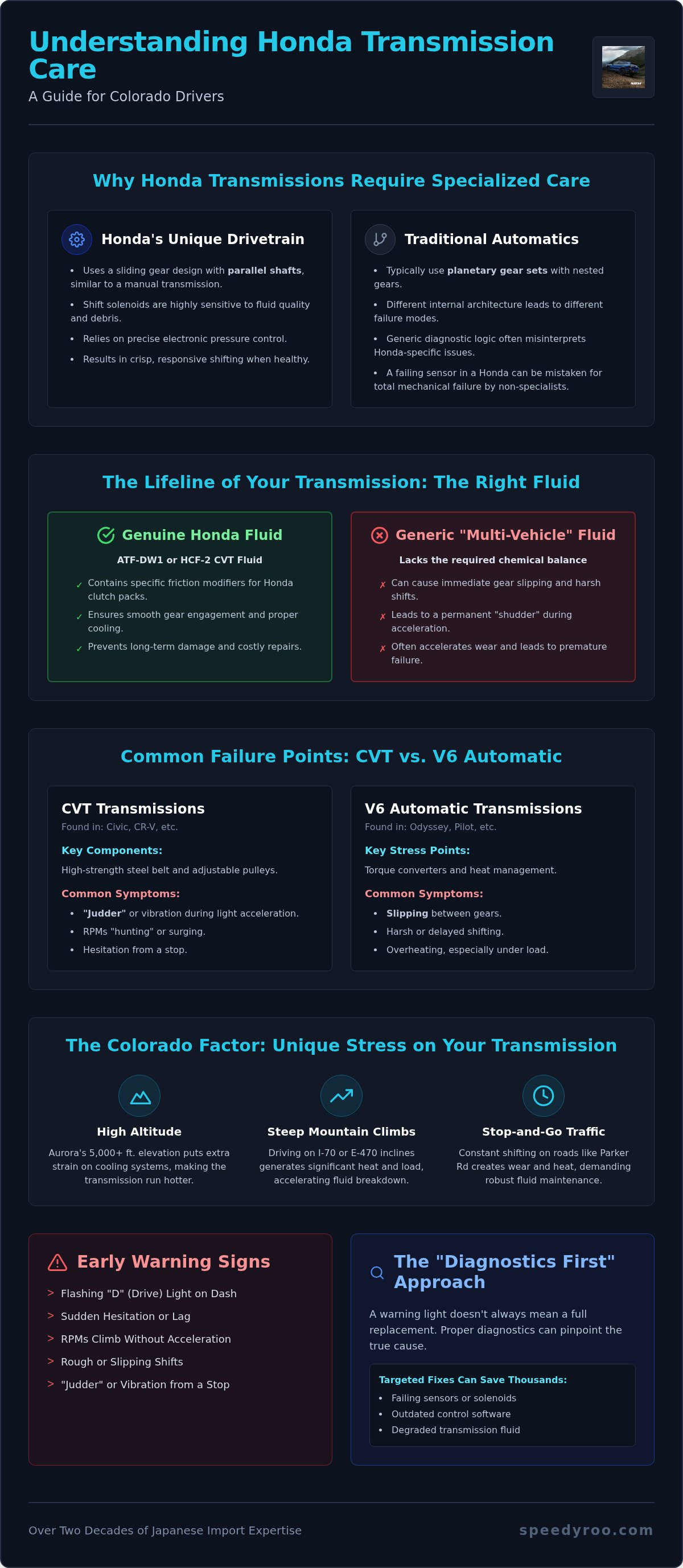
Stop-and-go traffic on Parker Road or the daily commute along I-225 creates a specific type of stress for your vehicle. For owners seeking Honda transmission repair Aurora services, it’s vital to understand that these systems aren’t built like those in a Ford or a Chevy. While most manufacturers use planetary gear sets, many Honda automatics utilize a unique sliding gear design similar to a manual transmission. This engineering choice provides the crisp shifting Honda is known for, but it also means that generic repair shops often apply the wrong diagnostic logic. At Speedy Roo, we’ve spent 24 years focusing on these Japanese imports, ensuring we address the root cause rather than just the symptoms.
Honda Drivetrain Engineering vs. The Rest
The internal architecture of a Honda is distinct. Instead of the nested gears found in traditional automatics, Honda’s older designs use parallel shafts with individual gears. This layout makes shift solenoids incredibly sensitive to debris and fluid quality. Even as the brand transitioned to more complex units, such as the ZF 9-speed or their in-house 10-speed transmissions, the need for specialized knowledge remained. You can explore the vast variety of Honda transmission types to see just how much these systems have evolved over the decades. Because these units rely heavily on precise electronic pressure control, a failing sensor is frequently misdiagnosed as a total mechanical failure by shops that don’t specialize in the brand.
The Critical Importance of Genuine Honda Fluids
The fluid inside your transmission does more than just lubricate; it acts as a hydraulic medium and a cooling agent. Honda transmissions are engineered to operate with specific friction modifiers found only in genuine Honda ATF-DW1 or HCF-2 CVT fluids. Generic “multi-vehicle” fluids often lack the exact chemical balance required for Honda’s internal clutch packs. Using the wrong fluid can lead to immediate gear slipping, harsh engagement, or a permanent “shudder” during acceleration. We’ve seen many cases where a simple, high-precision fluid exchange using factory-spec products saved a customer from a full replacement. Specialized fluid is the essential bloodline of the Honda drivetrain, maintaining the delicate balance of pressure and temperature needed for longevity.
Our philosophy centers on a “diagnostics first” approach. We know that Aurora’s 5,000-foot altitude and summer heat can accelerate fluid breakdown. By testing the electronic components and inspecting fluid clarity before recommending a rebuild, we provide the honest answers you need to stay on the road without unnecessary expenses.
Common Honda Transmission Failure Points: CVTs vs. Automatics
Every Honda model handles the road differently, and their transmissions are no exception. When you’re looking for Honda transmission repair Aurora, the first step is identifying whether your vehicle uses a Continuously Variable Transmission (CVT) or a traditional multi-speed automatic. These systems fail in very different ways. A flashing “D” light on your dashboard is a universal sign of trouble, but the mechanical reality behind that light depends entirely on what’s under the hood. Understanding these distinctions helps avoid the common diagnostic myths that often lead owners to believe they need a total replacement when a smaller fix might suffice.
The CVT Challenge: Belts and Pulleys
Modern Civics and CR-Vs rely on CVTs to maximize fuel economy. Instead of gears, these units use a high-strength steel belt and adjustable pulleys. Over time, that belt can wear or stretch, leading to a “judder” or a distinct vibration during light acceleration. You might also notice the RPMs “hunting” or surging as the transmission struggles to find the right ratio. In many cases, these symptoms are linked to fluid breakdown or outdated control software. Catching these signs early is the best way to maintain your car’s transmission and avoid the high cost of a belt failure. We often find that a specific software calibration or a precision fluid exchange resolves the issue before permanent damage occurs.
V6 Automatic Issues: Torque Converters and Heat
Heavier vehicles like the Honda Odyssey and Pilot use traditional automatics that face extreme stress from Colorado’s terrain. The most frequent failure point in these V6 models is the torque converter clutch. If you feel a shuddering sensation between 20 and 40 mph, it’s likely the torque converter struggling to lock up correctly. This heat-related wear can eventually burn out internal clutches if left unaddressed. However, a flashing “D” light is frequently caused by a failed 3rd gear pressure switch. This is a relatively simple component to replace. Identifying a failing solenoid or switch can result in a $500 repair, whereas ignoring the problem could lead to a $5,000 full unit replacement.
Misdiagnosing these electronic components as total mechanical failures is one of the biggest pitfalls for owners. You can read more about how to spot these errors in our guide on Japanese Import Repair in Aurora. If your Honda is acting up, we recommend a specialized diagnostic check to see if a targeted solenoid fix is all you need to get back on the road safely.
The Colorado Factor: How Aurora Driving Impacts Your Transmission
Aurora isn’t just another suburb; it’s a high-altitude environment that puts unique demands on every mechanical component of your vehicle. For owners seeking Honda transmission repair Aurora, it’s essential to realize that Colorado driving conditions are almost always classified as “severe service” by manufacturers. At 5,000 feet above sea level, the air is thinner and cooling efficiency drops. This means your transmission has to work harder to stay within a safe operating temperature, especially when navigating the rolling hills of Arapahoe County or the constant stop-and-go patterns of local traffic.
We see the results of this environmental stress daily. Heat is the primary enemy of transmission fluid, and Colorado provides plenty of opportunities for fluid to overheat and degrade. This is why we pay such close attention to fluid clarity and scent during a pre-sale vehicle evaluation in Aurora. Identifying burnt fluid early can be the difference between a simple service and a total rebuild.
Mountain Grades and Gear Hunting
Climbing toward the mountains on I-70 is a major stress test for any drivetrain. When your Honda is forced to “hunt” for the right gear while ascending steep grades, it generates significant friction heat within the clutch packs. We often advise our customers to use “Sport” or “L” modes during these climbs. Doing so helps maintain a steady gear and reduces the frequency of shifting, which preserves the life of the internal components. It’s also worth noting that software plays a huge role in how these systems handle stress. For example, the Honda CVT control software recall highlighted how critical proper electronic management is for preventing physical damage to the drive pulley shaft under load.
Winter Shifting and Fluid Viscosity
Our sub-zero winter mornings present the opposite challenge. When a vehicle is “cold-soaked” overnight, the transmission fluid becomes thick and moves slowly through the intricate valve body. If you immediately merge onto I-225 at high speeds without a brief warm-up period, you risk high-pressure spikes that can damage seals or solenoids. This is particularly critical for Honda CVTs, which rely on precise fluid pressure to grip the steel belt. A few minutes of gentle driving before hitting the highway allows the fluid to reach its optimal viscosity, ensuring smooth engagement and long-term drivetrain health. Taking these small local precautions helps your Honda handle the extremes of the Colorado climate with ease.
Repair, Rebuild, or Replace: Making the Right Choice
Facing a drivetrain issue doesn’t always mean your vehicle is at the end of its life. For Honda transmission repair Aurora drivers, the path forward usually falls into one of three categories: a targeted repair, a comprehensive rebuild, or a full replacement. We believe in providing a transparent cost-benefit analysis for each option so you can make an informed decision based on your budget and how long you plan to keep the car. Our role as an honest specialist is to explain the “why” behind every recommendation, ensuring you aren’t paying for a new unit when a smaller fix will suffice.
Sometimes, the trouble is purely electronic or external. Replacing a faulty shift solenoid, a pressure switch, or a leaking axle seal can restore factory performance for a fraction of the cost of a new unit. This is where specialized diagnostics save you money by preventing the unnecessary replacement of a healthy transmission case. If internal wear is significant, a rebuild involves taking the unit apart to replace friction materials like clutches and bands while keeping the original housing. For those who need to get back on the road quickly, a remanufactured unit is often the best middle ground. These units are built to factory specs in a controlled environment and typically come with a robust warranty that outlasts a simple used unit from a salvage yard.
When is a Flush Enough?
Many minor shifting hesitations or “notchy” gear changes can be solved with a simple “drain and fill” rather than a pressurized flush. We generally avoid high-pressure flushes on high-mileage Hondas because they can dislodge internal debris that might clog sensitive valve body passages. This conservative maintenance philosophy is similar to the approach we take for other precision Japanese brands, as we discuss in our guide to Toyota specialist Aurora services. If your fluid is merely dark but doesn’t smell burnt, fresh Honda-specific fluid might be the only thing standing between you and a smooth commute.
Evaluating the Value of Your Honda
We often help customers weigh the cost of a transmission rebuild against the vehicle’s current market value. If your Accord, Civic, or CR-V is otherwise in excellent mechanical shape, investing in the drivetrain can help you reach that 200,000 or even 300,000-mile milestone. We take pride in helping our neighbors keep their reliable Hondas on the road for as long as possible. Our goal is to ensure the repair provides long-term health for the vehicle rather than just a temporary fix for a single transaction.
If you’re unsure which path is right for your vehicle, schedule a transmission diagnostic with our team for a clear, honest assessment of your drivetrain’s health.
Speedy Roo: Aurora’s Trusted Honda Drivetrain Specialists
Since Speedy Roo Motorsports & Repair Inc opened its doors in 2002, we’ve focused on one thing: providing the highest level of care for Japanese vehicles. Our 24 years of specialization mean we’ve seen every generation of Honda drivetrain, from the early parallel-shaft automatics to the most modern CVTs. When you choose us for reliable Honda transmission repair Aurora, you’re stepping away from the high-pressure sales lanes of a dealership and into a community-focused environment. We use specialized diagnostic tools that interface directly with Honda’s proprietary control modules, allowing us to see exactly what the sensors are reporting in real-time. Whether you live in Southlands, Cherry Creek, or Centennial, you can expect an honest diagnosis that prioritizes your vehicle’s longevity over a quick transaction.
The Speedy Roo Diagnostic Advantage
Transparency is the foundation of our work. Unlike larger facilities where you only speak with a service advisor, we give you direct access to the technician who is actually working on your Honda. We believe that clear communication is essential for building trust. Our team utilizes detailed digital inspections, providing photos and data that clearly show the “why” behind every recommendation. If a shift solenoid is clogged or a pressure switch has failed, we show you the evidence. This methodical approach has defined our reputation for Honda transmission repair Aurora owners can count on for over two decades. We treat every vehicle as if it belonged to a neighbor, because in this community, it often does.
Schedule Your Transmission Consultation
Our intake process is designed to be thorough yet efficient. Every consultation begins with a road test and professional-grade diagnostics to verify the failure point before any wrenches turn. This commitment to precision is the same standard we apply to our Subaru repair in Aurora, where we’ve mastered the complexities of all-wheel-drive systems. We know that transmission issues are stressful, but catching a minor electronic fault today can prevent a total breakdown on I-225 tomorrow. Don’t wait for your Honda to leave you stranded. Contact us to schedule a comprehensive evaluation and experience the difference that specialized, honest expertise makes for your drivetrain.
Secure Your Honda’s Future on Colorado Roads
Your Honda was engineered for precision, but the unique stresses of Colorado’s high altitude and steep mountain grades require a specialized maintenance approach. Whether you are dealing with a CVT judder in your Civic or a torque converter shudder in a V6 Odyssey, the right diagnosis is the difference between a minor electronic fix and a major mechanical expense. Understanding the specific needs of your J-Series or K-Series drivetrain ensures your vehicle remains reliable for the long haul. You don’t have to navigate these technical decisions alone when you have a local partner who understands the “why” behind every gear shift.
At Speedy Roo, we bring 24 years of specialization in Honda and Japanese imports to every inspection. As an A+ rated independent shop in Aurora, we utilize specialized tools designed specifically for CVT and J-Series transmissions to provide a transparent assessment of your vehicle’s health. We’re here to help you avoid the stress of a breakdown on I-225 with honest, methodical care. For the most reliable Honda transmission repair Aurora has to offer, trust a team that knows your car’s engineering inside and out. Schedule your Honda transmission diagnostic at Speedy Roo today! and keep your vehicle shifting smoothly through every mountain pass and morning commute. We look forward to serving as your dedicated partner in automotive longevity.
Frequently Asked Questions
How do I know if my Honda transmission is failing?
Common signs include slipping gears, delayed engagement after shifting into Drive or Reverse, and unusual noises like whining or grinding. You might also notice a “shudder” during acceleration, especially in CVT models. If your RPMs surge without a corresponding increase in speed, it’s time for a professional diagnostic. These symptoms indicate that internal pressure or friction materials are no longer operating within factory specifications.
Is a Honda CVT more expensive to repair than a regular automatic?
Generally, yes, because CVTs often require total replacement rather than a traditional rebuild. While a standard automatic can sometimes be fixed by replacing individual clutch packs or bands, a failed CVT steel belt often causes internal damage that makes a rebuild impractical. However, early intervention through software updates and fluid services can prevent these high costs. Staying proactive with maintenance is the most effective way to avoid the expense of a full unit replacement.
How much does Honda transmission repair cost in Aurora?
Costs vary significantly based on whether you need a minor solenoid repair, a rebuild, or a full replacement. Industry data suggests that a transmission rebuild can range from $1,700 to $2,400, while a full replacement can exceed $6,000 depending on the model. For residents seeking Honda transmission repair Aurora services, the final price depends on the specific failure point and the choice between new OEM, remanufactured, or used components.
Can a transmission flush fix shifting problems?
A flush can resolve minor issues like “notchy” shifts or slight hesitation if the problem is caused by dirty fluid. However, if there is mechanical wear or a failed electronic sensor, fresh fluid won’t fix the underlying damage. In some high-mileage vehicles, a pressurized flush can actually dislodge debris and cause more harm. We typically recommend a “drain and fill” approach to safely refresh the fluid without risking internal clogs.
What is the “flashing D light” on my Honda dashboard?
The flashing “D” light is your vehicle’s way of signaling an electronic fault within the transmission control system. It often indicates a failed pressure switch or a faulty shift solenoid. While it looks alarming, it doesn’t always mean the entire transmission is broken. It’s essential to have the computer codes scanned immediately to identify the exact sensor that is malfunctioning before a small electronic error leads to physical mechanical wear.
Does Speedy Roo use genuine Honda transmission fluid?
Yes, we exclusively use Honda-specific fluids like ATF-DW1 and HCF-2 CVT fluid for all drivetrain services. Generic “multi-vehicle” fluids lack the precise friction modifiers required for Honda’s unique internal architecture. Using the wrong fluid can lead to immediate slipping and accelerated wear. Our commitment to using factory-spec products ensures that your Honda transmission repair Aurora meets the high standards established by the manufacturer for long-term health.
How long does a Honda transmission typically last in Colorado?
With proper maintenance, many Honda transmissions last well over 200,000 miles. However, Colorado’s steep mountain grades and high altitude create extra heat that can shorten this lifespan if fluid changes are neglected. Research shows that more than half of reported transmission problems occur under 90,000 miles when maintenance is ignored. We suggest following a “severe service” schedule, which often means changing your fluid every 30,000 miles to combat local environmental stress.
Should I go to a dealership or an independent shop for transmission work?
Independent specialists often provide a more personalized and cost-effective alternative to the dealership. While dealerships typically push for full unit replacements, an independent shop like Speedy Roo can offer targeted repairs for sensors or solenoids. We have 24 years of experience and the same diagnostic tools as the dealer, but we focus on building long-term trust with our neighbors in Centennial, Parker, and Aurora through transparent, honest communication.