
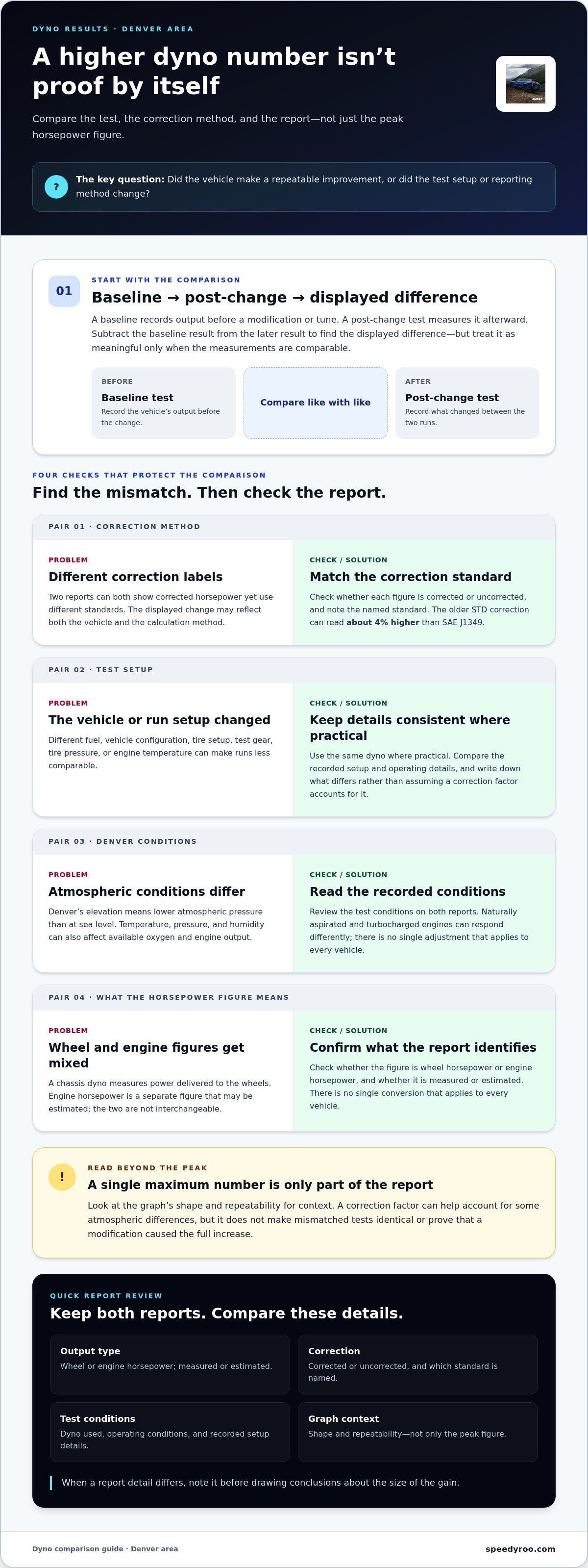
Did your car really gain horsepower, or did the second dyno session simply use different conditions? If you want to verify horsepower gains on dyno Denver drivers can trust, the baseline and follow-up runs need to be comparable. Denver’s elevation and changing weather can affect raw readings, while correction methods can shift the displayed result. For example, the older STD correction can read about 4% higher than SAE J1349.
A dyno report can help settle the question, but the headline number alone may not tell the whole story. Measured wheel horsepower isn’t the same as a crank-horsepower estimate, and differences in testing conditions or methods can make a before-and-after comparison misleading.
This guide explains what dyno figures represent, which report details to compare, and how correction factors affect the numbers. You’ll also learn what makes a report useful and how to choose a practical next step, including performance dyno tuning at Speedy Roo Motorsports in Aurora.
Key Takeaways
- Record vehicle changes and test details so you can interpret what happened between baseline and follow-up runs.
- Keep fuel, vehicle configuration, tire setup, and test gear consistent where practical to make comparisons more meaningful.
- To verify horsepower gains on dyno Denver, compare the correction method and test conditions as well as the peak figures.
- Look at the shape and repeatability of the dyno graph for context beyond a single maximum number.
- Use the report and your performance goals to guide an informed discussion about dyno tuning in Aurora.
What Does It Mean to Verify Horsepower Gains on a Dyno in Denver?
A higher number on a dyno screen is a reason to look closer, not proof by itself that a vehicle gained power. To verify horsepower gains on dyno Denver, compare measurements taken using a consistent method and sufficiently similar conditions. The key question is whether the difference reflects a repeatable improvement or a change in how the vehicle was tested or the result was reported.
A baseline test records the vehicle’s output before a modification or tune. A post-change test measures it afterward. Subtract the baseline result from the later result to calculate the displayed difference. Treat that difference as meaningful only when the measurements are comparable. Keep both reports together and note what changed between tests. That context is more useful than relying on a before-and-after claim alone.
Wheel horsepower, crank horsepower, and the number on the report
A chassis dyno measures power delivered to the wheels, while engine horsepower is a separate figure that may be estimated rather than directly measured in that test. Power is lost through the drivetrain between the engine and the wheels, so wheel output and engine output aren’t interchangeable. There’s no single conversion that applies to every vehicle. Check whether the report identifies wheel horsepower or engine horsepower, and whether the figure is measured or estimated. Understanding Dynamometers provides an overview of dyno types and their role in measuring torque and power.
Why a bigger dyno number doesn’t prove a real-world gain
Setup and test conditions can affect the displayed result. Changes in vehicle configuration, tire setup, test gear, or operating conditions can make two runs less comparable, even when both reports show horsepower. A correction method can account for some atmospheric differences, but it doesn’t make mismatched tests identical or prove that a modification caused the full increase. The following sections explain how to review these factors.
Separate the measurement from the driving impression, too. A louder exhaust can make acceleration feel more dramatic, and sharper throttle response can make the car seem quicker, but neither sensation establishes a horsepower increase. Conversely, a measured improvement may not feel equally noticeable in every situation. A dyno result describes the vehicle under a controlled test setup. It doesn’t predict exactly how the car will behave on every road, in changing weather, or on a track.
For a useful comparison, read the dyno result alongside the test conditions and report labels. If the baseline and follow-up use different output types or substantially different setups, the headline difference may not answer the question you care about. A careful review turns the dyno sheet into evidence you can use, rather than a number to accept without context.
How Denver Elevation, Test Conditions, and Dyno Corrections Affect Results
Denver-area dyno readings need to be understood in the context of the air the engine is breathing. Higher elevation means lower atmospheric pressure than at sea level, and changes in temperature, pressure, and humidity can also affect available oxygen and engine output. These conditions influence naturally aspirated and turbocharged engines differently, so there’s no single horsepower adjustment that applies to every vehicle.
A dyno correction factor adjusts a measured result toward a set of reference atmospheric conditions. It can make figures easier to compare, but it doesn’t recreate a different test environment, remove every variable, or prove that a modification caused a gain. The uncorrected figure reflects conditions at the time of the test. The corrected figure estimates what the result would be under the correction standard’s reference conditions.
What correction factors can and cannot tell you
Check whether the report shows corrected or uncorrected output and, if corrected, which standard it names. SAE J1349 and STD are examples of correction labels that can produce different reported figures. Don’t assume two reports use the same method just because both show corrected horsepower. A correction is useful context, not a guarantee that unlike tests are directly comparable.
If the baseline report identifies one correction method and the follow-up report identifies another, the displayed change may reflect both the vehicle and the difference in calculation. Treat that as a limitation when interpreting the result. The correction label matters as much as the number.
Why Denver-area conditions belong in the interpretation
Altitude is part of the testing context, not a reason to dismiss a dyno result. Naturally aspirated engines draw air at ambient pressure, while turbocharged engines use forced induction. Their responses to altitude can differ depending on the vehicle and its setup. Don’t apply a generic “Denver horsepower penalty” to a specific car. The report and the conditions recorded for each run are more useful than a broad estimate.
For a sound before-and-after comparison, use the same dyno where practical and keep the setup consistent. Changes in test gear, tire pressure or configuration, fuel, engine temperature, and other operating details may affect a run. Record what differs rather than assuming a correction factor accounts for everything.
Corrected figures are most useful when the comparison methods match. Review both reports for the dyno used, correction label, corrected or uncorrected status, and recorded test conditions. If a detail differs, note it before drawing conclusions about the size of the gain. This helps separate a plausible improvement from a difference in testing.
Drivers working to verify horsepower gains on dyno Denver should focus on consistency, not on chasing the largest displayed figure. Speedy Roo’s Aurora dyno tuning gives drivers in Aurora, Denver, Centennial, Parker, and Lone Tree a local option for discussing performance results in the context of their vehicle and goals.
How to Compare Before-and-After Dyno Results Fairly
A fair comparison starts before any change is made. To verify horsepower gains on dyno Denver, save the baseline, document what changed, repeat the test under similar conditions, and compare like with like. Use the same vehicle and, where practical, the same dyno setup. If a detail differs, record it rather than presenting the figures as an exact apples-to-apples result.
Record a useful baseline before changing the tune
Save the original dyno report and write down the vehicle’s configuration, fuel, relevant modifications, and existing calibration details. Record the report’s units, whether it shows wheel or engine output, the correction method, test conditions, and run identifiers. These notes help distinguish a change in vehicle performance from a change in how the test was conducted.
A single pull without context can be difficult to interpret. Keep the graph and any accompanying data with the baseline, and note whether the run appears representative of the vehicle’s condition. If you don’t know what changed between tests, the calculated difference may be clear as a displayed number but hard to explain.
Match the post-change test and inspect supporting data
After a tune or modification, repeat the test using the same output type, correction method, dyno setup, and test gear where practical. Keep fuel, vehicle configuration, tire setup, and operating conditions as consistent as possible. Review torque and any available air-fuel, boost, or OBD-II data alongside horsepower. Supporting readings add context, but not every report includes the same measurements.
If the fuel, tires, setup, or test conditions changed, mark that difference in your notes. A clear record makes limitations visible and helps you judge how confidently the results can be compared.
Use a simple comparison format. Enter the figures shown on the reports, not estimates, and calculate the difference as the post-change result minus the baseline result.
| Measure | Baseline | Post-change | Difference |
|---|---|---|---|
| Horsepower | [Report value and units] | [Report value and units] | [Post-change minus baseline] |
| Torque | [Report value and units] | [Report value and units] | [Post-change minus baseline] |
| Test notes | [Fuel, setup, correction method] | [Fuel, setup, correction method] | [List any differences] |
Before interpreting the result, confirm that both horsepower figures use the same units and represent the same type of output. Compare the correction labels and test notes, too. If one run used a different method or setup, include that difference rather than implying the change is fully attributable to the tune or modification. This gives you a clearer basis for discussing what the measurements show and what they can’t establish.
What to Check on a Dyno Report Before Trusting a Claimed Gain
A dyno report is most useful when it explains how the result was produced, not just what the peak number says. Before accepting a claimed increase, check that the baseline and follow-up reports describe the same kind of output and provide enough detail to interpret the comparison. Use this checklist to identify what’s clear and what needs context.
- Units and output: Confirm the units and whether the report shows measured wheel horsepower or an engine-output estimate.
- Correction: Look for corrected or uncorrected figures and the named correction method, if one is shown.
- Test details: Compare the recorded gear, vehicle setup, fuel, tire pressure, and test conditions.
- Supporting readings: Note whether torque, air-fuel, boost, or OBD-II data appears alongside horsepower.
- Repeatability: Check whether multiple runs tell a consistent story, rather than relying on one peak figure.
Read the graph, not just the peak horsepower figure
A dyno graph typically plots engine speed along the horizontal axis and measured output along the vertical axis. The curve shows how horsepower changes across the tested range, while the peak marks only its highest point. Two runs with similar peaks can have different curve shapes, so review the full curve when the scales, output types, and test methods align.
A broader or higher portion of a curve can add useful context, but it doesn’t by itself guarantee quicker acceleration, better drivability, or greater reliability. Interpret it alongside the vehicle’s setup and the purpose of the test.
Spot differences that make a comparison less conclusive
Check for differences in fuel, tire pressure, selected gear, vehicle configuration, or test conditions. Also look for mismatched units or correction labels, and note important details missing from either report. A mismatch lowers confidence in a direct comparison, but it doesn’t prove that anyone acted improperly.
Supporting data can help explain what changed. Torque can show how output varies through the tested range. Air-fuel and boost readings may provide additional context about engine operation, while OBD-II data can show related vehicle information when included. These readings don’t replace a matched horsepower comparison, but they can make the result easier to interpret.
If you’re reviewing a claimed gain, write down what the reports establish and what remains uncertain. That keeps the conversation focused on evidence and your vehicle’s goals. For help connecting report details with performance goals, explore Speedy Roo dyno tuning in Aurora. A careful review is a practical part of learning how to verify horsepower gains on dyno Denver.
Verify Dyno Horsepower Gains with Speedy Roo in the Denver Area
A dyno report is a starting point for a practical conversation, not a promise that every vehicle will respond the same way. Speedy Roo Motorsports & Repair Inc is based in Aurora and provides Japanese-vehicle repair and performance dyno tuning for drivers in the Denver area, including Aurora, Denver, Centennial, Parker, and Lone Tree. Since 2002, the shop has specialized in Japanese vehicles, including Subaru, Toyota, Lexus, Mazda, Honda, and Nissan.
Turn dyno data into an informed tuning decision
Bring the report details into the discussion: what output it measures, the units and correction method shown, the test conditions, and any supporting readings. Pair those details with the changes made to the vehicle and the outcome you want, such as stronger response in a particular driving range. That context is more useful than focusing on a peak horsepower figure by itself.
Recommendations should reflect the measured results and the vehicle’s actual configuration. A Subaru owner, for example, can connect performance questions with the vehicle’s maintenance and setup history through Subaru repair in Aurora. The Aurora dyno tuning resource offers more information about the tuning process.
Plan a Denver-area dyno tuning next step
Before arranging a dyno tuning visit, organize a few points so the conversation can stay focused:
- Vehicle: Note the make, model, and relevant configuration.
- Use: Describe how you drive and what you want the vehicle to do better.
- Changes: List modifications or calibration changes made since the baseline.
- Evidence: Bring before-and-after reports and note any differences in test conditions or reporting.
These details help frame the next step around your goals and the available evidence. Results depend on the vehicle’s condition, configuration, changes, and test conditions, so a responsible discussion focuses on what the measurements show rather than promising a specific horsepower increase. If you’re working to verify horsepower gains on dyno Denver, clear records and realistic goals make it easier to assess what the result means for your vehicle.
Ready to discuss your report and performance goals? Discuss dyno tuning with Speedy Roo.
Make Your Next Performance Decision With Confidence
A dyno result is most valuable when it helps you decide what to do next. Rather than chasing a larger figure for its own sake, consider how the vehicle should perform in everyday driving and whether the available measurements support a change. A focused goal gives tuning decisions a clear purpose and makes it easier to judge whether the outcome matters to you.
If you’re working to verify horsepower gains on dyno Denver, keep your reports and notes together as a reference for future decisions. They can help put a new result in context and keep expectations grounded in your vehicle’s actual setup and test conditions. Progress doesn’t have to mean pursuing the biggest possible number. It can mean understanding your car better and making a considered choice about its performance.
Speedy Roo Motorsports & Repair Inc offers performance dyno tuning for drivers in Aurora, Denver, Centennial, Parker, and Lone Tree. Discuss your dyno tuning goals with Speedy Roo and take the next step with a clearer plan. Keep your vehicle’s needs and your performance goals at the center of the conversation.
Frequently Asked Questions
Is a dyno test safe for a stock car?
Yes, a stock car can be tested if it’s in suitable operating condition and the test is handled appropriately. Before a performance test, check for warning lights, fluid leaks, overheating, unusual noises, or other unresolved symptoms. Share any concerns and relevant maintenance history so the vehicle’s condition can be considered. Whether you’re coming from Aurora, Denver, Centennial, Parker, or Lone Tree, don’t treat a dyno run as a way to test a car that’s already showing signs of a problem.
Can weather change horsepower readings on a dyno?
Yes. Temperature, air pressure, and humidity can influence engine output and the conditions recorded during a run. To verify horsepower gains on dyno Denver, keep the reports from each session and note the weather or test conditions shown, along with whether figures are corrected or uncorrected. A difference in weather doesn’t automatically make a result useless, but it is relevant context. Compare the reporting method before treating a change as a direct measure of vehicle improvement.
Does a dyno test show torque as well as horsepower?
Many dyno reports show both torque and horsepower, though the measurements included depend on the equipment and report. Torque is rotational force; horsepower relates torque to engine speed. Check the units and engine-speed range shown so you can interpret each figure correctly. For example, a torque value without its corresponding RPM gives less context about where that output occurs. Neither number alone describes every aspect of how a vehicle performs.
Can a dyno reveal a problem with my engine?
A dyno run can record performance behavior that may prompt further investigation, especially when relevant diagnostic information is available. It can’t diagnose every mechanical fault from a graph alone. If the car has a misfire, overheating, warning light, or unusual sound, address that concern before focusing on a performance result. A diagnostic scan or mechanical inspection may be needed to identify the cause. Treat dyno data as one useful clue, not a complete engine health assessment.
Do horsepower gains on a dyno always feel noticeable on the road?
No. A change in peak horsepower may not translate into an obvious difference in every driving situation. Gearing, traction, vehicle weight, and where power is delivered across the rev range all shape the driving feel. A useful real-world comparison is to pay attention to the same ordinary driving situations before and after a change, rather than relying on memory or a brief impression. Keep road testing safe and within applicable traffic laws.
Does every vehicle use the same dyno testing setup?
No. The appropriate setup depends on factors such as drivetrain configuration and the purpose of the test. For example, an all-wheel-drive vehicle requires a setup suited to its drivetrain, while a two-wheel-drive vehicle has different requirements. If you’re comparing results, look at how the vehicle was configured and secured for each session, not just the horsepower figure. A report that identifies its measurement type and relevant setup details is easier to interpret.