
Differential trouble can affect how your Nissan handles, so unusual noise, vibration, or difficulty turning smoothly deserves attention. A Nissan differential fluid change in Denver can help protect the gears when fluid has broken down or become contaminated, but it won’t fix every underlying problem. Follow your vehicle manufacturer’s maintenance recommendations, and have concerning symptoms inspected to find their cause.
When your vehicle feels different on the road, it makes sense to pay attention to how it handles. This guide explains what differential fluid does, how neglected or leaking fluid can contribute to wear, and which warning signs call for an inspection. You’ll also learn what a fluid change involves and how Nissan service can help assess differential concerns, so you can choose a practical next step.
Key Takeaways
- Use your Nissan’s maintenance recommendations to guide differential fluid service, since operating conditions and fluid condition affect when attention is needed.
- Burnt-smelling or gritty fluid, dark fluid, and metal particles can signal overheating, contamination, or internal wear.
- Watch for leaks and changes such as whining, grinding, clunking, vibration, or difficulty turning smoothly; an inspection can help identify the cause.
- For a Nissan differential fluid change Denver drivers trust, Speedy Roo Motorsports & Repair Inc provides Nissan service and repair to help assess the issue and determine the appropriate next step.
Why does differential fluid need to be changed, and what happens if I don’t?
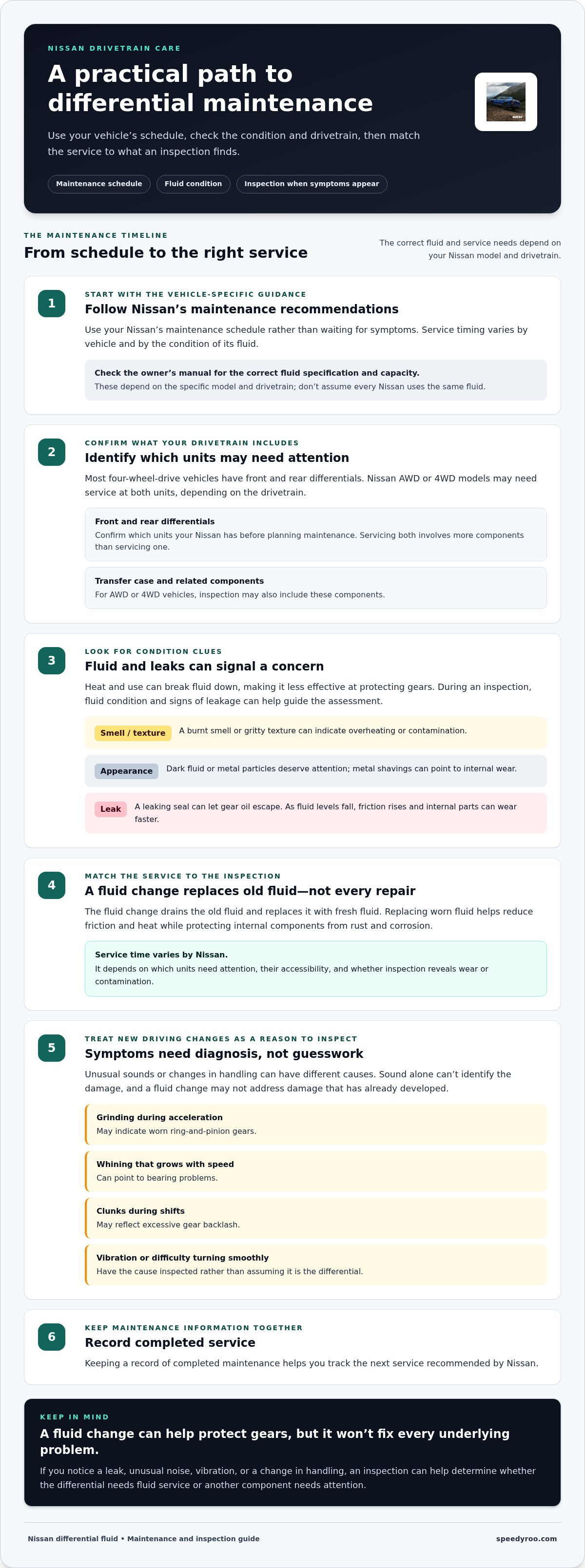
Differential fluid lubricates gears and carries heat away during operation. A Nissan differential fluid change in Denver replaces worn or contaminated fluid to help protect these components. Service should follow the maintenance recommendations for your specific Nissan.
Fluid Condition and Contamination
Fluid condition offers useful clues during an inspection. A burnt smell or gritty texture can indicate overheating or contamination. Dark fluid or metal particles also deserve attention, since metal shavings can point to internal wear. As heat and use break fluid down, it becomes less effective at protecting gears. Replacing worn fluid helps reduce friction and heat while protecting internal components from rust and corrosion.
Front and Rear Differential Service
Most four-wheel-drive vehicles have both front and rear differentials. Nissan AWD or 4WD models may therefore need service at both units, depending on their drivetrain. A fluid change drains the old fluid and replaces it with fresh fluid. For AWD or 4WD vehicles, inspection may also include the transfer case and related components. Confirm which units your Nissan has before planning maintenance.
Differential Fluid Change Timing
Service time varies by Nissan. It depends on which differential units need attention, how accessible they are, and whether inspection reveals wear or contamination. Servicing both front and rear differentials involves more components than servicing one unit. When planning a Nissan differential fluid change in Denver, consider your model’s maintenance schedule and the inspection it needs. Follow the manufacturer’s recommendations rather than waiting for symptoms.
Differential maintenance neglect and potential damage
Your Nissan’s model and drivetrain determine the fluid type and capacity. Follow the specifications in your owner’s manual. Skipping service can leave fluid less able to protect the gears, increasing friction and heat inside the differential.
Effects of Skipped Differential Maintenance
Old fluid can lose its ability to protect gears under repeated load. Heat and wear reduce lubrication, while a leaking seal allows gear oil to escape. As fluid levels fall, friction rises and internal parts can wear faster. Grinding during acceleration may indicate worn ring-and-pinion gears. Whining that grows with speed can point to bearing problems, while clunks during shifts may reflect excessive gear backlash. These symptoms need an inspection because sound alone can’t identify the damage. Addressing a leak early helps limit fluid loss and further wear. The differential works with the transmission to deliver engine power to the axle.
Manufacturer Fluid Maintenance Recommendations
Use Nissan’s maintenance schedule to guide fluid service. The correct specification and capacity depend on the model and drivetrain, so consult your owner’s manual for both. Don’t assume every Nissan uses the same fluid. During service, an inspection can help identify leaks or signs of wear before they worsen. Preventive maintenance may help limit damage, but a discount should not replace the manufacturer’s schedule. When comparing a maintenance discount, consider which fluid service and inspections it includes. Keep a record of completed maintenance to track the next recommended service.
Speedy Roo Motorsports & Repair: Subaru Repair and Service
Speedy Roo Motorsports & Repair provides Nissan service and repair for drivers concerned about differential fluid, leaks, unusual noises, or changes in handling. An inspection can help determine whether the differential needs fluid service or another component needs attention.
If your Nissan is showing these symptoms, contact Speedy Roo Motorsports & Repair or visit speedyroo.com.
Take the Next Step Toward Confident Nissan Care
Use your Nissan’s maintenance schedule as a practical guide, and treat new driving concerns as a reason to plan an inspection. A Nissan differential fluid change in Denver can be part of scheduled drivetrain maintenance, while unusual symptoms may call for a broader diagnosis. The right next step depends on your vehicle’s condition and the service it needs.
Speedy Roo Motorsports & Repair Inc offers Nissan Service and Repair, along with Subaru Repair and Service, Toyota Repair and Service, and Honda Repair and Service. If you’re ready to discuss your Nissan’s needs, contact Speedy Roo Motorsports & Repair Inc. A clear conversation can help you move forward with an informed plan and greater confidence in your vehicle’s care.
Frequently Asked Questions
Can differential problems affect my vehicle’s handling and safety?
Yes, a differential problem can affect how smoothly your vehicle turns and responds on the road. If its behavior changes, note when you notice it and arrange an inspection rather than guessing at the cause. Drivers in Aurora, Denver, Centennial, Parker, and Lone Tree can share those observations with a technician to help guide diagnosis.
How can I tell if my differential needs attention or if the noise is coming from something else?
You can’t reliably identify the source of a noise by sound alone. An inspection is needed to distinguish differential trouble from another issue. Note when the noise starts, whether it changes with vehicle speed or while turning, and whether you feel a vibration at the same time. These details give the technician useful context without treating a sound as a diagnosis.
What Happens If You Ignore Differential Problems?
Leaving a suspected differential issue unexamined can allow wear or fluid loss to progress. A fluid change may not address damage that has already developed, so diagnosis matters before choosing a repair. If an inspection finds worn internal parts, the next step may involve work beyond routine fluid maintenance. Keep track of when symptoms began and whether they’re changing.
What Is a Differential and Why Does It Matter?
A differential is a gear assembly that lets the drive wheels rotate at different speeds, especially while turning. Without this difference, the wheels would resist following separate paths around a corner. The assembly also helps transfer power to the wheels. Its role makes it a key part of the drivetrain, not simply a component that supports the axle.