
Your Nissan’s factory maintenance schedule depends on its model and mileage, so follow the intervals listed for your specific vehicle rather than a one-size-fits-all timetable. Nissan factory scheduled maintenance in Denver means tracking those mileage milestones and completing the recommended checks and services. Regular oil and battery checks can also help identify concerns before they disrupt your routine.
It’s easy to focus on the next oil change and overlook other items due as mileage increases. This guide explains what factory-scheduled service may include, how to use your Nissan’s maintenance schedule, and why regular oil and battery checks matter. You’ll also learn how Denver-area driving conditions can inform maintenance decisions and what to bring when arranging service. With a clear, mileage-based plan, you can make informed choices about your Nissan’s care without guessing what comes next.
Key Takeaways
- Use your Nissan’s model-specific maintenance schedule to identify services due at each mileage interval.
- Keep oil changes on schedule, and include battery checks to help spot maintenance concerns early.
- Driving conditions and vehicle configuration can affect which maintenance items need attention and when.
- When your Nissan is due for scheduled service or needs repair, Speedy Roo Motorsports & Repair Inc provides expert Nissan service and repair.
Oil changes and battery checks
Use the maintenance schedule for your specific Nissan to determine when oil service is due. The correct interval and oil specification depend on the vehicle, so consult its owner’s manual instead of assuming every Nissan follows the same plan. Record the mileage and date after each oil change. This simple log helps you track the next scheduled service and spot a missed interval.
Between services, check the oil level using the procedure in your Nissan owner’s manual. Park on level ground, follow the manual’s instructions, and use the dipstick if your model has one. If the level is low, don’t guess which oil to use. Match the specification in the manual and note any repeated drops in level. A recurring change deserves attention, especially if you also see a warning light or a new leak beneath the vehicle.
- Keep oil-change records with the mileage and service date.
- Use the oil specification listed for your Nissan model.
- Note warning lights, visible leaks, or repeated low readings.
Include the battery in routine maintenance, rather than waiting until the engine struggles to start. Ask for the battery’s condition and connections to be inspected. Corrosion, loose connections, or damage to the battery case can signal a concern that needs attention. A test can assess battery condition and charging performance, providing more useful information than appearance alone.
Denver’s seasonal temperature changes make it useful to pay attention to how your Nissan starts throughout the year. If it cranks slowly, needs repeated attempts, or shows a battery warning, note when the symptom occurs and mention it during service. Don’t wait for the next oil-change mileage if a warning appears. For Nissan factory scheduled maintenance in Denver, pairing the manual’s oil-service guidance with a battery inspection helps you keep track of two important maintenance needs.
Recommended Nissan maintenance by mileage interval
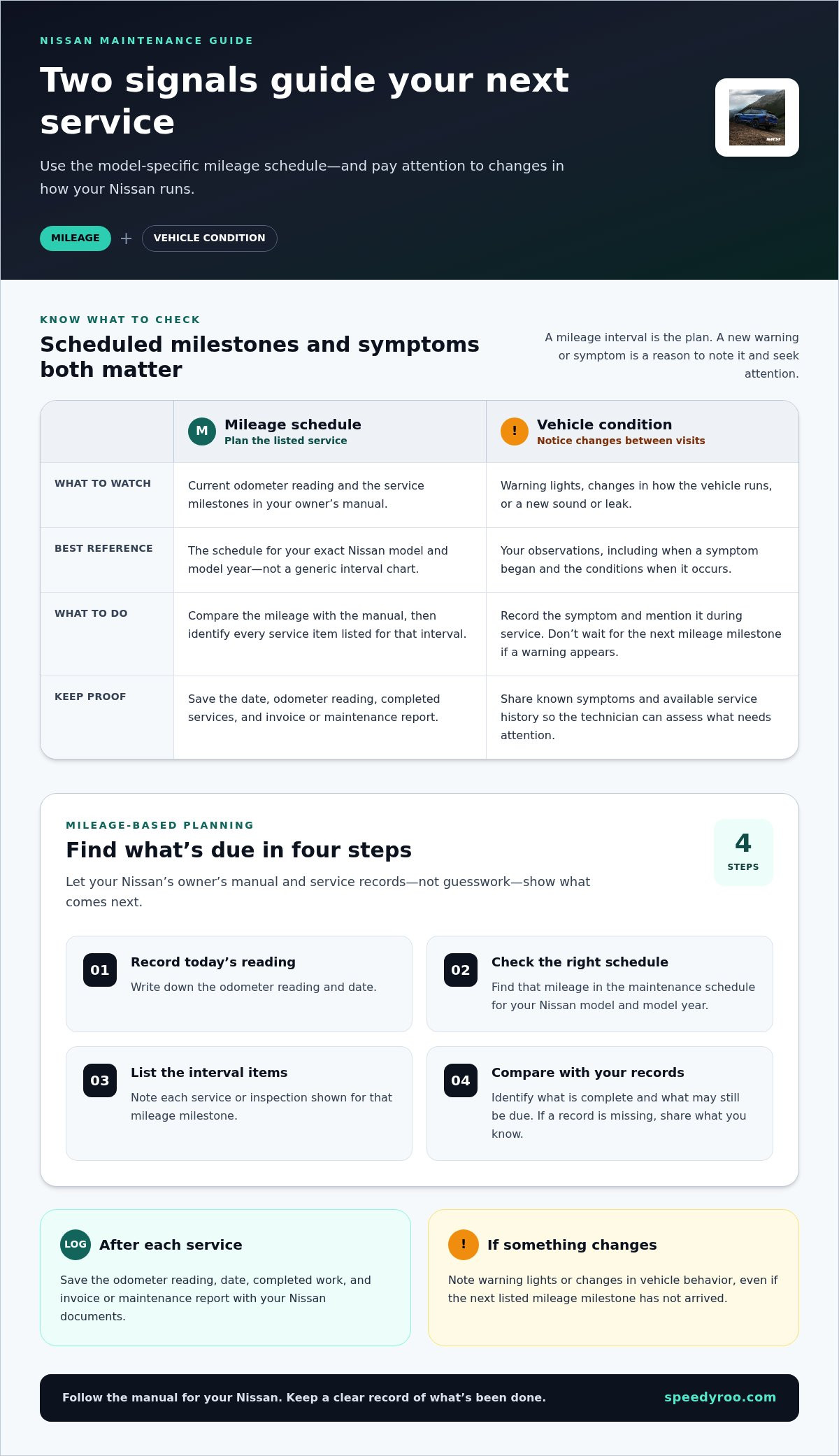
Your Nissan’s odometer helps show when scheduled maintenance is due. Start with the maintenance schedule in the owner’s manual for your exact model and model year. Find the current mileage and compare it with the listed service milestones. The manual is your guide; a generic interval chart may not match your vehicle’s engine or configuration.
Use this process to plan the next visit:
- Write down the odometer reading and date.
- Locate that mileage in your Nissan maintenance schedule.
- List each service item shown for that interval.
- Compare the list with your service records to identify completed work.
Different milestones may call for different combinations of inspections and maintenance. One visit may focus on routine checks, while a later interval may include specific component inspections or fluid-related service. Follow the entries in your manual rather than assuming the same tasks repeat at every visit. If a record is missing, tell the technician what you do know, such as the last recorded mileage or service date. That context helps distinguish completed work from items still due.
Keep a simple record after each appointment. Note the odometer reading, date, and completed services, then save the invoice or maintenance report with your Nissan documents. If you’re preparing for a mileage milestone, for example, those records can show whether an item was recently completed or remains outstanding. This makes it easier to track visits when the next interval includes several tasks.
Don’t treat mileage as the only signal. If a warning light appears or you notice a change in how your Nissan runs, record the symptom and when it began. Those details can help guide an inspection, even if the next listed milestone hasn’t arrived. For help matching scheduled work to your records, Nissan service and repair can address maintenance needs alongside vehicle concerns.
Factory-scheduled Nissan maintenance
Factory-scheduled service follows the maintenance schedule for your Nissan’s model and year. The aim is to complete the listed inspections and services while keeping a clear record of the work.
Technicians and Genuine Parts
Denver service centers differ in technician training and parts sourcing, so neither is universal. Ask whether the technician has Nissan factory training and whether the estimate specifies genuine Nissan parts or another part type. Review the service description before approving work, then compare the completed invoice with the estimate. Clear documentation identifies which parts and services were used on your vehicle.
Warranty or prepaid maintenance coverage depends on the written terms and the service involved. A warranty may cover eligible repairs under its conditions, while a prepaid plan covers only the maintenance listed in the agreement. Review your Nissan coverage documents for exclusions, required service records, and eligible work before assuming a scheduled visit is covered.
Scheduling and Information to Bring
When scheduling service in the Denver area, provide your Nissan’s model year, model, current odometer reading, and vehicle identification number (VIN). Bring maintenance records, warranty or prepaid-plan documents, and a list of warning lights or changes you’ve noticed. For example, note when a sound began or the driving conditions when it occurs. These details help the service team match your visit to the right schedule.
Skipping a listed service can leave inspections or maintenance tasks overdue. Wear or developing concerns may go unnoticed, and missing records can make it harder to tell what work has already been done. If an interval has passed, share the current mileage and any available service history. The schedule and your vehicle’s condition help identify which items need attention first.
Before approving additional work, ask why each item is recommended and how it relates to the Nissan maintenance schedule. A clear explanation distinguishes scheduled tasks from repairs prompted by an inspection or symptom. Keep the final invoice with your service records as a useful reference for the next mileage interval.
How does Nissan’s maintenance schedule vary by model, engine, and driving conditions?
A Nissan’s maintenance schedule can vary by model, model year, and engine. The owner’s manual provides the applicable instructions for your specific vehicle. Use its model-specific schedule instead of applying another Nissan’s service intervals. Even familiar models, such as the Rogue and Altima, can have different configurations and maintenance requirements.
Engine and drivetrain details matter because the schedule is written for a particular vehicle setup. Check the manual for your Nissan’s model year, engine, and any listed drivetrain information. If you’re unsure which schedule applies, use the vehicle identification number (VIN) and registration details to identify the exact vehicle before planning service. Don’t assume the engine type or configuration from the model name alone.
Driving patterns can help explain why the manual may distinguish normal use from more demanding conditions. Frequent short trips, repeated stop-and-go traffic, extended idling, or regular travel on rough roads can place different demands on a vehicle than steady highway driving. Describe how you use your Nissan, then follow the manual to determine whether that pattern changes its maintenance guidance.
Before comparing your driving habits with the schedule, gather these details:
- Your Nissan’s model year, model, engine, and drivetrain details.
- Current mileage and the services recorded in prior maintenance documents.
- Typical trips, including short drives, traffic, idling, and rough-road use.
Then match those details to the relevant schedule in the owner’s manual. If the manual gives different guidance for particular driving conditions, follow the applicable instructions and note which services are due. For example, describe a regular short-trip routine instead of simply saying you drive “normally.” Specific context makes a maintenance discussion more useful without replacing Nissan’s model-specific guidance with a generic interval.
If your records, vehicle configuration, or driving pattern make the next step unclear, arrange a Nissan maintenance review. Schedule Nissan service and repair to discuss the maintenance needs of your vehicle.
Speedy Roo Motorsports & Repair: Subaru Repair and Service
Speedy Roo Motorsports & Repair provides Nissan service and repair for drivers planning scheduled maintenance or addressing a vehicle concern. Bring your Nissan’s current mileage, maintenance records, and owner’s manual so the service discussion can focus on your model’s schedule and documented history.
Consider scheduling service when a mileage interval is due, your records show an unfinished maintenance item, or a warning light or new symptom needs attention. Sharing when a concern began and what you were doing when it occurred can help explain what you’ve noticed. The goal is to connect the factory schedule with your Nissan’s actual service history, rather than rely on a generic checklist.
Contact Speedy Roo Motorsports & Repair to discuss your Nissan’s maintenance needs.
Make Your Next Maintenance Step Count
Turn your maintenance notes into a useful plan for the road ahead. A record of completed work and upcoming needs can help you make informed decisions as your Nissan’s mileage changes. For Nissan factory scheduled maintenance in Denver, connect that plan to your vehicle’s service history so each visit has a clear starting point.
Speedy Roo Motorsports & Repair Inc provides Nissan service and repair, along with repair and service for Subaru, Toyota, and Honda. Bring your maintenance records and questions about your Nissan’s upcoming scheduled items to start a focused discussion about its needs.
Contact Speedy Roo Motorsports & Repair Inc to discuss your Nissan’s service. A thoughtful next step can help you move forward with greater confidence.
Frequently Asked Questions
What is Nissan’s factory-recommended maintenance schedule by mileage and time?
Nissan’s factory-recommended schedule depends on the vehicle’s model year and configuration, so consult the owner’s manual for mileage- and time-based guidance. Compare both entries with your current odometer reading and service history. For example, if the manual lists a calendar-based item but you’ve driven little, it can still help you determine whether that service is due.
What services are included in Nissan maintenance at 5,000, 10,000, and 30,000 miles?
The services listed at 5,000, 10,000, and 30,000 miles depend on your Nissan’s specific maintenance schedule; those mileages don’t establish one universal service list. Find each milestone in the owner’s manual and compare its items with your records. If you’re preparing for a visit, bring the manual or service history so completed work can be distinguished from outstanding scheduled tasks.