
A minor transmission symptom doesn’t automatically mean your old Honda is finished. If you’re asking whether it’s worth fixing your old Honda in Aurora, weigh the diagnosed problem against the car’s overall condition, safety, and likely usefulness after repair. A clearly identified, limited issue may make keeping the car practical, while repeated problems or significant wear can shift the decision.
It’s reasonable to hesitate before investing more in a car you’ve owned for years. First understand what the transmission is doing, whether the issue is isolated or part of a broader pattern, and how the Honda performs in other areas.
This guide explains how to weigh a repair decision, which safety concerns to consider, and why even minor transmission symptoms deserve a closer look before deciding whether to keep or replace your Honda.
Key Takeaways
- Judge a repair by the Honda’s overall condition and expected usefulness, not its age or mileage alone.
- Get a clear diagnosis before treating a minor transmission symptom as a reason to give up on the car.
- Include brakes and other safety-related problems in the keep-or-replace decision, alongside mechanical repairs.
- Use a Honda repair assessment to understand the issue and make a more informed decision about what to do next.
At what point will you give up fixing your old Honda?
Consider the diagnosis, the Honda’s condition, and how long you expect to keep driving it. For Aurora owners, the decision should account for the next repair as well as the car’s overall reliability and safety.
Diagnosis and Repair Experiences
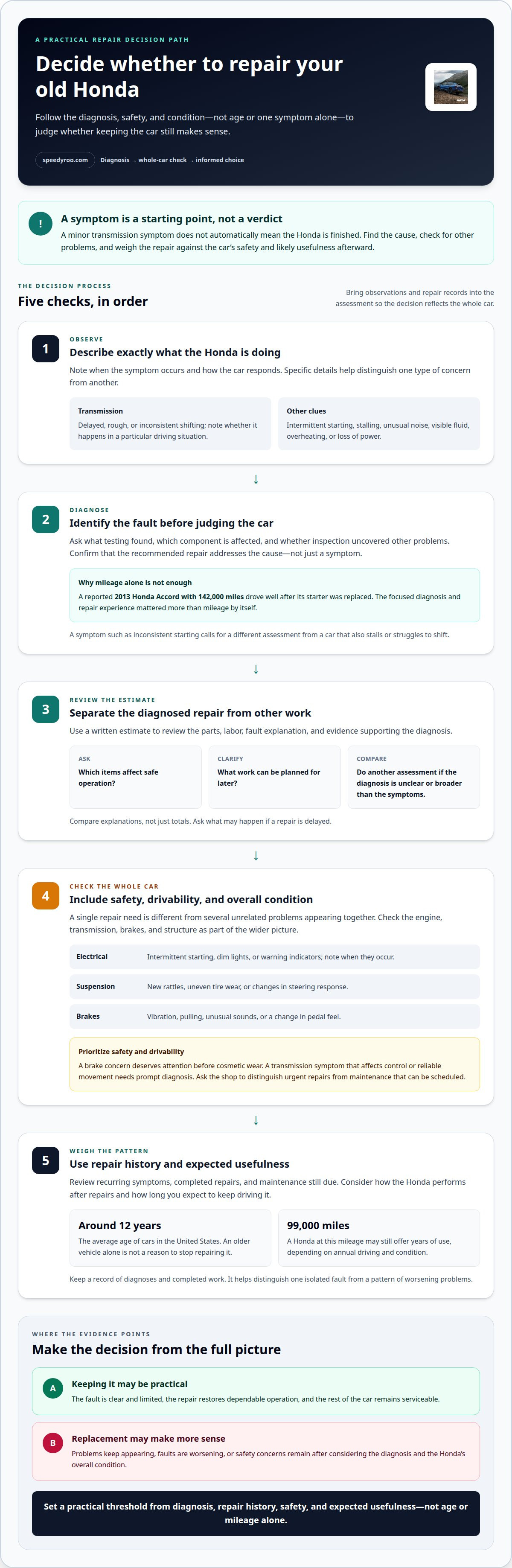
A repair symptom alone doesn’t reveal whether a Honda is nearing the end of its useful life. Look at what testing identifies, which component is affected, and whether other problems appear during inspection. For example, a 2013 Honda Accord with 142,000 miles was reported to drive well after its starter was replaced. That example shows why a focused diagnosis matters more than mileage alone.
Give the technician a clear description of the symptom, including when it occurs and how the car responds. A Honda that starts inconsistently, for example, needs a different assessment from one that also stalls or struggles to shift. Ask what the test results indicate and whether the recommended repair addresses the cause, not just a symptom.
Repair Estimates and Second Opinions
A written estimate helps distinguish the diagnosed repair from other recommended work. Review the parts, labor, and explanation of the fault, then ask which items affect safe operation and which can be planned for later. If the diagnosis is unclear or the proposed work seems broader than the symptoms, another assessment can help.
Compare the explanations, not just the totals. Ask each shop to identify the failed component, describe the evidence, and explain what may happen if the repair is delayed. A Honda with 99,000 miles may still offer years of use, depending on annual driving and condition. One estimate cannot answer whether keeping it makes sense without that wider picture.
DIY Work and Professional Repair
DIY work can make sense if you have the right tools, repair information, and experience for the specific task. Separate straightforward maintenance from work that requires diagnostic equipment or affects steering, braking, or transmission operation. A misdiagnosis can mean replacing a sound part while the original fault remains.
A Honda technician can assess symptoms alongside the vehicle’s service history and test results. Ask what evidence supports the diagnosis and how the proposed repair fits the car’s condition. If you do some work yourself, keep receipts and dated records so the technician can distinguish recent repairs from recurring problems.
Aurora Repair and Maintenance
For Honda repair and maintenance in Aurora, use the car’s records to build a complete picture before deciding. Note recurring symptoms, completed repairs, and maintenance that remains due. A diagnostic visit can connect those details to the current problem, while routine maintenance can help identify developing concerns before they affect drivability.
The average age of cars in the United States is around 12 years, so an older vehicle alone isn’t a reason to stop repairing it. Consider the Honda’s current condition, how it performs after repairs, and whether its maintenance history shows one isolated fault or a pattern. A well-documented Accord with one repair need presents a different decision from a car with several worsening problems.
Set a practical threshold based on the Honda’s condition, repair history, and expected usefulness. If a clear, limited repair restores dependable operation, keeping the car may suit your needs. If faults keep appearing or safety concerns remain, replacement may make more sense. Base the decision on diagnosis and evidence, not age alone.
Which repairs are most common and expensive on older Hondas?
Repair needs vary by model, maintenance history, and driving conditions. Start by grouping the concern: transmission behavior, engine performance, electrical faults, suspension wear, or braking. These categories help organize an inspection but don’t establish a diagnosis. A slipping gear, for example, calls for a different assessment from a warning light or worn suspension component.
Take transmission symptoms seriously, even when they seem minor. Note whether shifting feels delayed, rough, or inconsistent, and whether the symptom occurs in a particular driving situation. Share those details with the technician. A transmission concern may have a limited cause, while continued slipping or worsening shift quality may point to a more involved problem. Test results and the Honda’s overall condition matter more than the symptom’s name.
Engine and cooling concerns can also affect the decision to keep or repair the car. Record changes such as unusual engine noise, visible fluid, overheating, or loss of power. These observations can help a technician narrow the inspection. An oil spot beneath the car, for example, is a clue to investigate, not proof of a failed seal. Ask which component is responsible and whether the proposed work addresses the source.
- Electrical: Describe intermittent starting, dim lights, or warning indicators, including when each occurs.
- Suspension: Report new rattles, uneven tire wear, or changes in steering response.
- Brakes: Mention vibration, pulling, unusual sounds, or a change in pedal feel.
These examples are inspection prompts, not a claim that every older Honda develops the same faults. Prioritize repairs based on safety, drivability, and whether one fault could damage another component. A brake concern deserves attention before cosmetic wear; a transmission symptom that affects control or reliable movement needs prompt diagnosis. Ask the shop to distinguish urgent repairs from maintenance that can be scheduled.
Then compare the recommended work with the car’s condition beyond the immediate fault. If a Honda needs one isolated repair and its engine, transmission, brakes, and structure remain serviceable, that differs from several unrelated problems emerging together. Keep a written record of the diagnosis and completed work. For a focused Honda assessment in Aurora, Honda repair and service can help clarify which repairs address the diagnosed problem and which affect the decision to keep driving.
What safety problems should be checked before deciding to keep an old Honda?
Check safety systems before weighing an older Honda’s next repair against its usefulness. Start with the brakes, tires, steering, suspension, lights, and seat belts. A problem in any of these areas can affect whether the car is ready for regular driving. Note the symptoms and recent work, then ask for a focused inspection of the systems that concern you.
Begin with the brakes. Notice whether the car pulls to one side, vibrates during braking, makes unusual sounds, or has a changed pedal feel. One Honda Accord owner reported brake service in 2018 and 2019, illustrating why records matter: dates and repair details help show what was addressed and when. Check whether the current symptoms differ from those recorded visits, and have the cause diagnosed rather than assuming the earlier work is still sufficient.
Next, check the tires and steering response. Uneven tire wear, visible damage, or a Honda that drifts or feels difficult to control deserves attention. Tire wear can also point to alignment or suspension concerns, so note which tire is affected and whether the pattern repeats. During an inspection, ask how the tires, steering components, and suspension work together. A worn part can affect handling even when the engine runs smoothly.
Check visibility and occupant protection, too. Confirm that the headlights, brake lights, turn signals, and windshield wipers work as expected. Make sure seat belts latch and retract, and note any dashboard warning lights that remain on after starting. A failed brake light, for example, may not change how the Honda feels from the driver’s seat, but it still needs attention. Include these findings in the repair discussion.
- Record symptoms: Note when noises, pulling, warning lights, or braking changes occur.
- Review service history: Compare current concerns with prior Honda repair records.
- Prioritize by function: Address problems affecting braking, visibility, or control before cosmetic issues.
Use the inspection results to separate immediate safety repairs from other maintenance needs. A Honda with one identifiable issue and otherwise consistent operation presents a different decision from one with several unresolved problems affecting control or visibility. Ask which findings make the car unsafe to drive and what repair would restore the affected function. A clear explanation helps you decide whether to keep or replace the car based on its actual condition.
For a Honda safety concern in Aurora, arrange Honda repair and service to have the affected systems assessed.
Speedy Roo Motorsports & Repair: Subaru Repair and Service
Speedy Roo Motorsports & Repair helps Aurora drivers assess Honda repair needs and choose a practical next step. Its Honda Repair and Service addresses diagnosed mechanical problems and maintenance concerns, including issues affecting how an older Honda drives. Bring a clear description of the symptoms and relevant repair records to help guide the assessment.
A focused diagnosis can show whether a repair addresses an isolated fault or fits a broader pattern of wear. That information helps you weigh the Honda’s condition, safety, and expected usefulness without deciding by age alone. Speedy Roo also provides Subaru Repair and Service, Toyota Repair and Service, and Nissan Service and Repair.
For help with an older Honda, contact Speedy Roo Motorsports & Repair.
Make your next Honda decision with confidence
If you’re asking whether it’s worth fixing your old Honda in Aurora, start with a clear, evidence-based assessment. Bring the repair history and a concise description of what the car is doing, including changes in shifting, braking, or starting. This context helps the technician explain how the diagnosis relates to the Honda’s condition and your plans for continued driving.
Speedy Roo Motorsports & Repair Inc provides Honda Repair and Service, along with Subaru Repair and Service and Toyota Repair and Service. A focused discussion of your Honda’s needs can help turn uncertainty into a practical repair decision, without assuming that age alone settles the question.
Request a Honda repair assessment from Speedy Roo Motorsports & Repair Inc, and take the next step with a clearer understanding of your options.
Frequently Asked Questions
How much does it cost to diagnose and repair common problems on an old Honda?
Diagnostic and repair pricing depends on the fault, model year, parts required, and labor involved. Diagnosing a starter differs from tracing an intermittent transmission symptom, so a useful estimate describes the specific work rather than relying on a generic figure. Request an estimate that lists diagnostic work separately from any recommended repair before authorizing repairs.
How do repair costs compare with the car’s value and the cost of replacing it?
Compare the repair estimate with the Honda’s value in its current condition and after repair, then consider the cost and effort of finding replacement transportation. If you’re deciding whether it’s worth fixing your old Honda in Aurora, factor in likely near-term maintenance, safety, and whether the repair restores dependable use. A repair that exceeds resale value isn’t automatically a poor choice if keeping the Honda avoids replacing a vehicle you still need.
How can I estimate the remaining lifespan of an old Honda?
Estimate remaining use from the car’s condition and driving demands, not its odometer alone. A 2015 Honda Accord with 110,000 miles was reported to still have plenty of life, while some owners have kept Accords to 150,000 to 200,000 miles. Those are individual experiences, not a forecast. Review service records, rust, oil use, recurring faults, and how the Honda performs after repairs.
How do I get a reliable repair estimate and avoid unnecessary repairs?
Give the shop the VIN, model year, mileage, symptom timing, warning messages, and maintenance records. These details help avoid estimates based on incomplete assumptions. Request an itemized estimate that separates the diagnosed repair from additional recommendations, and agree that no extra work proceeds without your approval. Keep the estimate and invoice together to compare what you authorized with what was completed.
What are the costs and benefits of repairing, selling, or scrapping an old Honda?
To decide whether it’s worth fixing your old Honda in Aurora, compare the repair’s expected usefulness with the effort of selling or replacing the vehicle. Repairing keeps a familiar car in service, while selling may recover some value without taking on the work. Scrapping may suit a Honda with extensive damage or no practical repair path. Consider your transportation needs, safe drivability, and how much uncertainty you can accept.