
More horsepower starts with measured changes, not guesswork. Performance dyno tuning in Denver can help increase power by recording baseline output, guiding calibration adjustments, and measuring the results. The before-and-after dyno readings show how the vehicle’s output changed, rather than relying on a generic estimate.
Want stronger pulling power for towing, or a more responsive feel for everyday driving? The best tune depends on how you use your vehicle and what you want it to do. This guide explains what horsepower readings on a dyno can tell you, how tuning may affect fuel economy, and how tune levels can suit towing or daily driving. It also explains why Denver’s elevation of 5,280 feet is relevant when considering local performance tuning, so you can make a more informed decision about your vehicle’s setup.
Key Takeaways
- Set a clear horsepower goal around how you use your vehicle, then plan upgrades and tuning to support that purpose.
- Learn how baseline and post-tune dyno runs help measure changes in engine output instead of relying on estimates.
- Understand why fuel economy can shift after tuning and how driving habits and calibration goals influence the result.
- Compare tune approaches for towing and daily driving to choose a setup that balances usable power with your priorities.
I want more horsepower, can you help?
Yes. Start by defining whether you want stronger acceleration, better towing response, or a balance of both. Those goals help shape a tuning plan and give you a basis for comparing horsepower and torque before and after calibration.
Shop Equipment, Experience, and Specialties
Compare shops by the vehicles they tune, their dyno setup, and experience with your engine and modifications. Ask how they document baseline and post-tune horsepower and torque, then read reviews for details about communication and results. Cars, trucks, and motorcycles may require different equipment and tuning expertise, so choose a shop whose stated specialties match your vehicle. Denver’s elevation is 5,280 feet, which affects engine output and how readings should be interpreted.
Tuning Restrictions and Vehicle Impacts
Colorado emissions compliance matters when choosing a calibration. The U.S. Environmental Protection Agency describes aftermarket products that can affect performance or fuel economy by altering, bypassing, replacing, or disabling OEM-installed emissions-related design elements. A tune can also change engine operating demands, so reliability depends on the calibration and vehicle condition. Warranty coverage follows applicable terms; don’t assume a tune has no effect. Ask how the proposed changes address your vehicle’s intended use and emissions equipment.
Denver Dyno Tuning Costs
Dyno tuning costs depend on the vehicle, its modifications, the work required, and the time needed to calibrate and test it. A straightforward calibration differs from work that includes troubleshooting or multiple adjustments. When requesting an estimate, ask what it covers, such as baseline testing, calibration changes, and post-tune measurements, so you can understand the scope rather than focus on an unexplained total.
Appointment and Pre-Tuning Preparation
Appointment requirements and pre-tuning inspections vary by shop; planning a session allows the tuner to account for the vehicle and requested work. Before the visit, gather details about modifications, fuel type, warning lights, and recent repairs. Bring any tuning or service records you have, and arrive with enough fuel for the planned testing. A pre-tune inspection can identify issues that may affect safe, useful dyno results. Ask how the shop handles cars, trucks, or motorcycles like yours.
Baseline and post-tune dynamometer testing
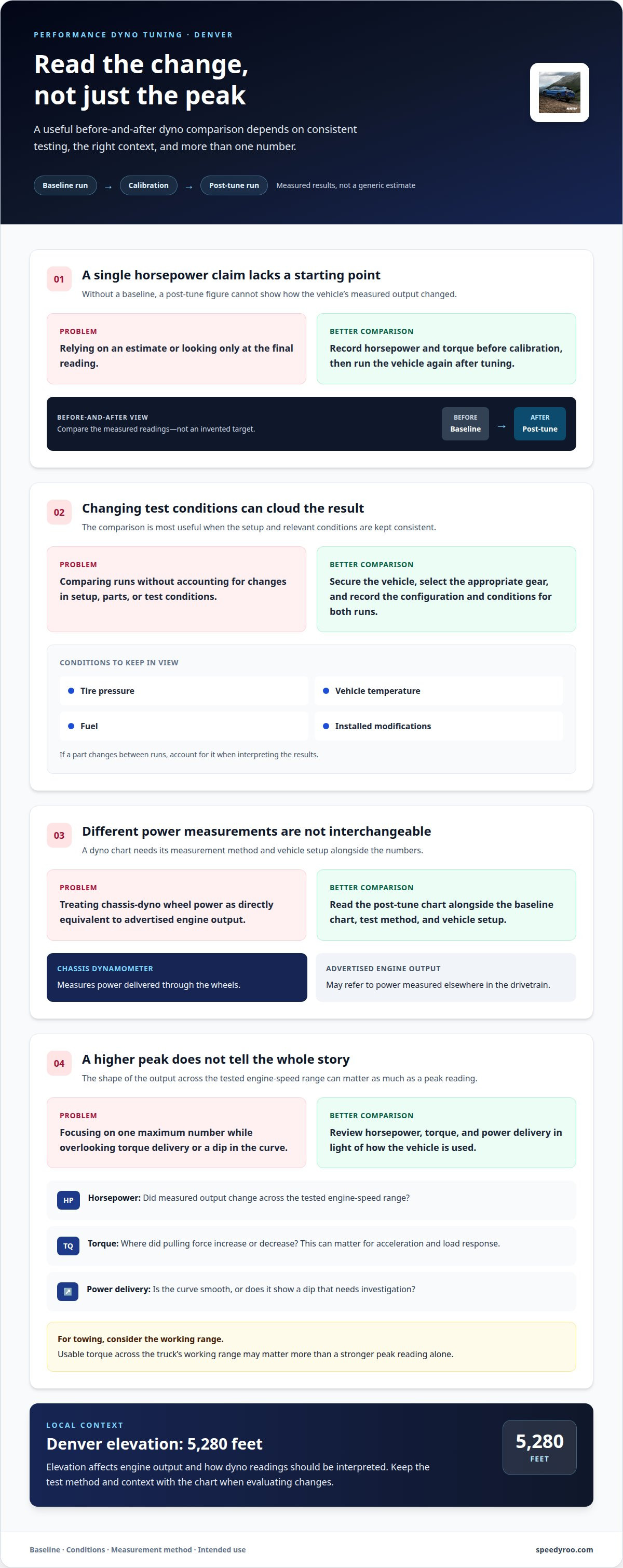
A baseline dyno run records how the vehicle performs before calibration changes. After tuning, another run provides a direct comparison of horsepower and torque under dyno conditions. The difference shows what changed, while both readings give the tuner information to refine the calibration.
Before-and-after runs are most useful when they use a consistent setup. The tuner secures the vehicle, selects the appropriate gear, and records the configuration and test conditions. Tire pressure, vehicle temperature, fuel, and installed modifications can affect readings, so keeping relevant conditions consistent supports a fair comparison. If a part changes between runs, account for that when interpreting the results.
Dyno figures need context. A chassis dynamometer measures power delivered through the wheels, while advertised engine output may refer to power measured elsewhere in the drivetrain. Those figures are not directly interchangeable. Read a post-tune chart alongside the baseline chart, test method, and vehicle setup, not as a standalone horsepower claim.
Here’s what a useful comparison can show:
- Horsepower: Whether measured output changed across the tested engine-speed range.
- Torque: Where pulling force increased or decreased, which can matter for acceleration and load response.
- Power delivery: Whether the curve is smooth or shows a dip that needs investigation.
A higher peak doesn’t tell the whole story. For example, a truck used for towing may benefit from usable torque across its working range, not only a stronger peak reading. The tuner can review the charts, explain the changes, and adjust the calibration based on the intended use. For a closer look at the dyno tuning process, focus on how the baseline and final results are compared.
Fuel economy effects
Fuel economy after tuning depends on calibration goals, engine condition, load, and driving habits. A diesel setup optimized for steady highway cruising behaves differently from one designed for frequent towing or quick acceleration. Diesel dyno tuning typically improves highway-cruising fuel economy by 2-4 MPG. That reported outcome applies to highway cruising, not every route or driving pattern.
Calibration changes can affect how an engine delivers torque and responds to the accelerator. A tune that supports steady cruising may allow the driver to maintain speed with less throttle input. Repeated hard acceleration, higher speeds, heavy cargo, or towing can increase fuel use and offset potential savings. A more powerful calibration isn’t automatically more economical.
For a meaningful comparison, record fuel use across similar driving conditions before and after tuning. Use the same commute or highway route, note whether the vehicle carries cargo, and account for towing. A short stop-and-go trip won’t provide the same comparison as sustained highway travel. These details help separate the effect of calibration from changes in driving patterns.
- Highway use: Steady speed gives a clearer view of cruising efficiency.
- Towing: Trailer weight and terrain affect engine load and fuel demand.
- Driving style: Frequent acceleration can consume fuel despite added torque.
- Vehicle condition: Engine or maintenance issues can influence fuel use independently of tuning.
Diesel applications such as the 6.7L Cummins, 6.7L Power Stroke, and 6.6L Duramax require goals suited to their use. A highway-driven truck and a regularly loaded work truck place different demands on calibration. Exhaust gas temperatures can be one factor to consider when assessing how an engine performs under load. Discussing fuel economy alongside power and load helps shape a tune around real driving priorities.
Multiple tune levels for towing and daily driving
Choose a calibration based on the vehicle’s workload, not peak horsepower alone. Towing calls for predictable response under load, while daily driving may prioritize smooth throttle and usable power.
Dyno tuning for turbocharged, supercharged, and naturally aspirated engines depends on each engine’s air-delivery system and existing modifications. A turbocharged setup needs calibration suited to its boost system; a supercharged engine has different airflow demands. Naturally aspirated tuning works with the engine’s existing intake and exhaust flow.
“Tune levels” don’t follow one universal scale across vehicles. A level label is useful only when its intended use and calibration changes are clearly explained. Ask what each setting prioritizes, such as towing response, everyday drivability, or higher performance. The engine, fuel, modifications, and load all shape a suitable calibration.
- Towing: Focus on controlled power delivery and response while carrying or pulling a load.
- Daily driving: Prioritize predictable throttle behavior and power that feels useful in regular traffic.
- Performance use: Match the calibration to the engine setup and the driver’s specific goal.
Before tuning, define the vehicle’s most common job. A truck that regularly tows, for example, needs different priorities from a car used mainly for commuting. The tuning plan can then reflect that use, with results assessed on a dynamometer. If the vehicle’s workload changes, review whether the tune still fits.
In Denver, performance dyno tuning can include baseline testing, calibration adjustments, and post-tune measurements. The right approach depends on the vehicle and its setup. Share whether you drive a turbocharged, supercharged, or naturally aspirated engine, along with its modifications and towing needs. This helps connect the tuning plan to real-world use instead of a generic stage name or peak output alone.
Speedy Roo Motorsports & Repair: Aurora Dyno Tuning
Speedy Roo Motorsports & Repair offers Aurora Dyno Tuning for drivers seeking measured performance changes. Consider the service when you want to discuss a horsepower goal, compare dyno results, or explore calibration suited to towing or daily driving.
Share how you use your vehicle and what modifications it has. That context keeps the tuning discussion focused on your priorities, not just a peak number. Subaru, Toyota, and Honda owners can also get brand-specific repair and service when maintenance needs attention alongside performance goals.
Ready to discuss your vehicle and tuning goals? Contact Speedy Roo Motorsports & Repair.
Make Your Next Performance Step Deliberate
A performance dyno tuning plan in Denver works best as part of a longer-term approach to vehicle ownership. A vehicle’s role can change: a commuter may later tow, or new modifications may affect engine behavior. Treat those changes as a reason to review whether the current calibration still matches how you use the vehicle.
Before taking the next step, decide what you want to improve and what you want to preserve, such as smooth everyday response or confidence under load. This gives the tuning discussion a practical direction and connects performance goals to real use. Clear priorities also make it easier to discuss potential trade-offs.
When you’re ready to explore a tuning plan for your vehicle, contact Speedy Roo Motorsports & Repair Inc. A thoughtful conversation is a good place to begin, and you can move forward with a clearer sense of what suits your goals.
Frequently Asked Questions
Why Choose Professional Dyno Tuning?
Professional dyno tuning tailors engine calibration to a specific vehicle instead of relying on a generic file. This matters when parts, engine condition, or driving needs differ from a standard setup. For example, a modified vehicle that hesitates under acceleration may need a different adjustment from one seeking smoother throttle response. A tuner can interpret the vehicle’s behavior and explain the calibration choices.
How do Denver dyno tuning shops compare by equipment, experience, and customer reviews?
When choosing a dyno tuning shop, compare the vehicles it tunes, its dyno setup, and its experience with your engine and modifications. Ask how it records baseline and post-tune horsepower and torque. Reviews can also offer insight into communication and results.
How does Denver’s altitude affect dyno tuning and engine performance?
Denver’s elevation of 5,280 feet affects engine output and how dyno readings should be interpreted. Compare readings using the test method and vehicle setup as context.