
What Subaru Outback service Denver owners need depends on more than the next mileage reminder. Your Outback’s model year, mileage, maintenance history, and daily driving all matter. Colorado’s temperature swings, winter-treated roads, and high elevation can also provide useful context when deciding what deserves attention.
It can be hard to tell whether a service item applies to your Outback or whether a new noise or warning light needs diagnosis rather than routine maintenance. This guide explains how to approach maintenance by model year and mileage, what Colorado driving conditions to mention, and how to prepare for a service visit. Speedy Roo Motorsports & Repair Inc is an independent Subaru specialist in Aurora, serving Outback owners across the Denver area with diagnostics and clear explanations. The goal is to help you make informed decisions about your vehicle’s care.
Key Takeaways
- Outback service should reflect your model year, mileage, maintenance history, and vehicle condition, not a one-size-fits-all checklist.
- Colorado weather, elevation, winter roads, and trip patterns are useful context when discussing maintenance needs.
- For Subaru Outback service Denver owners can start with the owner’s manual, service records, and a clear note of any new symptoms.
- A service visit typically moves from discussing concerns and reviewing history to inspection, diagnosis if needed, and an explanation of findings.
- Speedy Roo has focused on Subaru repair since 2002, serving Denver-area Outback owners from its Aurora shop.
Subaru Outback Service in Denver: What Does Your Vehicle Need?
Useful Outback service recommendations start with the vehicle, not a generic checklist. Your model year, mileage, maintenance history, and current symptoms help distinguish scheduled maintenance from a concern that needs diagnosis. With those details, the next step can be based on the vehicle’s requirements and condition rather than guesswork.
Subaru Outback service Denver drivers seek can include scheduled maintenance, inspections, diagnostics, and mechanical repairs. An inspection can identify areas that deserve attention, but it does not automatically mean a repair is necessary.
A service inspection checks the vehicle’s condition; a repair diagnosis uses evidence to identify the cause of a specific problem. Keeping those steps distinct helps you understand what was observed and why a repair may be recommended. You can review the findings before deciding how to proceed.
How model year and service history shape Outback maintenance
Before booking, note your Outback’s model year and mileage, then gather recent service records if available. Include dates and mileage for previous maintenance, along with receipts or notes about work already completed. This history can help prevent unnecessary repeat work and clarify what may be coming due.
Outback generations can differ in powertrain and maintenance details. The Subaru Outback history and overview provides background on the model’s generations, but the schedule for your specific vehicle should come from the applicable Subaru owner documentation. Use that guidance alongside the car’s condition and service history rather than assuming one interval applies to every Outback.
Routine maintenance or repair: how to tell the difference
Routine service follows the schedule for your vehicle and may include checks or replacement work specified for its model and mileage. A new warning light, unusual noise, vibration, or change in acceleration or handling is different. These symptoms call for diagnosis, not an assumption that a particular component has failed.
When describing a concern, note when it started, whether it happens consistently, and what conditions bring it on. For example, record whether a sound occurs during startup, braking, or turning. These observations help direct an inspection but do not prove the cause. Testing and inspection help narrow down what is happening.
Bring your records and describe any changes you have noticed. A review can separate routine work from concerns that need further diagnosis or could be planned for a future visit. That model-aware approach keeps the service discussion focused on your Outback.
What Happens During a Subaru Outback Service Visit?
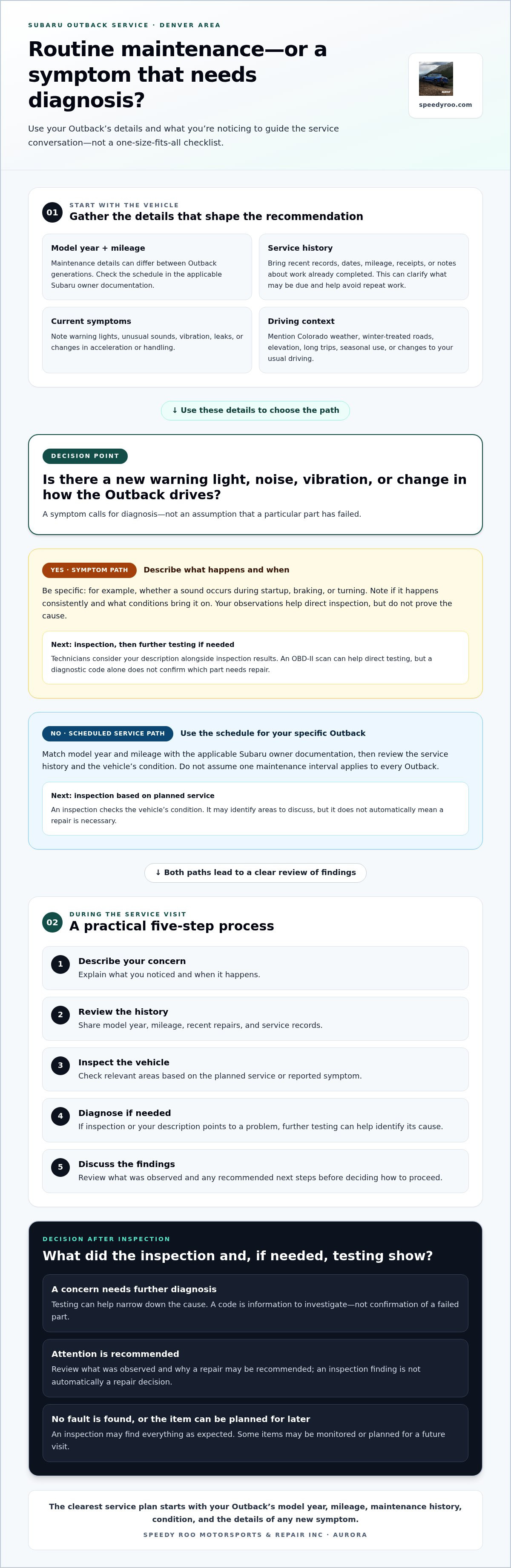
Whether you come in for planned maintenance or a new concern, a service visit should give you a clearer picture of your Outback. For Subaru Outback service Denver drivers can expect a practical process: describe what you have noticed, review the vehicle’s history, inspect it, investigate symptoms if needed, and discuss the findings. An inspection may confirm that everything looks as expected; not every visit uncovers a fault or requires a repair.
- Describe your concern. Explain what you have noticed and when it happens.
- Review the history. Share the Outback’s model year, mileage, recent repairs, and service records.
- Inspect the vehicle. The technician checks relevant areas based on the planned service or reported symptom.
- Diagnose if needed. If the inspection or your description points to a problem, further testing can help identify its cause.
- Discuss the findings. You’ll receive an explanation of what was observed and any recommended next steps.
What information should you share when booking?
Make a short note of warning lights, sounds, leaks, or changes in handling. Include when each occurs, such as during a cold start, while braking, or on a particular kind of trip. Share the Outback’s model year and mileage, along with recent service or repair records. Long trips, seasonal use, or a change in your usual driving can also provide useful context.
Specific observations are more helpful than a general description. Instead of “there’s a noise,” note that it happens while turning at low speed or after the car has been parked overnight. You do not need to identify a failed part; describe what you experience in your own words.
How diagnostics turn symptoms into a repair plan
Technicians consider your description alongside inspection results and, when appropriate, diagnostic test results. An OBD-II scan tool retrieves information from the vehicle’s onboard systems and can help direct further testing. It is one part of diagnosis, not a substitute for assessing the vehicle and its symptoms.
A diagnostic code points to information worth investigating; by itself, it doesn’t confirm which part needs repair. Careful diagnosis helps distinguish a possible cause from a confirmed fault and avoids basing a repair recommendation on a code alone.
Clear findings help you weigh priorities. A technician can explain what needs attention, what requires more testing, and what may be monitored or planned for later. Speedy Roo Motorsports & Repair Inc provides Subaru repair in Aurora, serving Outback owners across the Denver area. You can share your Outback’s service needs with our team to start the conversation with the details that matter.
Denver Driving and Subaru Outback Service: What Should Owners Consider?
Colorado driving provides useful context for a service conversation, but it does not create one maintenance schedule for every Outback. Cold starts, sharp temperature changes, elevation, winter road treatment, and a mix of short errands and longer drives may all be relevant. Your model year, owner’s manual, service history, and inspection findings should guide recommendations for your vehicle.
For Subaru Outback service Denver owners can help the technician build a clearer picture by describing how and where they drive. A vehicle used mostly for short trips has a different pattern of use from one that regularly makes longer highway journeys or travels on rougher roads. Mention seasonal changes, especially if you have noticed a new symptom in colder weather.
How winter and changing road conditions affect service planning
Pay attention to changes during winter, but do not assume a repair is automatically due. Tell the technician if your Outback starts differently in cold weather, develops an unusual noise, or displays a new warning indicator. Before a visit, you can also look for visible tire wear, damaged wipers, lights that are not working, or fluid spots where the vehicle is parked.
These observations can help focus the inspection. The season alone should not determine a repair recommendation; the vehicle’s condition and inspection findings should guide the discussion. If a change occurs only on cold mornings or after driving through winter conditions, include that timing when describing it.
- Cold starts: Note changes in starting behavior and whether they happen consistently.
- Road exposure: Mention frequent winter driving, rough roads, or a change in your usual routes.
- Visible concerns: Describe tire, wiper, lighting, or fluid issues you have observed without trying to diagnose their cause.
Why AWD and tire condition belong in the same conversation
Tire condition matters when discussing service for an all-wheel-drive vehicle. Tire wear, tire type, and whether all four tires match are useful points to review together. Do not assume a single tread-depth number applies to every Outback; follow the guidance for your model and have the actual condition assessed.
Share details about recent tire replacements or rotations, including whether one tire was replaced separately, and mention any uneven wear. That history helps technicians consider tire condition alongside other AWD concerns. A Subaru AWD service assessment in Aurora can take the vehicle’s condition and service history into account rather than treating a symptom in isolation.
Before your visit, note changes in starting, handling, sounds, or warning indicators, along with when they occur. Those details connect Colorado driving conditions to what your Outback is doing. Inspection findings and model-year guidance can then shape a practical plan without relying on a blanket seasonal interval.
When Should You Schedule Subaru Outback Service Near Denver?
A simple sequence can make service planning easier: check the owner’s manual, review your records, note any symptoms, then arrange maintenance or an inspection. The schedule helps you plan routine work, while a change in how the Outback starts, stops, or drives may need attention outside that schedule.
For Subaru Outback service Denver owners should use the maintenance schedule for their vehicle’s model year, not a general interval applied to every generation. Time-based items matter alongside mileage, and previous service records show what has already been completed. If your records are incomplete, share what you know; even partial history provides useful context.
Use the maintenance schedule without overlooking vehicle condition
Check the owner’s manual for the schedule that applies to your model year, then compare it with your mileage and past service dates. This is a useful starting point for routine planning, not a substitute for considering how the vehicle performs now. Service history and inspection findings can clarify what is due and what needs a closer look.
Colorado driving adds context, but it does not set one maintenance interval for every Outback. Consider Subaru maintenance guidance for Colorado drivers alongside your model-year documentation and the vehicle’s condition. Keep records of completed work and bring them to the visit so recommendations reflect the Outback in front of the technician.
Which Outback symptoms deserve prompt attention?
Do not wait for a routine service date if a new warning light appears, the vehicle indicates overheating, braking feels different, or drivability changes suddenly. These signs can have different causes, so avoid guessing at a failed part. If a warning indicates immediate risk, stop safely and follow the instructions in your owner’s manual rather than continuing to drive.
For less sudden but worsening changes, arrange an assessment and explain what you have observed. Note when the symptom began, whether it happens every time, and whether it is becoming more frequent or severe. Those details help direct the inspection but do not replace diagnosis.
- For planned maintenance: Compare the manual with mileage, dates, and service records.
- For a new symptom: Record what changed, when it happens, and whether it’s getting worse.
- For an immediate-risk warning: Stop safely and follow the owner’s manual guidance.
With your records and symptom notes ready, the service discussion can focus on the next step, whether that is scheduled maintenance or diagnosis. If you are unsure how to prioritize a concern, talk with the Speedy Roo team about your Outback’s service needs.
Subaru Outback Service in Denver with Speedy Roo
Outback service starts with a clear understanding of the vehicle and the reason for the visit. Speedy Roo Motorsports & Repair Inc is an independent Japanese-vehicle repair shop in Aurora, serving drivers in Denver, Centennial, Parker, and Lone Tree. Subaru repair and service is the shop’s primary focus, and the team has worked with Japanese-vehicle owners since 2002.
Whether you are planning routine maintenance or trying to understand a new symptom, the next steps should be clear. Careful inspection and methodical diagnostics help distinguish what has been observed from what still needs investigation. The team explains findings and recommendations so you can make an informed decision.
Why Denver-area Outback owners choose an independent Subaru specialist
A Japanese-vehicle repair focus brings relevant experience to Subaru maintenance and repair. Each Outback still needs to be assessed on its own: model year, mileage, service records, and current condition all shape the work that makes sense. Familiarity with Subaru vehicles helps keep the discussion centered on the car rather than a generic checklist.
Speedy Roo is based in Aurora and serves Outback owners across the Denver area. For drivers looking for Subaru Outback service Denver has an independent specialist option nearby. The process is grounded in inspection, diagnosis when needed, and a clear explanation of findings. Recommendations should follow what the technician finds, since no two vehicles have the same history.
How to take the next step with Speedy Roo
A few details can make the first service conversation more focused. Before you get in touch, gather:
- Your Outback’s model year and current mileage.
- Available service records and a note of recent repairs or maintenance.
- A concise description of any symptom, including when it started, how often it occurs, and whether it’s changing.
- Any relevant driving context, such as recent seasonal use or a change in your usual trips.
You do not need to know what part might be causing a symptom. A straightforward description of what you have noticed is a useful starting point. The team can use those details to begin a focused conversation about scheduled service, an inspection, or a concern that may need diagnosis. If the vehicle shows a warning that indicates immediate risk, follow the owner’s manual guidance and prioritize safety.
Ready to discuss maintenance or a symptom with an independent Subaru specialist? Schedule Subaru Outback service with Speedy Roo and share the details that will help start the conversation.
Make Your Next Service Visit a Useful Starting Point
Your next maintenance visit can do more than address what is due today. Use it to establish a clear baseline for your Outback’s care. A record of the vehicle’s condition and completed work makes future changes easier to discuss and keeps decisions connected to its history rather than memory or guesswork.
That steady approach is useful when planning Subaru Outback service Denver drivers can rely on over time. You do not need to arrive with a diagnosis or a long list of questions. Start with what you have noticed and what you want to understand. A straightforward conversation can turn uncertainty into a practical next step, whether that means routine care or a closer look at a concern.
Schedule Subaru Outback service with Speedy Roo and take the next step toward informed, consistent care. A plan built around your vehicle makes its needs easier to manage.
Frequently Asked Questions
How often should a Subaru Outback be serviced in Colorado?
Subaru’s general recommendation is every 6,000 miles or six months, whichever comes first, but your Outback’s applicable owner’s manual should guide its schedule. Colorado driving can involve short trips, dusty roads, or temperature extremes, which may fit Subaru’s severe-driving guidance. Check the severe-use schedule in your manual rather than assuming every local driver needs the same interval. Keep dates and mileage for completed services so upcoming items are easier to track.
Can an independent shop service a Subaru Outback?
Yes. An independent shop can provide Subaru maintenance, diagnostics, and repairs. Speedy Roo Motorsports & Repair Inc is an independent Japanese-vehicle repair facility serving owners in Aurora, Denver, Centennial, Parker, and Lone Tree. Share your Outback’s model year and the work it needs, and bring any maintenance records you have, especially if the vehicle has changed owners.
Is it safe to drive my Outback with the check engine light on?
It depends on the warning and how the vehicle is behaving, so a check engine light alone cannot establish whether driving is safe. Read the owner’s manual for the indicator, and pay attention to changes such as shaking, loss of power, unusual smells, or overheating. If the manual indicates immediate risk or the vehicle’s behavior makes driving unsafe, stop in a safe place and follow its instructions. Arrange diagnosis rather than guessing at the cause.
What should I bring to a Subaru Outback service appointment?
Bring the Outback’s model year, current mileage, and any service records or receipts you can find. A short written note can also help: describe the concern, when it happens, and whether it has changed. If another shop recently scanned a warning light, bring the scan results, but do not treat a code as a confirmed diagnosis. These details help make the initial service discussion more specific for drivers in Aurora, Denver, Centennial, Parker, and Lone Tree.
Does Denver’s altitude affect Subaru Outback maintenance?
Yes, altitude can affect how an engine performs, and tire pressure can fluctuate with changing conditions. That does not mean every Outback needs a special universal maintenance interval. Follow the schedule for your model year and discuss any change in performance or tire-pressure readings during service. If you travel between Denver and lower elevations, mention where you noticed a difference; that context can help a technician assess the concern alongside the vehicle’s condition.
Why does matching tire condition matter on a Subaru Outback?
The Outback’s all-wheel-drive system depends on all four tires having very similar tread depth; mismatched tires can contribute to premature drivetrain wear. If you replace a tire, tell the technician whether it was replaced alone or with others, and mention any uneven wear. Tire size and specification also matter, so use the guidance for your particular Outback instead of relying on a general tread-depth threshold.
How do I know whether my Outback needs maintenance or a repair?
Maintenance follows the applicable schedule, while a new noise, warning light, leak, or change in braking or handling is a reason to investigate. A service reminder or upcoming interval points toward scheduled care; a new symptom calls for diagnosis to determine its cause. For example, a vibration that appears only during braking is useful information, but it does not identify the failed part. Describe the change and let inspection guide the next step.