
Imagine you’re descending a steep mountain pass when a sudden, high-pitched squeal pierces the cabin of your Honda. It’s a moment of instant anxiety that every Colorado driver wants to avoid; yet many people wait until a small noise becomes a major safety concern. You deserve to feel confident in your vehicle’s stopping power without the fear of being overcharged or misunderstood. Finding reliable Honda brake repair Aurora drivers can trust starts with understanding the specific needs of your vehicle before you even walk into a shop.
We know that our local climate, with its rapid temperature swings and heavy road salt, puts unique stress on your braking system. This article provides an expert-led maintenance checklist designed to help you troubleshoot noises and identify wear signs early. You’ll learn how to navigate common issues, such as the June 2025 brake pedal recall affecting certain Pilot models, and why the standard 15,000-mile inspection is critical for your safety. We’ll also explain how Colorado weather affects your rotors and fluid. By the end of this guide, you’ll have the knowledge to protect your car and your peace of mind on every mountain road.
Key Takeaways
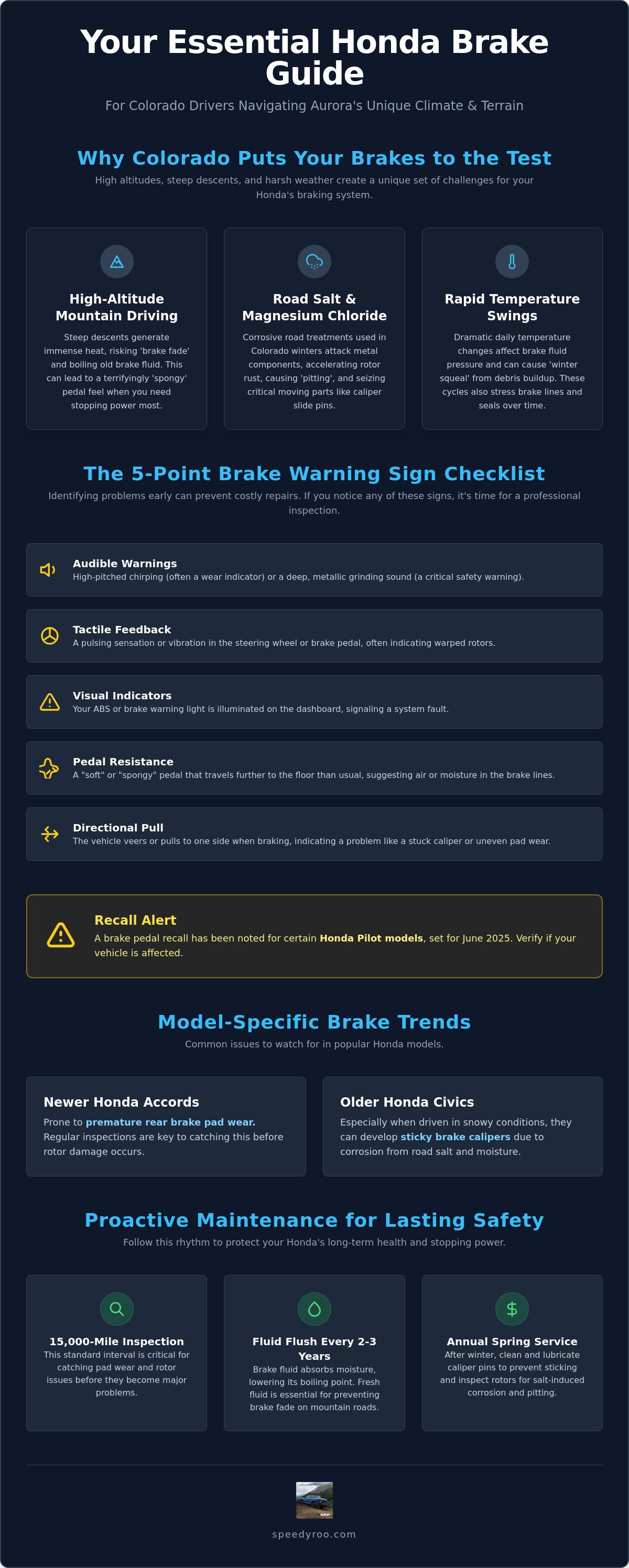
- Understand how high-altitude mountain descents and local road salt create unique maintenance challenges for your Honda’s braking system.
- Learn to identify critical warning signs, from high-pitched chirping sounds to vibrations in your steering wheel, before they lead to costly repairs.
- Discover why a specialized approach to Honda brake repair Aurora ensures your vehicle’s safety features, like Honda Sensing, remain perfectly calibrated.
- Identify model-specific trends, such as premature rear brake pad wear in newer Accords or sticky calipers common in older Civics driven in snowy conditions.
- Establish a proactive maintenance rhythm, including fluid flushes every two to three years, to protect your vehicle’s long-term health and stopping power.
Why Honda Brake Care is Unique in the Aurora Climate
Living in the Denver metro area offers incredible access to the mountains, but that beauty comes with a hidden cost for your vehicle’s stopping system. Aurora drivers face a combination of high-altitude physics and extreme weather that most vehicle manuals don’t fully address. When seeking Honda brake repair Aurora residents often find that standard, one-size-fits-all components simply can’t handle the thermal stress of a 3,000-foot descent from the Eisenhower Tunnel back down to the plains. Understanding how brake systems work in these conditions is the first step toward maintaining a safe vehicle.
Honda engineering is world-class, but its sophisticated Anti-lock Braking Systems (ABS) and Electronic Brake Distribution (EBD) require specialized Japanese import knowledge. These systems are calibrated for specific friction levels. Using generic, low-grade brake pads often leads to “glazing,” where the pad surface becomes smooth and hard like glass due to excessive heat. This reduces your stopping power exactly when you need it most. Our local environment also forces us to contend with magnesium chloride and road salt, which are notorious for accelerating rotor corrosion and seizing up critical moving parts. Many owners are surprised to learn how many common myths about Japanese car inspection Aurora drivers believe can lead to overlooked maintenance and unnecessary repair costs.
The Impact of Mountain Driving
Steep descents on I-70 can cause a phenomenon known as brake fade. As you apply constant pressure to slow down, the friction generates immense heat. If your brake fluid is old, the moisture trapped inside can actually boil, leading to a “spongy” pedal feel that is terrifying at highway speeds. High-quality, fresh brake fluid is essential in Colorado because it has a higher boiling point. Additionally, Honda-specific rotors often feature unique venting patterns designed to pull heat away from the hub. Maintaining these specialized parts ensures your car can dissipate heat efficiently during a long mountain trek.
Seasonal Brake Challenges in Colorado
The rapid temperature swings in Aurora, where it can be 60 degrees at noon and 10 degrees by sunset, affect the pressure within your brake lines. These cycles can also cause “winter squeal.” This isn’t always a sign of worn pads; often, it’s a buildup of road salt and debris between the pad and the rotor. To prevent long-term damage, we recommend several proactive steps:
- Spring Caliper Service: Cleaning and lubricating the caliper slide pins after the snow melts prevents them from sticking.
- Rotor Inspection: Checking for “pitting” or rust ridges caused by magnesium chloride exposure.
- Fluid Testing: Ensuring your fluid hasn’t absorbed too much moisture during the humid spring thaw.
By focusing on these localized needs, you can ensure your Honda brake repair Aurora service provides lasting reliability rather than just a temporary fix. Taking a methodical approach to these environmental stressors keeps your Honda performing at its peak for years to come.
The 5-Point Honda Brake Warning Sign Checklist
Identifying a problem early can be the difference between a simple pad replacement and a full system overhaul. Most drivers feel a sense of unease when their car makes an unfamiliar sound, but knowing exactly what to look for provides a sense of calm reliability. If you suspect your vehicle needs Honda brake repair Aurora, use this checklist to categorize your symptoms before visiting a specialist. Understanding how your car’s brakes work helps you visualize these components in action as you monitor your vehicle’s performance.
- Audible Warnings: High-pitched chirping or deep grinding sounds.
- Tactile Feedback: A pulsing sensation in the steering wheel or a vibrating brake pedal.
- Visual Indicators: The ABS or brake warning light illuminated on your dashboard.
- Pedal Resistance: A “soft” or “spongy” feel where the pedal travels further than usual toward the floor.
- Directional Pull: The vehicle veers to the left or right when you apply the brakes.
If you’re noticing any of these signs, it’s a good idea to seek a professional Honda inspection to ensure your safety on the road. Catching these issues early prevents damage to more expensive components like calipers and master cylinders.
Deciphering Brake Noises
Not all sounds are created equal. A high-pitched “chirp” is often the built-in wear indicator touching the rotor, a helpful design feature that tells you the pads are getting thin. However, a heavy grinding sound usually means the friction material is completely gone, and you’re now experiencing metal-on-metal contact. This requires immediate attention to avoid ruining your rotors. In some cases, a clicking sound might suggest a loose caliper or a missing anti-rattle clip. While new pads might squeak slightly during a brief break-in period, persistent noise is always a signal to investigate further.
Feeling the Vibration
When your steering wheel shimmies during a stop, it’s typically a sign that your front rotors have developed “runout” or warped due to excessive heat. If you feel the vibration in your seat or the floorboard instead, the issue is likely rooted in the rear rotors. This is particularly common in the Denver area where mountain descents, as discussed in the previous section, put immense thermal pressure on the system. Ignoring these pulsations doesn’t just affect comfort; it can increase your stopping distance and put unnecessary strain on your suspension components. A methodical technician can measure the rotor thickness to determine if they can be resurfaced or if a replacement is the safer, more precise choice for Honda brake repair Aurora.
Common Honda Brake Issues: Model-Specific Trends
Hondas are renowned for their longevity, but our technicians see specific patterns across different models that casual drivers might miss. While a generic shop might treat every vehicle the same, a specialized approach to Honda brake repair Aurora ensures that model-specific engineering quirks are addressed correctly. From the way a CR-V balances its weight during a stop to the sensitive sensors in a Civic’s master cylinder, these details matter for your vehicle’s long-term health. Understanding these trends helps you move from uncertainty to a state of confidence in your car’s reliability.
The Accord and CR-V Rear Pad Phenomenon
Many owners of newer Honda Accords and CR-Vs are surprised to find their rear brake pads wearing out significantly faster than the front ones. This is often caused by the Electronic Brake Distribution (EBD) system. Honda designed this system to apply the rear brakes slightly earlier than the fronts to minimize “nose dive” and keep the car level during a stop. While this creates a smoother ride, it puts a heavy burden on the smaller rear pads. Furthermore, the electronic parking brake in these models can sometimes fail to retract fully if road debris or salt gets into the mechanism, leading to a constant, subtle drag that eats away at the friction material. We recommend regular inspections of the caliper piston boots to ensure they remain sealed and functional.
Civic and Fit: Lightweight Braking Nuances
For drivers of compact models like the Civic or Fit, the primary challenge is heat management. These cars utilize lightweight rotors that can struggle with the intense heat generated during stop-and-go traffic on Havana Street or during mountain descents. You might notice a “clunking” or “clicking” noise in the front suspension during a stop. This is often a sign that the caliper slide pins have become dry or that the pad shims have shifted. For these smaller models, we’ve found that high-quality ceramic pads are often the best choice. They handle thermal stress more effectively than semi-metallic alternatives and produce less dust, which helps keep your wheels cleaner and your braking performance consistent.
Beyond these model-specific issues, modern Hondas feature highly sensitive master cylinder fluid sensors. In our cold Aurora winters, brake fluid can contract slightly, which may trigger a “low fluid” dashboard light even if there isn’t a leak. However, this light is also a clever indicator that your pads are getting thin, as the fluid level naturally drops to fill the calipers as the pads wear down. A methodical technician will check both the fluid level and the pad thickness to provide an honest assessment. Addressing these nuances is a core part of providing the Honda brake repair Aurora drivers expect from a specialist who takes pride in their craft. If you also drive a Mazda and have noticed similar performance concerns, our guide to Mazda engine repair Aurora SkyActiv owners rely on covers how Colorado’s high-altitude climate can mask growing mechanical issues in Japanese imports.
Maintenance Checklist for Long-Lasting Honda Brakes
While your Honda’s onboard Maintenance Minder system provides a helpful estimate of when service is due, it’s not a substitute for a physical inspection. A computer can’t see the rust forming on a brake line or feel the grit inside a caliper slide pin. For drivers seeking reliable Honda brake repair Aurora, a proactive approach is the best way to avoid the stress of an unexpected failure. By following a methodical schedule, you can catch minor issues before they turn into expensive repairs or safety hazards.
We recommend a comprehensive brake check every 6 months or 7,500 miles. This timing often aligns with your regular oil change, making it a convenient way to stay ahead of wear. During these visits, a technician should perform several critical tasks:
- Measure Rotor Thickness: Technicians use precision micrometers to ensure your rotors meet Honda’s strict safety specifications for heat dissipation.
- Lubricate Caliper Pins: Cleaning and greasing these pins prevents the “sticky” caliper issues mentioned in previous sections, ensuring your pads wear evenly.
- Inspect Brake Lines: Colorado road salt and magnesium chloride are brutal on metal components. We look for brittle spots, leaks, or rust that could compromise your hydraulic pressure.
- Check Pad Material: Verifying the remaining friction material on both the inner and outer pads is essential for preventing metal-on-metal damage.
If you’re unsure when your system was last checked, you can schedule a professional Honda brake inspection to get a clear baseline for your vehicle’s health.
The Importance of Fluid Flushes
Brake fluid is hygroscopic, which means it naturally attracts and absorbs moisture from the atmosphere. In Aurora, our rapid cycles of spring humidity and dry winters can accelerate this process. When moisture enters the system, it lowers the fluid’s boiling point and causes internal corrosion. This is a primary contributor to expensive ABS pump failures. Most Honda models require high-quality DOT 3 brake fluid to maintain proper hydraulic pressure and seal integrity. We recommend a full flush every 2 to 3 years to keep the system clean and responsive.
Rotor Resurfacing vs. Replacement
You don’t always have to buy new rotors when your pads wear out. If there’s enough metal thickness remaining, we can “turn” or resurface your rotors to remove minor warping or glazing. However, if a rotor is too thin or shows deep “heat spots” from heavy mountain braking, replacement is the only safe path forward. It’s vital to match new pads with a clean, flat rotor surface. This ensures the pads “bed in” correctly, providing the quiet, smooth stopping power you expect from your Honda.
Why Choose an Independent Honda Specialist in Aurora
When it comes to Honda brake repair Aurora drivers often feel caught between the high costs of a dealership and the uncertainty of a general repair shop. Choosing an independent specialist offers a middle ground rooted in transparency and community trust. Instead of being just another repair order in a high-volume system, you receive personalized attention from technicians who understand the specific engineering of Japanese imports. This specialized focus allows for more accurate diagnostics and more efficient repairs that respect both your time and your budget.
Transparency is the foundation of our work. Unlike the high-pressure environment of many dealerships, an independent specialist focuses on the long-term health of your vehicle. We prioritize repairs based on safety and necessity, providing clear explanations so you feel empowered rather than overwhelmed. We utilize high-quality parts that meet or exceed Honda OEM standards, ensuring your vehicle’s safety systems perform exactly as designed. This approach replaces the typical stress of the industry with a feeling of calm reliability.
The Independent Advantage
Building a long-term relationship with a mechanic who knows your driving habits and your car’s history is invaluable. This “Honest Specialist” approach means we look at your car as a whole, not just a single transaction. Independent shops often have the flexibility to offer repair solutions that dealerships won’t consider, such as resurfacing rotors when it is a safe and viable option. This methodical care saves you money while maintaining the high standards of craftsmanship your Honda requires for the challenging Colorado terrain.
Speedy Roo’s Commitment to Aurora Drivers
Since 2002, we’ve been a steady partner for drivers in the Aurora community. Our team brings over 20 years of experience specifically to Honda, Subaru, and Toyota vehicles. We’ve invested in specialized diagnostic tools designed to interface with complex Japanese braking systems, including the electronic sensors and ABS modules discussed in previous sections. This technical precision, combined with a human touch, ensures your Honda brake repair Aurora is handled with meticulous care.
If you’re considering purchasing a used vehicle, we invite you to schedule a Pre-sale vehicle evaluation Aurora to ensure the braking system and other critical components are in peak condition. We take pride in helping our neighbors make informed decisions about their property. Ready for a safer drive? Schedule your Honda brake inspection at Speedy Roo today!
Secure Your Safety on the Road Ahead
Maintaining your vehicle’s stopping power is about more than just checking a box; it’s about protecting yourself and your family on every mountain pass and city street. You now have the tools to identify model-specific wear patterns and understand how the unique Colorado climate impacts your rotors and fluid. By following a proactive maintenance schedule and staying alert to the audible and tactile warning signs we’ve discussed, you ensure your car remains as reliable as the day you brought it home.
At Speedy Roo, we’ve been a dedicated partner to local drivers since 2002. As specialists in Honda, Subaru, and Toyota service, we bring a methodical level of precision to every diagnostic task. We are proud to be A+ rated for our honest and transparent pricing, replacing the stress of the repair shop with a sense of calm reliability. When you need the specialized Honda brake repair Aurora residents have trusted for over two decades, our team is ready to provide the expert care you deserve.
Schedule Your Honda Brake Service in Aurora today and drive with renewed confidence.
Frequently Asked Questions
How long do Honda brake pads typically last in Colorado?
Most Honda brake pads last between 30,000 and 70,000 miles, but Colorado driving conditions often push this to the lower end. Frequent mountain descents and stop-and-go traffic on I-225 create significant friction and heat. We recommend a physical inspection every 15,000 miles to monitor wear. This proactive approach ensures your pads have enough friction material to handle the sudden stops required by our local terrain.
Why do my Honda brakes squeak even though the pads are new?
New pads often require a brief bedding-in period to transfer a thin layer of friction material to the rotor. Squeaking can also occur if the rotors weren’t resurfaced during the pad change or if the caliper contact points weren’t properly lubricated. In Aurora, overnight moisture can cause a light layer of surface rust on the rotors, which usually disappears after the first few stops of the morning.
Is it okay to replace just the front brake pads?
Yes, replacing only one axle is a standard practice since front brakes typically handle about 70 percent of the stopping force. They naturally wear faster than the rears in most driving scenarios. However, specialized Honda brake repair Aurora technicians will check all four corners. This is especially important for newer CR-Vs and Accords, which often experience premature rear wear due to their electronic braking distribution systems.
What is the difference between ceramic and semi-metallic pads for a Honda?
Ceramic pads are quiet, produce minimal dust, and handle high temperatures well, making them an excellent choice for daily commuting in the Denver metro area. Semi-metallic pads offer a stronger cold-weather bite and are more durable for heavy-duty use, but they can be noisier. For most Honda owners, ceramic pads provide a sophisticated balance of long-term health and a smooth, quiet driving experience.
How much does a typical Honda brake repair cost in Aurora?
The cost of your repair depends on whether you need a simple pad replacement or a full service including new rotors and a fluid flush. While we don’t provide flat-rate quotes without an inspection, independent specialists typically offer a 30 to 40 percent savings compared to local dealership rates. We focus on transparent assessments; we only recommend replacing components that have reached the end of their safe service life.
Why is my brake pedal vibrating when I slow down from highway speeds?
Vibration in the pedal usually signals that your rotors have developed uneven thickness or warpage from excessive heat. As the pads grip the uneven surface, the pulses travel through the hydraulic system to your foot. This is a common issue for drivers who frequent the mountains. Addressing this with professional Honda brake repair Aurora ensures your car stops smoothly and prevents unnecessary strain on your suspension components.
Can I drive my Honda if the brake warning light is on?
You shouldn’t drive if the red brake warning light is illuminated, as this often indicates a critical loss of hydraulic pressure or dangerously low fluid levels. If the amber ABS light is on, your car will still stop, but the anti-lock safety features won’t engage during a skid. It’s best to have the vehicle inspected immediately to identify the root cause and ensure your safety on the road.
Does Speedy Roo use OEM Honda parts for brake repairs?
We use high-quality components that meet or exceed Original Equipment Manufacturer specifications to ensure your vehicle’s safety systems operate with factory-level precision. This includes maintaining the integrity of advanced features like Honda Sensing. Our goal is to provide lasting reliability by using parts we trust for our own families’ cars. We believe in providing a level of craftsmanship that supports the long-term health of your vehicle.