
A clear, odorless puddle after using the air conditioning is usually water. Dark, greasy fluid that leaves a stain is more likely engine oil. If you’re wondering why your car is leaking fluid in Parker, check its color, smell, and texture for clues, but remember that some leaks make driving unsafe. Treat suspected fuel, coolant, or brake-fluid leaks as urgent.
Finding a puddle under your car can be worrying, especially when it’s hard to tell whether it’s harmless condensation or a sign of a problem. A few visible clues can help you identify what may be leaking and decide how cautiously to respond.
This article explains how to distinguish water from oil, what fluid colors and smells may suggest, and which warning signs mean you should stop driving and arrange an inspection.
Key Takeaways
- Clear, odorless water after using the air conditioning is often condensation, while a dark, greasy stain may point to engine oil.
- Use a fluid’s color, texture, smell, and location as clues, but don’t rely on color alone to identify a leak.
- Suspected coolant, fuel, or brake-fluid leaks can make driving unsafe; know which warning signs mean you should stop.
- Steam or a temperature gauge in the red zone calls for pulling over safely and arranging help.
- Notice when a puddle appears and where it sits under the car to help narrow down the likely source.
How Serious Is a Water Leak in a Car?
A clear puddle after using the air conditioning may be ordinary condensation, but coolant loss is different. Coolant circulates through the engine and radiator to control operating temperature. A leak can lower the fluid level and cause overheating. Green, orange, yellow, or pink fluid with a sweet smell may indicate coolant. Treat that combination seriously, even if the temperature gauge looks normal at first.
Green coolant or antifreeze may leak from a radiator, water pump, or hose. A cooling-system fault can also cause leaks from hoses connected to the climate-control system. The puddle’s location may offer a clue, but fluid can travel along parts before reaching the ground. A sweet-smelling puddle near the front of the car deserves prompt attention. Don’t assume a small leak is harmless.
Coolant isn’t always brightly colored. Old or diluted coolant can lose much of its color and look nearly clear, making it harder to distinguish from usually clear, odorless air-conditioning condensation. Weather and recent air-conditioning use provide context, not proof. If clear liquid smells sweet, leaves residue, or appears alongside a rising temperature gauge, consider a coolant leak rather than assuming it’s water.
A heater-core leak can leave another clue inside the vehicle: dampness on the passenger-side floor rather than only an outdoor puddle. A cooling-system fault may also send coolant through hoses serving the cabin climate controls. These signs matter because a leak can affect both engine temperature control and the passenger area. Check the floor and note whether the dampness feels or smells different from plain water.
If green coolant is leaking, don’t drive the car. An unrepaired leak can cause overheating and significant engine damage. Check the coolant level only when the engine is cool, and arrange an inspection as soon as possible. Never open a hot cooling system, because hot fluid and steam can escape. If the temperature gauge reaches the red zone or steam appears, pull over safely immediately.
- Green or colored fluid: A sweet smell can point to coolant from a radiator, water pump, or hose.
- Nearly clear fluid: Old or diluted coolant can lose its color, so appearance alone can mislead.
- Passenger-side dampness: A wet floor may indicate a heater-core leak.
- Rising temperature: Stop safely if the gauge reaches the red zone or steam appears.
By contrast, clear, odorless water after using the air conditioning is commonly condensation. On most cars, the HVAC drain sits behind the engine, which can explain a puddle without suggesting coolant loss. Still, compare the liquid’s smell, engine temperature, and any dampness on the passenger-side floor. If those clues suggest coolant, treat the leak as urgent rather than waiting for another drive to clarify it.
My Car is Leaking Fluid – What Does It Mean?
Color, texture, smell, and puddle location can help narrow down a fluid leak, but one clue rarely identifies it on its own. In Parker, keep leaked fluid out of drains and soil, and follow local disposal guidance for the specific fluid.
Fluid Identification by Appearance and Smell
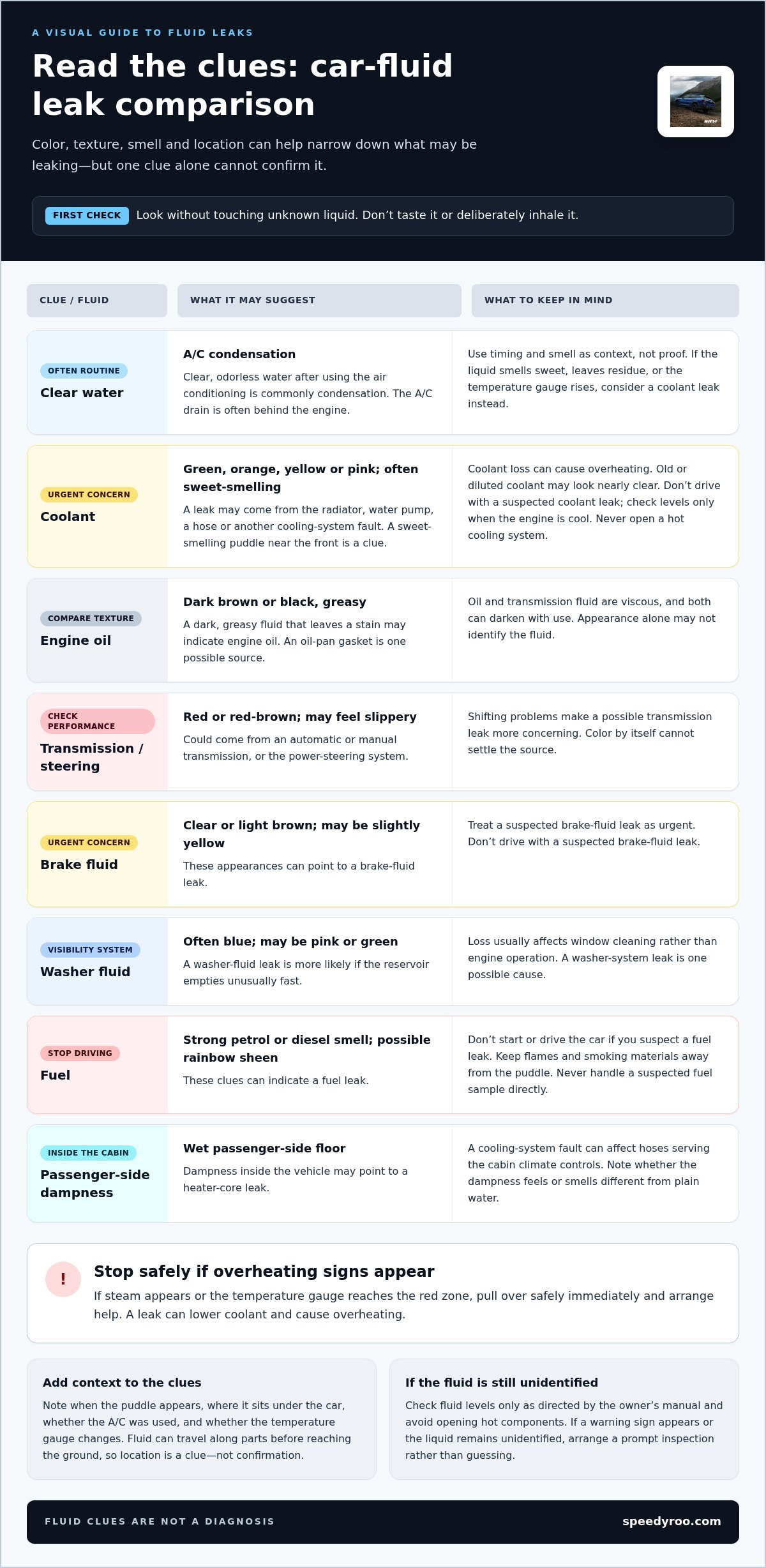
Identifying a fluid means comparing its appearance, feel, odor, and position under the car. These clues can help distinguish routine condensation from fluids that may affect braking, engine temperature, or shifting. Look without touching unknown liquid, and don’t taste or deliberately inhale it. A sample on a light-colored surface can make its color and any oily residue easier to see.
Common Causes of Fluid Leaks
Common causes include a failed gasket, a damaged hose, or a leak from a fluid reservoir or connected system. An oil-pan gasket can leak engine oil; a cooling-system fault can leak coolant; and a washer-system leak can lose windshield fluid. Identifying the likely system matters because each leak affects a different function, from engine lubrication to clear visibility.
Dark brown or black fluid that feels greasy and leaves a stain may indicate engine oil. Oil and transmission fluid are viscous, and both can darken with use. Red or red-brown fluid may come from an automatic or manual transmission, or the power-steering system. A slippery texture and shifting problems make a possible transmission leak more concerning. Clear or light-brown fluid may be brake fluid, and slightly yellow fluid can also point to a brake-fluid leak. Color alone can’t settle the question.
Blue liquid often indicates windshield washer fluid; a blue, pink, or green tint and a reservoir that empties unusually fast make that possibility more likely. Washer-fluid loss usually affects window cleaning, not engine operation. A strong petrol or diesel smell, or a rainbow sheen on the liquid, can indicate fuel. Don’t start or drive a car if you suspect a fuel leak. Keep flames and smoking materials away from the puddle.
Location adds useful context. A puddle near the front may accompany a coolant leak, while wetness on the passenger-side floor can point to a heater-core leak. Clear water beneath the car after using the air conditioning may be condensation. A sample can help: A/C drain water is clear, while gasoline has a characteristic smell. Never handle a suspected fuel sample directly.
Note when the puddle appears, where it sits, and whether the dashboard temperature gauge changes. These observations can help connect the leak with air-conditioning use, a cold start, or a change in vehicle performance. Check fluid levels only as directed by the owner’s manual, and avoid opening hot components. If the liquid remains unidentified or an alert illuminates on your dashboard, professionals like Eagle Automotive recommend arranging a prompt inspection rather than guessing.
Is it safe to drive with a fluid leak?
If fluid appears, pull over safely, switch off the engine, and look for warning signs without touching the leak. Don’t drive with a suspected fuel, coolant, or brake-fluid leak.
Leaks in Steering, Brake, and Engine Fluids
Leaks from steering, braking, or engine systems matter because each fluid serves a different function. Red or red-brown fluid may be power-steering fluid, while a yellow leak can be brake or clutch fluid. A car leaking brake fluid should be repaired before driving, since low brake fluid can cause brake failure.
For engine oil, check the level as directed in the owner’s manual. Low oil can leave engine parts without proper lubrication, so checking the level can help prevent engine damage. A faulty oil-pan gasket is one possible source. If steering fluid is leaking, note any change in steering effort, and don’t treat fluid color alone as a diagnosis.
Transmission and Differential Fluid Leaks
Transmission and differential fluid can leak from their housings, seals, or connected parts. Red, pink, or reddish-brown fluid with a slippery, oily texture and shifting problems may indicate a transmission leak. Low transmission-fluid levels can affect shifting, so don’t continue driving if gear changes become abnormal.
Differential fluid lubricates internal gears, so a visible leak underneath deserves prompt inspection. Fluid color can vary, and the puddle’s location can mislead because fluid travels along vehicle parts. Treat an unidentified leak as a reason to pause rather than assuming it comes from the washer system or harmless condensation.
Immediate Steps and Driving Risks
Immediate steps are to stop safely, note warning signs, and avoid driving if it could worsen a serious leak. The U.S. War Department manual says to check the ground under the vehicle, locate the leak, and correct it before driving. Record where the puddle sits and whether dashboard warnings or unusual sounds appear.
If the temperature gauge reaches the red zone or steam appears under the hood, pull over safely and call for service. Don’t drive if you suspect a fuel leak; a suspected brake-fluid leak also needs repair before driving. For an oil leak, check the level as the owner’s manual directs. Don’t open a hot cooling system or touch unknown fluid.
Washer-fluid leaks generally affect visibility through the windows rather than engine performance, but poor visibility can still make driving unsafe. Repair costs depend on the leak’s source and location, the parts required, and any resulting damage; a price is provided after a quote request. A prompt inspection of fluid leaking from underneath can help identify the affected system before continued driving adds risk.
Signs that a leak needs urgent attention
Fluid color, smell, warning lights, and vehicle behavior can help show whether a leak needs immediate attention. A spreading puddle or a change in braking, steering, shifting, or engine temperature makes driving unsafe.
Arrange a tow rather than driving if you suspect a fuel, coolant, or brake-fluid leak. If the temperature gauge reaches the red zone or steam comes from under the hood, pull over safely and call for service.
Stop and seek help for these warning signs:
- Fuel: A strong petrol or diesel smell, or a rainbow sheen on the liquid, can indicate a fuel leak. Don’t start or drive the vehicle.
- Coolant: A sweet-smelling puddle, a rising temperature gauge, or steam can point to a cooling-system problem. Don’t continue driving with a suspected coolant leak.
- Brake fluid: A clear, light-brown, or slightly yellow leak may involve the brakes. Low brake fluid can cause brake failure, so repair the leak before driving.
- Transmission: Slippery red, pink, or reddish-brown fluid together with shifting problems calls for prompt attention.
- Visibility: A washer-fluid leak can leave windows dirty, making driving less safe, especially in cold weather.
A clear, odorless puddle after using the air conditioning is commonly condensation. Water dripping from the tailpipe during startup or short trips can also be normal, especially in cold weather. These clues differ from a fluid leak accompanied by an unusual smell, oily residue, a dashboard warning, or a change in how the vehicle operates.
Assess severity by considering the fluid and the car’s response, not puddle size alone. A small oil leak can lower the engine-oil level, so checking the level can help prevent engine damage. A cooling-system leak can worsen until the engine overheats. Have a car leaking fluid from underneath inspected promptly, even if it still seems to drive normally.
Diagnosis starts by locating the leak and identifying the fluid. A technician can inspect likely sources such as a radiator, hose, reservoir, oil-pan gasket, or washer system, then assess fluid levels and related symptoms. Independent service centers such as thurtonautocentre.co.uk emphasize that catching small leaks early during routine servicing prevents extensive engine wear. Tell the technician where the puddle appeared, its color and smell, and whether the temperature gauge or shifting changed. Those details help narrow the inspection.
If the liquid is confirmed as normal air-conditioning condensation or exhaust moisture, the car is generally safe to drive. If you can’t identify it, or the leak affects braking, steering, engine temperature, fuel, or shifting, don’t risk driving. Pull over safely when needed and arrange prompt service.
Distinguishing water from engine oil
A puddle under a car can come from normal condensation or an engine-fluid leak. Compare the liquid’s appearance, residue, location, and timing before deciding what it may be. Clear, odorless water after using the air conditioning commonly comes from condensation. Dark, greasy liquid that leaves a stain and doesn’t evaporate is more likely engine oil.
Air-conditioning condensation often drips from a drain tube near the passenger side of the engine compartment. On most cars, the HVAC drain is behind the engine, so a small clear puddle there after using the air conditioning fits that pattern. The water shouldn’t feel oily or leave a persistent stain. Its appearance alone, however, can’t identify every leak.
Engine oil behaves differently on the ground. Brown, dark brown, or black fluid often feels greasy, leaves a mark, and remains after nearby water evaporates. A faulty oil-pan gasket is one possible source. Fluid can run across underbody parts, so the spot on the pavement may not be directly below the failing seal.
Timing provides another useful clue. Water dripping from the tailpipe during startup or short trips can be normal exhaust moisture, especially in cold weather. Exhaust moisture normally stops once the exhaust system reaches operating temperature. By contrast, a dark stain that remains beneath the engine after the car has cooled deserves attention as a possible oil leak.
To observe a leak, park on a level surface and note where the puddle forms. Place clean, light-colored cardboard beneath the suspected area, without reaching under a running vehicle. After the car has been parked, inspect the mark for color, oily residue, and whether it dries. Record when the puddle appears, such as after air-conditioning use or a short trip in cold weather.
Don’t rely on color alone to diagnose a fluid leak. Oil can darken over time, and lighting can change how a stain appears. A clear-looking puddle may also need attention if it has an unusual smell or leaves residue. Compare several clues, and avoid touching or tasting unknown liquid.
If the mark looks greasy and remains, check the engine-oil level as directed in the owner’s manual. Low oil can contribute to engine damage, so don’t ignore a falling level or a growing stain. If the leak’s source remains unclear, an inspection can distinguish an oil leak from harmless condensation and identify what needs repair.
For help diagnosing a suspected oil leak, arrange an inspection for your vehicle.
Speedy Roo Motorsports & Repair Inc: Subaru Repair and Service
Speedy Roo Motorsports & Repair Inc provides Subaru Repair and Service for drivers who find a persistent leak or can’t identify its source. An inspection can help trace the fluid to the affected system and determine the repair needed. Addressing a leak promptly can help protect important vehicle components and clarify whether it’s safe to drive.
Speedy Roo Motorsports & Repair Inc also provides Toyota, Honda, and Nissan repair and service. If a puddle keeps returning, fluid levels are dropping, or a warning sign appears, share what you’ve noticed, including the fluid’s color, location, and when it appears. Contact Speedy Roo Motorsports & Repair Inc to discuss your vehicle’s leak and repair needs.
Choose a Clear Next Step for Your Car
If you’re still asking why your car is leaking fluid in Parker, use what you’ve observed to decide what to do next. Note when the puddle appears, where it forms, and whether the car’s behavior changes. Those details can help turn an uncertain guess into a focused inspection. If a warning sign makes driving unsafe, arrange help instead of driving to a repair facility.
For a persistent or unidentified leak, Speedy Roo Motorsports & Repair Inc provides Subaru Repair and Service, Toyota Repair and Service, and Honda Repair and Service. An inspection can locate the source and identify the repair needed for your vehicle. Clear details about the symptoms help start the conversation.
Contact Speedy Roo Motorsports & Repair Inc to discuss your vehicle’s leak. Taking a thoughtful next step can help you move forward with greater confidence.
Frequently Asked Questions
Is it water or oil leaking from my car?
Water typically dries without leaving a greasy mark, while engine oil leaves a persistent stain. If you’re asking why your car is leaking fluid in Parker, note when the puddle appears: air-conditioning use points toward condensation, while an oily spot after parking may indicate an engine leak. Check residue on clean cardboard, not by touching unknown fluid. A dark, spreading stain warrants checking the engine-oil level as the owner’s manual directs.
What Is the Clear Fluid Dripping Underneath My Car?
Clear, odorless liquid is often air-conditioning condensation, but clarity alone can’t identify it. Windshield washer fluid can also look clear or bluish-clear, and old or diluted coolant may lose its color. Notice whether the reservoir level changes, whether the liquid smells sweet, and whether the temperature gauge rises. A clear puddle accompanied by a change in engine temperature deserves more attention than an occasional drip after using the air conditioner.
Why is my car leaking when parked?
A parked car may leave a puddle because fluid kept draining after the engine stopped, or because a leak becomes visible only after the vehicle sits. The stain’s position may help narrow down the source, but fluid can run along components before reaching the ground. Park on a clean, level surface and compare the puddle’s location and appearance after the next drive. A growing stain or falling fluid level calls for inspection.
Why is there water dripping under my car?
Water beneath a car commonly comes from air-conditioning condensation, especially after the system has been running. Water from the tailpipe during startup or short trips can also be normal exhaust moisture. If a puddle appears after rain or a car wash, damp carpets or marks on the headliner may point to clogged door or sunroof drains. Note whether the water follows air-conditioning use, wet weather, or a short trip to narrow down its likely source.
What car fluids can leak and how can you identify them by color, smell, and location?
Color and smell provide clues, not a final diagnosis. Dark, greasy stains may be engine oil; sweet-smelling green, orange, yellow, or pink fluid may be coolant. Red or red-brown fluid can come from a transmission or power-steering system. Blue fluid often suggests windshield washer fluid, while a strong fuel smell or rainbow sheen can signal fuel. A light-brown or yellow leak may involve brake fluid, so consider the car’s behavior and the puddle’s location too.
Is it safe to drive a car that is leaking fluid, and when should you stop driving?
Stop driving if you suspect a fuel, coolant, or brake-fluid leak, or if the temperature gauge enters the red zone. Steam under the hood, a change in braking, or shifting problems are also reasons to pull over safely. A car is generally safe to drive when the liquid is normal air-conditioning condensation or exhaust moisture. If the source is unclear, don’t take a test drive to identify it.
How can I check for a car fluid leak safely at home?
Park on level ground, switch off the engine, and let hot components cool before observing the area. Place clean cardboard beneath the parked car to see the fluid’s color and approximate location, but never crawl under a vehicle supported only by a jack. Don’t touch or taste unknown liquid, and don’t open a hot coolant reservoir. Record when the spot forms and check fluid levels only as the owner’s manual instructs.
How much does it cost to diagnose and repair common car fluid leaks?
Cost depends on the leak’s source, how accessible it is, the parts required, and whether continued driving caused additional damage. A loose or damaged hose and a leak from a hard-to-reach seal can require different diagnostic and repair work. The price is provided after a quote request. Don’t judge the likely expense by puddle size alone, since a small leak can still come from a critical system.