
Have you ever felt your Subaru “ghost walk” while cruising down I-225, making you feel like the rear end is floating on ice even when the pavement is dry? It’s an unsettling sensation that many local drivers experience, and it’s often the first sign that your vehicle’s complex handling system needs professional attention. You rely on your car to navigate Colorado’s unpredictable winters, so any compromise in stability feels like a major risk to your safety.
When it comes to Subaru suspension repair Aurora owners need a specialist who understands how every bushing and strut impacts the Symmetrical AWD system. In this guide, you’ll discover why these vehicles require specific expertise to maintain their legendary handling and how to identify common issues before they compromise your drivetrain. We’ll examine the specific components that tend to wear out on Colorado roads and explain how a transparent diagnostic process can prevent expensive damage while restoring your confidence behind the wheel.
Key Takeaways
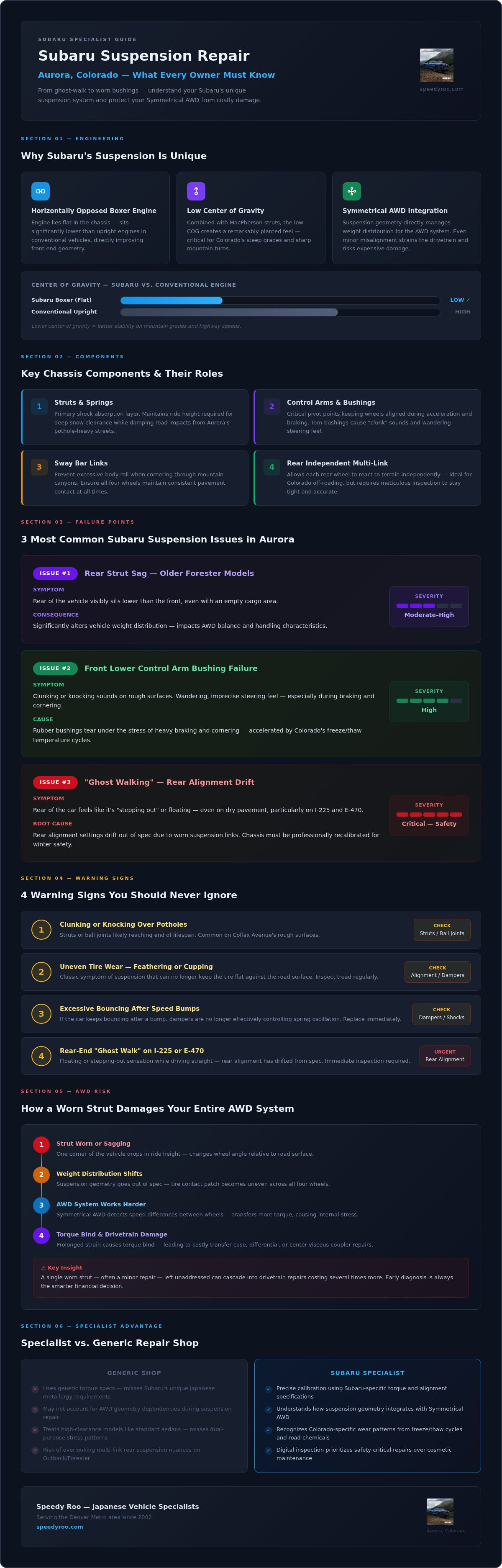
- Learn how the unique geometry of the Boxer engine and MacPherson struts creates the low center of gravity that defines Subaru’s stable handling.
- Identify early warning signs of common failures like rear strut sag or worn lower control arm bushings before they lead to expensive mechanical repairs.
- Understand why professional Subaru suspension repair Aurora services are essential to prevent torque bind and protect your Symmetrical AWD system from damage.
- Discover our transparent diagnostic approach, which uses digital inspections to prioritize critical safety repairs over optional cosmetic maintenance.
- Gain peace of mind by working with an independent specialist that has focused on meticulous Japanese vehicle care in the Denver Metro area since 2002.
Understanding the Subaru Suspension System
Subaru engineering is distinct from almost every other manufacturer on the road. While most vehicles use upright engines that sit high in the engine bay, your Subaru utilizes a horizontally opposed Boxer engine. This flat design allows the engine to sit much lower in the chassis, which directly influences the front end suspension geometry. By pairing this low center of gravity with MacPherson struts, Subaru creates a vehicle that feels remarkably planted. This stability is vital when you are navigating the steep grades and sharp turns of the Colorado foothills.
Maintaining this balance requires a deep understanding of how these components interact. Precise calibration is necessary because the suspension doesn’t just provide comfort; it manages the weight distribution for the Symmetrical AWD system. If the geometry is even slightly off, it can lead to premature tire wear or strain on the drivetrain. That is why seeking a specialist for Subaru suspension repair Aurora is a practical choice for the longevity of your vehicle. A generic approach often misses the nuances of Japanese metallurgy and the specific torque requirements these chassis demand.
Key Components of Your Subaru’s Chassis
The chassis relies on a network of parts working in harmony to absorb the impact of Aurora’s road imperfections. Your struts and springs are the primary line of defense. They don’t just soak up bumps; they maintain the ride height necessary for deep snow. Control arms and bushings serve as the critical pivot points that keep your wheels aligned during acceleration and braking. If these bushings tear, you’ll likely feel a “clunk” or a wandering sensation in your steering. Additionally, sway bar links are essential for preventing excessive body roll. They keep the car level when you’re driving through mountain canyons, ensuring that all four wheels maintain consistent contact with the pavement.
The Difference Between Subaru and Generic Suspensions
Engineering a Subaru involves balancing high ground clearance with car-like handling. Models like the Outback and Forester are designed to clear obstacles that would stop a standard sedan, yet they must remain stable at highway speeds on I-225. This dual-purpose design means the suspension components are under unique stresses. We often see specific wear patterns in the rear independent suspension, which is designed to allow each wheel to react to terrain independently. This feature is excellent for Colorado off-roading, but it requires meticulous inspection to ensure the multi-link setup remains tight. Because everything is tied into the Symmetrical AWD system, a worn strut on one corner can actually cause the AWD system to work harder, potentially leading to much more expensive repairs over time.
Common Subaru Suspension Issues in Aurora
Living in the Denver Metro area means your vehicle faces a unique set of challenges. Between rapid temperature shifts and the chemical treatments on our roads, certain components wear out faster than you might expect. While Subarus are built for durability, they have specific engineering quirks that often surface after a few seasons of Colorado driving. Identifying these issues early is the best way to avoid a breakdown on your way to the mountains.
One of the most frequent problems we see is the “Rear Strut Sag” in older Forester models. You might notice the back of the vehicle sitting lower than the front, even when the cargo area is empty. This isn’t just an aesthetic concern; it significantly alters the vehicle’s weight distribution. Another common failure point is the front lower control arm bushings. These rubber components are designed to dampen road vibrations, but they often tear under the stress of heavy braking and cornering. When these bushings fail, you lose the precise steering feel that makes a Subaru enjoyable to drive.
Perhaps the most unsettling issue is the “Ghost Walking” phenomenon. This typically occurs on icy stretches of I-225 or E-470. It feels as though the rear of the car is stepping out or floating, even when you are driving straight. This is often caused by rear alignment settings that have drifted out of spec due to worn suspension links. If you experience this, it’s a clear sign you need a professional Subaru suspension repair Aurora specialist to recalibrate your chassis for winter safety.
Warning Signs You Shouldn’t Ignore
Your car often communicates its needs through sound and feel. If you hear a distinct clunking or knocking noise when driving over the inevitable potholes on Colfax Avenue, your struts or ball joints are likely reaching the end of their lifespan. You should also regularly inspect your tires for uneven wear. Feathering or cupping on the tread is a classic symptom of a suspension system that can no longer keep the tire flat against the road. Finally, if your car continues to bounce several times after hitting a speed bump, your dampers are no longer effectively controlling the spring’s energy.
Aurora-Specific Environmental Stressors
The local climate plays a massive role in suspension longevity. Aurora experiences extreme temperature swings that cause rubber bushings to expand and contract rapidly, leading to premature cracking. Additionally, the magnesium chloride used by road crews is highly corrosive. This liquid de-icer can seep into metal components and accelerate rust on your undercarriage. When the spring thaw arrives, deep potholes become a constant threat. A single hard impact can bend a control arm or blow out a strut seal, making a routine inspection essential after every winter season.
Why Suspension Health is Critical for Subaru AWD
Subaru’s Symmetrical AWD is a precision engineered system. It relies on all four tires having near-identical diameters and consistent contact with the road. When your suspension is compromised, it directly impacts this delicate balance. If you’ve been delaying Subaru suspension repair Aurora services, you might be risking more than just a bumpy ride; you could be endangering your entire drivetrain. Worn struts allow tires to hop or tilt, creating uneven contact patches that confuse the AWD sensors.
The engineering requirement is strict: Subaru tires must stay within 2/32 of an inch of each other in tread depth. If your alignment is off, one tire will wear faster than the others. This forces the center differential to work harder to compensate for the speed difference, leading to heat buildup and mechanical strain. This can eventually cause “torque bind,” where the drivetrain components fight each other during tight turns. For more context on how these systems interact, you can read our guide on Subaru AWD Service in Aurora.
Protecting Your Drivetrain Investment
Neglecting your chassis has hidden costs that go beyond simple comfort. Premature differential wear is often the direct result of a suspension that can’t maintain proper wheel positioning. A stable chassis also ensures your Vehicle Dynamics Control (VDC) functions correctly. VDC relies on accurate sensor data from each wheel to manage traction. If a wheel is bouncing due to a blown strut, the system may intervene unnecessarily, which is a major safety concern when you’re navigating snowy mountain passes in the Rockies. Keeping the chassis tight ensures that your safety systems have the steady platform they need to perform.
The Precision of 4-Wheel Alignment
Many generic shops perform a basic front-end alignment, but Subarus require a full 4-wheel adjustment. Because the rear suspension is independent and multi-link, it’s just as adjustable—and just as prone to drifting—as the front. If the “thrust angle” is off, your car might “crab” down the highway, essentially driving slightly sideways. This creates massive drag, ruins fuel efficiency, and puts lateral stress on your wheel bearings. Our methodical approach to chassis calibration ensures that every angle is set to factory specifications, providing the stable handling you expect from a specialist.
The Repair and Upgrade Process at Speedy Roo
At Speedy Roo, we believe that a proper repair starts with a clear understanding of your vehicle’s current state. We don’t just guess at what might be causing a noise; we follow a methodical process to ensure every component is evaluated. This transparent approach is why we’ve become a trusted name for Subaru suspension repair Aurora drivers rely on. We focus on providing a detailed report that prioritizes essential safety repairs over optional maintenance; this gives you the information needed to make an informed decision. Our goal is to be your partner in vehicle longevity, not just another shop looking for a quick transaction.
Diagnostic Steps for Suspension Clarity
Our team uses digital inspections to document your chassis condition. We look for leaking strut seals, torn CV boots, and cracked bushings. Physical testing is also vital. We road test on Aurora streets to replicate the rattles you hear daily. By checking ball joints and wheel bearings on the lift, we pinpoint compromised parts. This ensures we fix the root cause immediately. We’ll even show you the photos of your components so you can see exactly what our technicians see during the evaluation.
OEM vs. Aftermarket: Making the Right Choice
Choosing parts involves balancing driving style with budget. Genuine Subaru components maintain factory comfort. However, Colorado drivers often prefer KYB or Bilstein struts for towing or off-road use. These brands offer superior damping for the Rockies and can handle the extra weight of camping gear or bike racks. For performance, we provide Forester lift kits or WRX lowering springs. Our Dyno Tuning experts can help dial in a setup that complements your power delivery. We ensure that every upgrade maintains the safety and reliability of your Symmetrical AWD system.
Whether you need a simple strut replacement or a full suspension overhaul, we have the specialized knowledge to do the job correctly. We take pride in being the expert neighbor who helps you keep your vehicle on the road for years to come. Contact us today to learn more about our Subaru Repair and Service options and get your handling back to factory standards.
Why Choose Speedy Roo for Subaru Repair in Aurora?
Selecting the right facility for your vehicle is ultimately a matter of trust. Since 2002, we’ve dedicated our shop to the meticulous care of Japanese imports. We aren’t a “jack-of-all-trades” facility that attempts to fix every domestic or European make on the road. By maintaining a specialized focus, our technicians have developed an intuitive understanding of the specific engineering that makes your car unique. Whether you are visiting for routine maintenance or a complex Subaru suspension repair Aurora drivers have trusted us to keep their vehicles handling correctly for over two decades.
Our status as an independent specialist allows us to prioritize your needs over corporate quotas. We only recommend repairs that are actually necessary for your safety and vehicle longevity. This commitment to honesty has earned us an A+ reputation across the Denver Metro area. We understand that a well-maintained chassis is the key to surviving Colorado’s road conditions; we treat every vehicle as if it belonged to our own family. Our expertise also extends into performance dyno tuning, which gives us a deeper perspective on chassis dynamics than a standard repair shop can offer.
The ‘Expert Neighbor’ Experience
When you bring your vehicle to us, you’ll benefit from direct communication with the professionals who are actually performing the work. We take pride in being a friendly guide for our customers, sharing our knowledge so you feel empowered to make the best decisions for your car. We want to help you reach that 200,000-mile milestone with a chassis that still feels tight and responsive. You can learn more about our comprehensive approach by visiting our page on Subaru Repair in Aurora. We are invested in the long-term health of your property, not just a one-time transaction.
Convenient Local Service
Our facility is rooted in the Aurora community and is easily accessible for residents in Centennial and Parker. We’ve designed our shop to be a clean, professional environment that reflects our methodical approach to Japanese vehicle repair. We are located near major transit routes, making it simple to drop off your vehicle and get on with your day. Scheduling a suspension inspection before the next major snowstorm is a practical way to ensure your AWD system is ready for the challenges of I-225. We invite you to experience the difference that specialized care and localized expertise can make for your driving confidence.
Restore Your Subaru’s Handling for the Road Ahead
Maintaining a healthy chassis isn’t just about comfort; it’s about protecting the longevity of your Symmetrical AWD system and ensuring your safety on Colorado’s unpredictable roads. From addressing the unsettling “ghost walking” sensation to replacing worn control arm bushings, proactive care prevents expensive drivetrain damage. By choosing a specialist for Subaru suspension repair Aurora drivers gain the peace of mind that comes with meticulous, expert craftsmanship. Don’t wait for a minor rattle to become a major mechanical failure.
Since 2002, Speedy Roo has served the Aurora, Denver, and Centennial communities as an independent specialist. Our expert Japanese vehicle technicians focus on what your car actually needs to stay reliable for the long haul. We’re committed to being your partner in vehicle health, providing transparent diagnostics and honest recommendations every step of the way.
Schedule Your Subaru Suspension Inspection at Speedy Roo Today!
We look forward to helping you keep your Subaru ready for many more seasons of Colorado adventures. Your vehicle deserves the specialized care and attention that only a dedicated, local expert can provide.
Frequently Asked Questions
How much does Subaru suspension repair typically cost in Aurora?
Repair costs vary significantly based on the specific components involved and the model year of your vehicle. A simple bushing replacement is naturally less intensive than a full strut overhaul or a multi-link rear suspension rebuild. Because every situation is unique, we recommend a professional diagnostic inspection to provide an accurate assessment. This ensures you only pay for necessary repairs while maintaining the safety of your Symmetrical AWD system.
What is that clunking sound coming from the back of my Subaru Outback?
A rear clunking sound often indicates worn sway bar links or failing rear struts. On many Outback models, the rear multi-link suspension has several bushings that can tear over time, especially when navigating Colorado’s rougher terrain. If the noise occurs specifically when driving over bumps, it’s a sign that a component has developed excessive play. An expert neighbor can quickly identify the source during a physical inspection of the chassis.
Can I drive my Subaru with a leaking strut?
You can technically drive with a leaking strut, but it’s not advisable for long-term safety or vehicle health. A leaking strut loses its ability to control the spring’s movement, which leads to increased stopping distances and poor handling. For a vehicle with Symmetrical AWD, a failed strut creates uneven tire contact that can strain the drivetrain. Addressing Subaru suspension repair Aurora early prevents this damage from spreading to more expensive components.
How often should I have my Subaru suspension inspected in Colorado?
We recommend a comprehensive suspension inspection at least once a year or every 12,000 miles. Colorado’s extreme temperature swings and heavy use of magnesium chloride can accelerate the degradation of rubber bushings and metal components. It’s especially practical to schedule an inspection after the spring thaw, as winter potholes often cause alignment shifts. Regular checks help maintain the “Colorado-ready” handling you expect from your vehicle throughout the changing seasons.
Does a lift kit void my Subaru warranty?
A lift kit generally only affects the warranty for the specific components it modifies or directly impacts. Under the Magnuson-Moss Warranty Act, a manufacturer cannot void your entire warranty simply because of an aftermarket part. However, if a lift kit causes premature wear on your CV axles or differential, those specific repairs might not be covered. It’s best to consult with a specialist who understands how geometry changes affect the Symmetrical AWD system.
Why does my Subaru feel unstable or ‘floaty’ at highway speeds?
A floaty sensation is typically caused by worn-out struts that can no longer dampen the vehicle’s vertical movement. This feeling is often most noticeable on I-225 or during mountain canyon drives where the chassis needs to remain planted. When struts lose their internal hydraulic pressure, the car relies too much on the springs, leading to a lack of steering precision. This instability is a clear indicator that your suspension requires a professional evaluation.
Do I need an alignment every time I get new tires on my Subaru?
It is highly recommended to perform a 4-wheel alignment whenever you install new tires. Because Subarus require all four tires to have nearly identical tread depth, a slight misalignment can cause uneven wear that ruins your investment prematurely. An alignment ensures that your new tires maintain a flat contact patch with the road, protecting your Symmetrical AWD system from the mechanical strain caused by mismatched tire diameters or improper thrust angles.
What is the difference between a strut and a shock on a Subaru?
Most modern Subarus use MacPherson struts in the front and either struts or shock absorbers in the rear. A strut is a structural part of the suspension system that supports the vehicle’s weight and holds the coil spring. A shock absorber only dampens movement and is not a structural load-bearing component. Understanding this distinction is vital for Subaru suspension repair Aurora because replacing a strut involves more complex labor and impacts the vehicle’s alignment.