
Imagine pulling into the heavy traffic of I-70 on a 90-degree afternoon only to see your temperature gauge climb toward the red zone. It’s a stressful moment that every driver in Colorado wants to avoid, especially when you’re miles from home. We understand how much you rely on your vehicle to handle our state’s dramatic temperature swings and high-altitude climbs. Keeping your engine at the right temperature isn’t just about comfort; it’s about protecting the long-term health of your car. This is why staying current with your Nissan cooling system service Aurora is one of the most important maintenance steps you can take.
In this article, we’ll help you identify the subtle warning signs of a failing system before they turn into expensive repairs. You’ll learn the critical difference between a simple coolant fill and a comprehensive system flush, as well as why using the correct blue or green coolant matters for your specific model. We’ll also explain how a healthy cooling system protects your CVT transmission, giving you the confidence to drive through any season with peace of mind.
Key Takeaways
- Understand how Aurora’s high altitude impacts your coolant’s boiling point and why local conditions require specialized thermal regulation.
- Identify early warning signs like the distinct scent of leaking Nissan Long Life Coolant or fluctuating temperature gauges before a breakdown occurs.
- Compare the “Drain and Fill” method with a comprehensive system flush to determine the best approach for your Nissan cooling system service Aurora.
- Learn simple weekly checks for your overflow reservoir and hoses that can prevent minor leaks from becoming major engine repairs.
- Discover the vital connection between your cooling system’s efficiency and the long term reliability of your Nissan’s CVT transmission.
Why Nissan Cooling System Health Matters in Aurora, CO
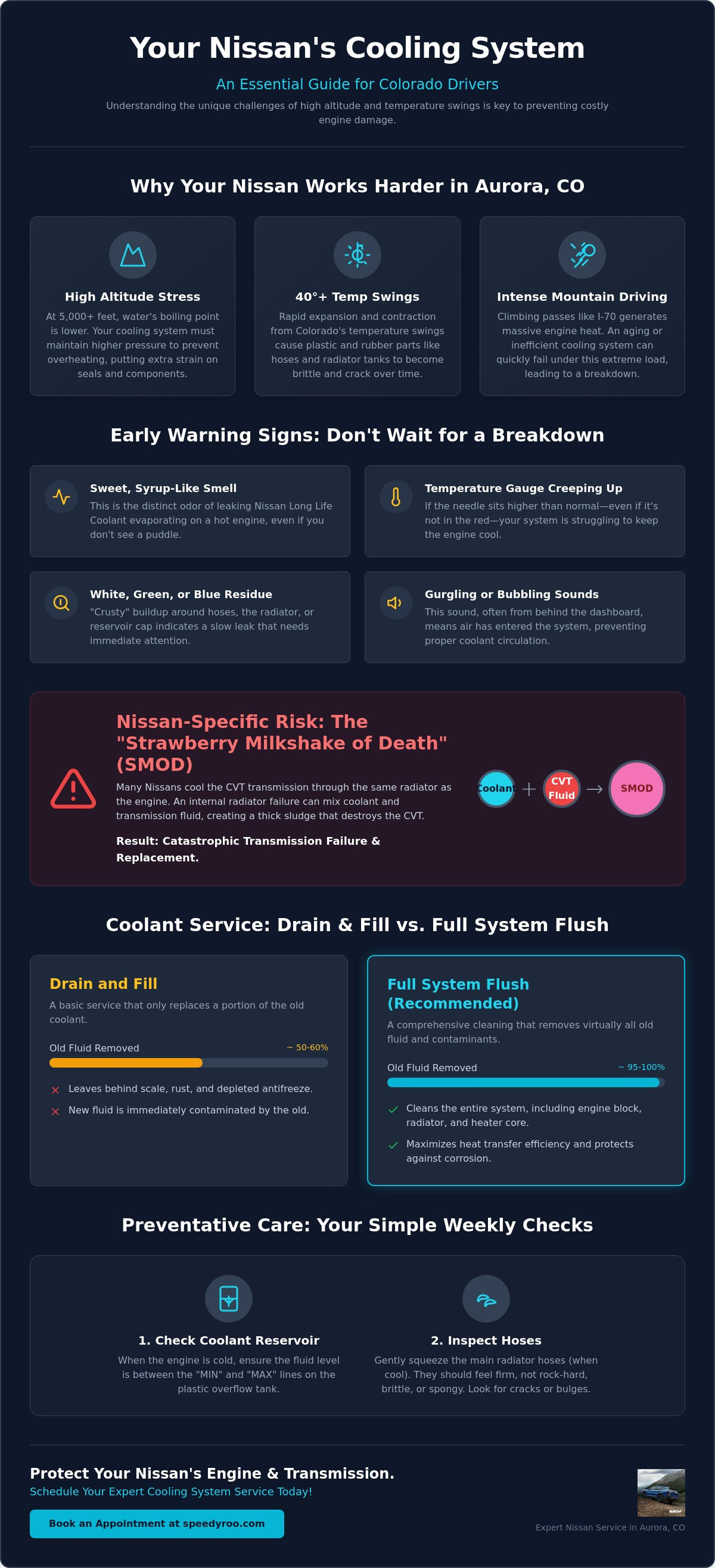
Your Nissan depends on a complex network of components to stay cool. This system acts as the primary thermal regulator for both your engine and your transmission. Understanding how engine cooling systems work is the first step in realizing why regular maintenance is so vital. In Aurora, our vehicles face unique challenges that cars at sea level don’t encounter. At over 5,000 feet, the lower atmospheric pressure actually lowers the boiling point of liquids. This means your cooling system must operate under higher internal pressure to keep the engine from overheating. A comprehensive Nissan cooling system service Aurora drivers rely on includes a check of these pressure limits to ensure the system remains sealed and functional.
Colorado’s infamous 40-degree temperature swings also play a role in vehicle longevity. When the mercury drops or spikes rapidly, the plastic and rubber components in your Nissan expand and contract. Over time, this leads to micro-cracks in radiator tanks and brittle hoses. Choosing a professional Nissan cooling system service Aurora residents trust ensures these parts are inspected before they fail. Investing in preventative care is always more affordable than dealing with a warped cylinder head or a blown head gasket caused by extreme heat. These repairs can cost thousands, whereas a routine check keeps your engine’s internal components safe and aligned. Colorado drivers who also own all-wheel drive vehicles should be aware that similar preventative thinking applies to Subaru AWD service Aurora specialists recommend for maintaining drivetrain health in our demanding climate.
The Role of Antifreeze in Colorado Winters
When the winter air in Aurora turns sub-zero, your coolant’s secondary job begins. It isn’t just about heat; it’s about preventing the liquid inside your engine from freezing. If the mixture is off, the liquid can expand as it freezes. This creates enough force to crack an engine block or ruin a radiator. We often see drivers make the mistake of “just adding water” during the summer months. This dilutes the water-to-glycol ratio, leaving the vehicle vulnerable when the first freeze hits. Maintaining the correct chemical balance is essential for year-round protection in our volatile climate.
Heat Management During Mountain Driving
Nothing tests a cooling system like a climb up I-70 toward the Eisenhower Tunnel. As you gain elevation, the engine load increases significantly, generating massive amounts of heat. Your radiator must work at peak efficiency to shed this thermal energy. As coolant ages, it loses its ability to transfer heat effectively. It can also develop scale buildup that restricts flow through the narrow passages of the radiator. If your Nissan is older, that mountain pass can quickly become the breaking point for a neglected system. Keeping the fluid fresh ensures your radiator can handle the heavy lifting required for Colorado life; for more information on how professional mechanical systems manage heat in various settings, you can read more about expert solutions.
Warning Signs Your Nissan Needs Immediate Cooling Service
Catching a cooling issue early can save your engine from catastrophic damage. One of the most common indicators is a sweet, syrup-like smell coming from the front of your car or through the vents. This is the distinct scent of Nissan Long Life Coolant. Even if you don’t see a puddle on your driveway, that smell means fluid is escaping and evaporating on hot engine parts. You should also keep a close eye on your temperature gauge. If the needle sits higher than usual, even if it hasn’t reached the red zone, your system is struggling. Understanding how your car’s cooling system works helps you realize that even small fluctuations are worth investigating.
Visual inspections under the hood often reveal “crusty” white, green, or blue residue. This buildup typically forms around radiator hoses, the thermostat housing, or the reservoir cap. It’s essentially dried coolant marking the spot of a slow leak. Another strange symptom is a gurgling or bubbling sound behind the dashboard. This often happens because air has entered the system, creating pockets that move through the heater core. If you notice these signs, scheduling a Nissan Service and Repair consultation can prevent a minor leak from becoming a major roadside emergency.
Nissan-Specific Issues: The CVT Connection
Many Nissan models use an integrated cooling design where the radiator also helps regulate the temperature of the CVT transmission. This connection makes a Nissan cooling system service Aurora even more critical. If the internal walls of the radiator fail, coolant can mix with transmission fluid. This creates a thick, pink sludge known among enthusiasts as the “Strawberry Milkshake of Death” (SMOD). Once this happens, the transmission usually requires a total replacement. Regular inspections of the radiator’s internal integrity are your best defense against this specific, high-cost failure. Other Japanese vehicle owners facing transmission concerns in our local climate can also benefit from the expert Mazda transmission service Aurora specialists provide, particularly given the unique challenges Colorado driving conditions place on modern gearboxes.
Common Leak Points in Rogue, Altima, and Frontier
Certain models have predictable patterns when they age. The Rogue and Altima often develop hairline cracks in the plastic radiator tanks after years of Colorado’s extreme temperature cycles. These cracks might only leak when the engine is fully hot and the system is under pressure. On the Frontier, the radiator cap is a frequent culprit. If the cap’s seal fails, the system cannot maintain the pressure needed to prevent boiling. We also see thermostats that stick open, causing the engine to take too long to reach operating temperature. This hurts your fuel economy and heater performance during Aurora winters.
Coolant Flush vs. Drain and Fill: Which Is Best?
Deciding between a coolant flush and a basic drain and fill is a common dilemma for Nissan owners. While both methods involve fresh fluid, they serve different purposes based on your vehicle’s age and maintenance history. A drain and fill is a straightforward process where we remove the liquid currently sitting in the radiator and the overflow reservoir. It’s an efficient way to refresh the system’s chemical additives, but it only replaces a portion of the total volume. The rest of the old, degraded fluid remains trapped inside the engine block and the heater core. This method is essentially a maintenance “top-off” rather than a deep clean.
In contrast, a professional Nissan cooling system service Aurora drivers choose for long-term reliability involves a full exchange or flush. This method uses specialized equipment to pulse new fluid through the entire cooling circuit. It doesn’t just replace the fluid; it actively pushes out the old mixture from every corner of the engine. For high-mileage Nissans, this is often paired with a chemical cleaner to break down the scale and mineral deposits that naturally accumulate over time. These deposits act like insulation, trapping heat inside the engine and making your radiator significantly less effective at its job.
When a Simple Drain and Fill Is Sufficient
If you’ve owned your Nissan since it was new and have followed the factory maintenance schedule perfectly, a drain and fill is often all you need. This approach is ideal for maintaining the pH balance of the coolant without disturbing older seals or gaskets with high-pressure equipment. It’s a cost-effective maintenance step that works well for newer vehicles that show no signs of contamination. However, keep in mind that this method leaves roughly 50% of old fluid in the engine, which will mix with the new fluid immediately.
The Benefits of a Professional Nissan Coolant Flush
A full flush is the superior choice for vehicles with an unknown service history or those that have already begun to show signs of cooling stress. It ensures that 100% of the fluid is fresh and capable of protecting your engine from the internal corrosion that leads to leaks. We recommend this more thorough Nissan cooling system service Aurora owners can trust when the following conditions are met:
- The coolant appears cloudy, rusty, or has visible floating debris.
- Your Nissan has exceeded 100,000 miles without a documented flush.
- You’ve recently purchased a used vehicle and want a clean baseline for maintenance.
- The heater performance has decreased, suggesting a partially clogged heater core.
By removing rust and scale, a flush restores the system’s ability to transfer heat. This is vital for surviving our hot Colorado summers and the heavy loads of mountain driving. It’s a methodical way to ensure your engine remains healthy for years to come.
How to Maintain Your Nissan Cooling System Between Services
Proactive care is the best way to ensure your vehicle remains reliable between scheduled visits. You don’t need to be a mechanic to perform basic checks that can save you from a breakdown. We recommend a weekly visual inspection of your engine bay to catch small issues before they escalate. Consistent habits are what separate a long-lasting engine from one that requires an emergency Nissan cooling system service Aurora drivers often face due to neglect. Start by looking at your coolant overflow reservoir. This translucent tank is your window into the system’s health, allowing you to monitor fluid levels without ever opening a pressurized cap.
While you’re under the hood, take a moment to inspect your radiator hoses. When the engine is completely cold, gently squeeze the large hoses. They should feel firm yet pliable. If a hose feels brittle, “crunchy,” or excessively soft and spongy, it’s a sign that the rubber is breaking down from the inside out. Look closely at the connection points near the clamps. Any bulging or dampness in these areas suggests a hose is nearing the end of its life. Additionally, Colorado drivers must contend with magnesium chloride and road salt during the winter. These chemicals can corrode your radiator’s delicate aluminum fins. Periodically rinsing the front of your car with low-pressure water helps keep these components clean and efficient. The same road chemicals that threaten your radiator also affect the drivetrain components that make Subaru AWD service in Aurora such an important part of winter vehicle preparation for Colorado drivers.
Step-by-Step: Checking Your Coolant Safely
Safety is the absolute priority when dealing with engine heat. Never attempt to open a radiator pressure cap while the engine is warm or even slightly hot. The system operates under high pressure, and opening it prematurely can cause boiling liquid to spray out. For a routine check, only use the overflow reservoir. Locate the “Full” or “Max” line on the side of the plastic tank. If the fluid level is consistently dropping below the “Low” mark, you likely have a slow leak. If you find yourself frequently adding fluid, it is time to schedule a professional Nissan Service and Repair to identify the source of the loss.
Understanding Nissan Coolant Colors
Nissan utilizes specific chemical formulas to protect their engines, usually identified by color. Most older models use a Green Long Life Coolant, while newer vehicles require a Blue Long Life version. It is vital that you don’t mix these chemistries. Combining different types can cause a reaction that leads to “gelling,” which can clog your radiator and heater core. You should also avoid “Universal” coolants found at general retailers. These often lack the specific anti-corrosion additives required for Nissan’s water pump seals and internal gaskets. Using the correct, manufacturer-approved fluid is the only way to guarantee long-term protection.
Expert Nissan Cooling Service at Speedy Roo Motorsports & Repair Inc
Speedy Roo Motorsports & Repair Inc has been a cornerstone of the local automotive community since 2002. We’ve dedicated over two decades to mastering the nuances of Japanese engineering. Our team doesn’t view a Nissan cooling system service Aurora as a simple fluid swap. Instead, we approach it with a diagnostic mindset. We prioritize finding the root cause behind every symptom. If your coolant is discolored or your reservoir is low, we investigate the source to prevent future breakdowns. This commitment to thoroughness is a central part of our Japanese import repair Aurora philosophy. We believe that professional maintenance should be proactive, not just reactive.
Being located in Aurora gives us a unique perspective on the challenges your vehicle faces daily. We drive the same high-altitude routes and experience the same rapid weather shifts as our customers. This local experience allows us to serve as an “Expert Neighbor” for Nissan owners. We understand exactly how Colorado road chemicals and mountain inclines stress your radiator and hoses. We use this knowledge to provide tailored advice that helps your Nissan survive our specific climate. You won’t find generic advice here; you’ll find specialized solutions built on years of local experience.
The Speedy Roo Motorsports & Repair Inc Difference
Our process is built on meticulous care and absolute transparency. We don’t guess when it comes to your engine’s health. Every cooling service includes a professional pressure test. This allows us to verify that every seal and connection is holding tight under operating conditions. We also take the time to provide honest, clear explanations of our findings. If a component is nearing the end of its life, we’ll show you why and explain the risks of waiting. We want you to feel empowered and informed about your vehicle’s maintenance needs. Our goal is to build long-term trust through steady, reliable craftsmanship.
Schedule Your Nissan Service Today
We’re conveniently located to serve drivers throughout Aurora, Denver, and Centennial. Our technicians have deep experience with the entire Nissan lineup, including the Altima, Maxima, Rogue, Pathfinder, and Frontier. Whether you need a routine inspection or a complex cooling system repair, we have the specialized tools and expertise to handle the job correctly the first time. Don’t wait for a warning light to appear on your dashboard during a summer road trip. Take the first step toward long-term engine protection by booking an appointment with our team. Book your Nissan cooling system inspection at Speedy Roo Motorsports & Repair Inc and experience the peace of mind that comes with expert, specialized care.
Secure Your Vehicle’s Future on Colorado Roads
Protecting your vehicle from Colorado’s unique environmental challenges requires a proactive approach. We’ve explored how our high altitude and rapid temperature shifts put extra stress on your radiator and transmission. By staying alert for early warning signs like sweet odors or gurgling sounds, you can prevent minor leaks from turning into major repairs. Choosing a professional Nissan cooling system service Aurora ensures that your engine and CVT transmission remain protected by fresh, high-quality coolant that meets factory specifications.
Since 2002, Speedy Roo Motorsports & Repair Inc has served as a dedicated partner for local drivers. As specialists in Japanese imports, we combine technical precision with the honest, transparent pricing our community expects. We don’t just fix cars; we build long-term relationships based on meticulous care and reliable results. Don’t leave your engine’s health to chance before your next mountain trip. Schedule Your Nissan Cooling Service in Aurora today and drive with the confidence that your vehicle is prepared for whatever the Colorado weather brings.
Frequently Asked Questions
How often should I get a Nissan cooling system service in Aurora?
Most modern Nissans use long life coolant rated for up to 100,000 miles, but Colorado’s extreme temperature swings often require earlier attention. We recommend a professional inspection every 30,000 miles to ensure the fluid’s pH levels and boiling point protection remain effective. Regular checks are the best way to catch brittle hoses or slow leaks before they leave you stranded on a mountain pass.
Can I use any brand of antifreeze in my Nissan?
You should only use Nissan approved Blue or Green Long Life Coolant to avoid chemical reactions that can damage your engine. Many universal brands contain silicates or borates that can wear down Nissan water pump seals over time. Sticking to the factory specified chemistry ensures that your internal gaskets remain healthy and prevents the gelling that occurs when incompatible fluids mix.
Why is my Nissan heater blowing cold air?
Cold air from your vents usually indicates that your coolant level is too low to reach the heater core. This often happens because air pockets have entered the system through a leak or a failing radiator cap. Since the heater core is often one of the highest points in the cooling circuit, it’s the first place to lose heat when the fluid level drops below a safe threshold.
How much does a typical Nissan coolant flush cost in Colorado?
The cost of a cooling service varies based on your specific model’s fluid capacity and the current condition of the system. Factors like whether you need a simple drain and fill or a comprehensive system flush with chemical cleaners will influence the final investment. We provide transparent estimates after a physical inspection to ensure you only pay for the maintenance your vehicle actually requires.
Is it normal for my Nissan coolant level to drop slightly?
Minor fluctuations in the overflow reservoir are normal as the engine heats up and cools down. However, a consistent drop that requires you to add fluid every few weeks is a clear sign of a leak. A professional Nissan cooling system service Aurora drivers rely on can identify if that fluid is escaping through a hairline radiator crack or being consumed internally by the engine.
What happens if I don’t change my Nissan coolant?
Old coolant becomes acidic over time, which leads to internal corrosion of the radiator, water pump, and heater core. As the protective additives wear out, the fluid can no longer prevent rust and scale buildup. This restricted flow eventually leads to engine overheating, which can warp cylinder heads and cause permanent engine damage that is far more expensive than routine maintenance.
Can a bad cooling system cause my Nissan transmission to fail?
Yes, because many Nissan models use the radiator to cool the CVT transmission fluid. If the engine is running too hot, the transmission fluid cannot shed heat effectively, leading to premature wear of the internal belts and pulleys. Maintaining your engine’s cooling efficiency is one of the most effective ways to extend the life of your expensive Nissan transmission. Drivers of other Japanese vehicles facing similar concerns should also explore the Mazda transmission service Aurora checklist to understand how Colorado’s demanding conditions affect modern automatic and SkyActiv gearboxes alike.
What is the “Strawberry Milkshake of Death” in Nissan trucks?
This term refers to a catastrophic internal failure of the radiator where engine coolant mixes with automatic transmission fluid. The resulting mixture looks like a thick pink shake and quickly destroys the transmission’s internal clutches and sensors. Regular inspections of the radiator’s integrity are essential for Frontier, Pathfinder, and Xterra owners to prevent this high cost failure from occurring.