
That high-pitched squeal on a frozen Aurora morning is more than a nuisance. It is often the first sign that Colorado’s harsh road salts and steep mountain grades have compromised your vehicle’s stopping power. When you need Subaru brake repair Aurora specialists understand that your vehicle’s Symmetrical All-Wheel Drive requires more than a generic fix. Whether you are dealing with brake fade after a weekend in the Rockies or rust-related corrosion on your rotors, getting a precise diagnosis is the only way to ensure your safety on the road.
We understand how stressful it is to feel your pedal lose its bite during a mountain descent or to receive a repair estimate that feels inflated. This guide will show you how specialized care can restore your confidence with quiet, responsive braking and transparent, honest pricing. You will learn about the specific wear patterns seen in our local climate, the legal standards for brake performance in Colorado, and how expert diagnostics can protect your Subaru’s long-term reliability. We will also cover what to look for during your annual inspection to keep your Boxer engine and AWD system performing at their best.
Key Takeaways
- Understand why Subaru’s Symmetrical All-Wheel Drive requires a specialized approach to maintenance that goes beyond simple pad replacement.
- Identify common warning signs like pedal pulsation or morning squeals that indicate how Colorado’s climate affects your vehicle’s safety.
- Discover how professional Subaru brake repair Aurora services use precision diagnostics to prevent heat-related rotor warping during mountain descents.
- Learn the differences between brake pad materials and why choosing the right components is vital for long-term reliability in the Rockies.
- See why a comprehensive 20-point inspection from a Japanese import specialist offers a more transparent and thorough alternative to dealership service.
Understanding Your Subaru’s Braking System: More Than Just Pads and Rotors
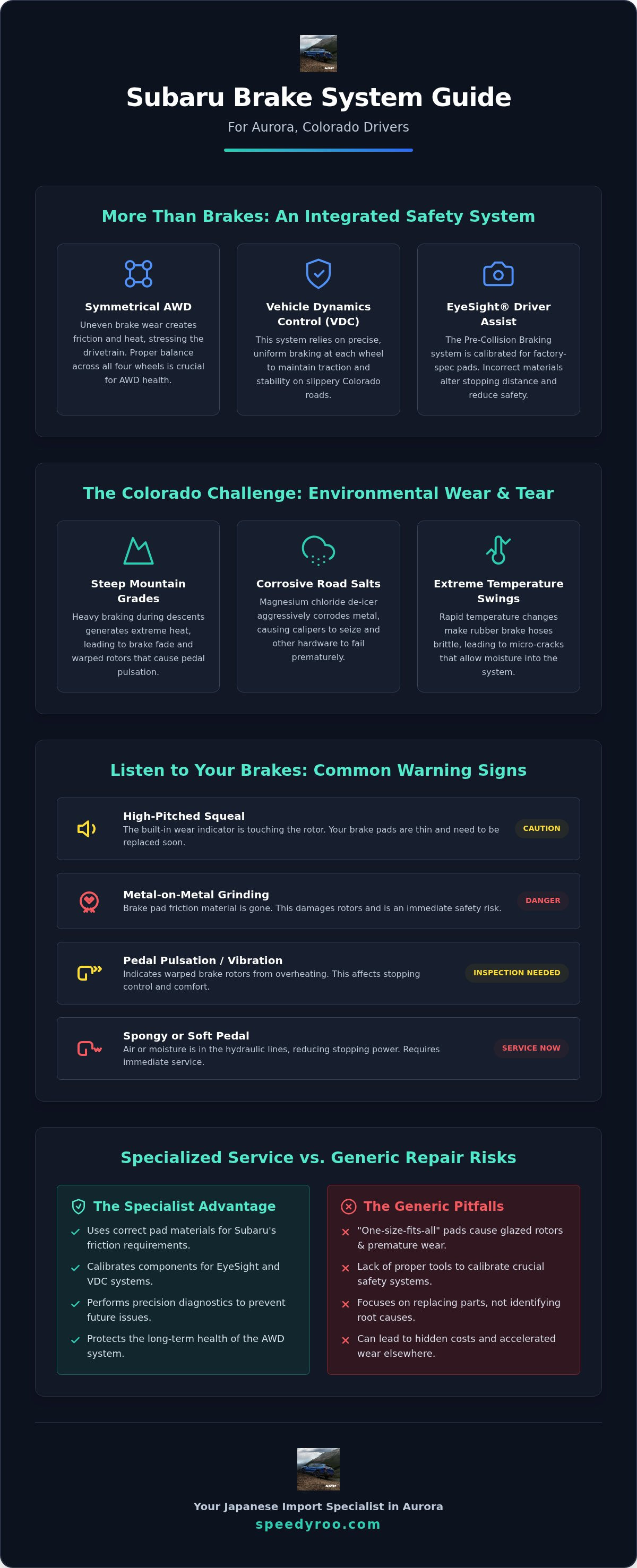
A professional Subaru brake repair Aurora service involves far more than simply swapping out old parts for new ones. Your vehicle relies on a sophisticated automotive braking system that balances hydraulic pressure, friction materials, and complex electronic safety overrides. Because Subarus use a unique Boxer engine layout and Symmetrical All-Wheel Drive, the braking components are positioned and calibrated to work with a specific center of gravity and weight distribution. When these systems are out of sync, it doesn’t just affect your stopping distance; it impacts the entire driving dynamic of the car.
The master cylinder acts as the heart of this system, converting your foot’s pressure into the hydraulic force needed to stop thousands of pounds of steel. If this component isn’t maintained, you will notice a spongy or inconsistent pedal feel that can be dangerous during sudden stops. Many generic, one-size-fits-all brake pads fail to meet the specific friction requirements of a Subaru. This often leads to glazed rotors or premature wear that shortens the life of your entire assembly, costing you more in the long run.
The AWD Connection: How Brakes Impact Drivetrain Health
In a Subaru, the brakes and the drivetrain are deeply interconnected. If a caliper sticks or a pad drags unevenly on one wheel, it creates a speed differential that the center differential must constantly work to correct. This unnecessary friction generates heat within the AWD system, potentially leading to costly drivetrain repairs. Modern Subarus also utilize Vehicle Dynamics Control (VDC), which applies individual brakes to specific wheels to manage traction and stability. If your braking response isn’t uniform across all four corners, the VDC system cannot effectively keep you on your intended path during slippery Colorado winters.
EyeSight Driver Assist Technology and Brake Calibration
If your vehicle is equipped with EyeSight, your brakes are the final line of defense in the Pre-Collision Braking system. The car’s computer calculates exactly when and how hard to apply pressure based on the expected performance of factory-spec materials. Installing pads with the wrong friction coefficient can change your stopping distance by several critical feet, potentially rendering the safety system less effective. Comprehensive Subaru repair in Aurora includes checking system sensors and verifying that all components are calibrated to react at the precise millisecond the EyeSight cameras demand.
Common Subaru Brake Warning Signs in the Aurora Climate
Your Subaru communicates its health through sound and feel. A high-pitched squeal when you tap the pedal is often a built-in wear indicator doing its job. It’s a warning that your pads are thin, but you still have time to schedule service. A grinding noise, however, is an immediate safety risk. This metal-on-metal contact means the friction material is completely gone, which quickly destroys your rotors and reduces your ability to stop. If you hear this while driving through Aurora, you should seek a specialized inspection immediately.
Physical feedback through the brake pedal is another clear indicator of trouble. If the pedal pulsates or vibrates under your foot, your rotors have likely developed “runout” or warped due to excessive heat. This is a frequent occurrence for local drivers who frequent the mountains. Conversely, a spongy or soft pedal often points to air or moisture trapped within the hydraulic lines. Aurora’s extreme temperature swings, where a 70-degree afternoon can drop to sub-zero temperatures overnight, place immense stress on rubber brake hoses. These fluctuations can cause the rubber to become brittle and develop micro-cracks, allowing moisture to seep into the system. If you notice a change in pedal feel, it is wise to consult a local specialist to ensure your hydraulic system remains airtight.
Colorado Road Salt and Corrosion Issues
Magnesium chloride is a staple on Aurora roads during the winter months, but it’s a primary enemy of your braking hardware. This liquid de-icer is highly effective at melting ice, yet it’s also incredibly corrosive to the metal components of Japanese imports. It often leads to the “frozen caliper” phenomenon, where rust prevents the piston from moving freely. By 2026, road salt is expected to cause more brake pads to seize within their brackets if they aren’t serviced regularly with specialized lubricants. These mechanical failures can interfere with modern brake safety systems, which rely on every component moving with precision to prevent accidents.
Mountain Driving: Heat Soak and Brake Fade
Descending a long mountain pass like I-70 requires your brakes to convert an enormous amount of kinetic energy into heat. If that heat builds up faster than the rotors can dissipate it, you will experience brake fade. The pedal may feel firm, but the car simply won’t slow down as expected. In extreme scenarios, the heat can cause standard brake fluid to boil, creating gas pockets that lead to a total loss of braking pressure. For those who frequently travel into the Rockies, a Subaru brake repair Aurora specialist might suggest a high-performance fluid with a higher boiling point. This simple upgrade provides an extra margin of safety during long, steep descents where standard components might struggle.
Choosing the Right Brake Components for Your Subaru
Selecting the right parts for your Subaru brake repair Aurora service depends heavily on where and how you drive. For standard city commuting, ceramic pads are a popular choice because they are quiet and produce very little dust. However, if you frequently head into the high country, semi-metallic pads offer superior heat dissipation. Organic pads are rarely recommended for Colorado drivers; they tend to wear quickly and lose effectiveness when temperatures rise on steep grades.
Rotors are just as critical as pads. They act as a heat sink for the entire system. High-quality rotors feature advanced metallurgy that resists the warping and pulsation discussed earlier. Your wheel size and tire tread also play a role in stopping distance. Even the best brakes can’t overcome the lack of grip from worn tires. To ensure your vehicle is handled with a comprehensive perspective, we often suggest coordinating your brake work with our Subaru AWD service in Aurora for holistic drivetrain care.
OEM vs. High-Performance Aftermarket Pads
Genuine Subaru pads are engineered for a balance of comfort and longevity. They work perfectly for most daily drivers. If you find yourself frequently towing or descending I-70 with a full load, high-performance aftermarket options like Hawk or EBC may be a better fit. These pads offer a higher friction coefficient but can be noisier and produce more dust. It’s vital to choose brands that are compatible with Subaru’s specific rotor metallurgy to avoid accelerated wear.
Rotor Resurfacing vs. Replacement: The Honest Truth
In the past, “turning” or resurfacing rotors was a standard practice to save money. Today, many modern Subaru rotors are designed with thinner “hats” to reduce weight and improve fuel efficiency. This often means there isn’t enough metal left to safely resurface them after they have worn down. At Speedy Roo, we use precision micrometers to measure the remaining thickness. If a rotor is within safe limits, we will resurface it. If it’s too thin to dissipate heat safely, we will recommend a replacement. We only replace what is necessary to keep you safe.
Our Specialized Subaru Brake Repair Process in Aurora
At Speedy Roo, we believe that an effective Subaru brake repair Aurora service requires a methodical, step-by-step approach. Our technicians don’t just look for worn pads; they perform a comprehensive 20-point brake system inspection designed specifically for the complexities of Japanese imports. This process ensures that every component, from the mechanical hardware to the electronic safety modules, is functioning within factory specifications. By focusing on the entire system rather than just the obvious wear items, we can identify small issues before they turn into expensive repairs or safety hazards.
Accuracy is the foundation of our work. We use precision micrometers to measure pad and rotor thickness down to the millimeter. This data-driven approach removes the guesswork and allows us to provide you with an honest assessment of your vehicle’s remaining service life. Once the physical components are inspected, we perform hydraulic system pressure testing to ensure there are no internal leaks within the master cylinder or calipers. Every service concludes with a final road test on Aurora streets to verify noise-free operation and perfectly straight-line stopping before we hand back your keys.
Precision Diagnostics and Component Testing
During our diagnostic phase, we pay close attention to the caliper slide pins and rubber boots. In our climate, these pins often seize due to road salt, causing uneven pad wear and reduced stopping power. We also utilize specialized software to test ABS sensors and control modules for electronic faults that a generic scanner might miss. We measure rotor runout to within thousandths of an inch to ensure a perfectly flat mating surface that prevents future pedal pulsation. These meticulous steps are what separate a specialized repair from a standard “pad slap” found at high-volume shops.
Brake Fluid Flushes and Hydraulic System Integrity
Maintenance intervals are critical for hydraulic health. Subaru recommends a full brake fluid flush every 30,000 miles or 30 months to maintain optimal performance. Brake fluid is hygroscopic, meaning it naturally absorbs moisture from the air over time. Even in our relatively dry Colorado climate, this moisture can lead to internal corrosion and a “spongy” pedal feel. Our process involves a complete system bleed to remove air bubbles and contaminants, replacing old fluid with fresh, high-quality lubricant. This ensures your pedal remains firm and responsive, even during the heat of a mountain descent.
If you have noticed a change in your stopping distance or a soft pedal, schedule an inspection with our Aurora specialists today to ensure your hydraulic system is fully pressurized and safe.
Reliable Subaru Brake Service Near You: The Speedy Roo Difference
Choosing the right facility for your Subaru brake repair Aurora needs is a decision that impacts your daily safety and long-term vehicle health. Since 2002, Speedy Roo Motorsports & Repair Inc has served as a premier independent alternative to the high-volume dealership model. We provide the same sophisticated diagnostics and specialized software found at corporate service centers, but we deliver them with a transparent, community-focused warmth. Our facility is designed to take the stress out of automotive care, replacing it with a sense of calm reliability for drivers throughout Aurora, Centennial, and Parker.
Our reputation is built on the “Honest Specialist” philosophy. We don’t believe in high-pressure sales or recommending unnecessary services. Instead, we focus on proactive maintenance that helps you avoid the high costs of emergency repairs. By combining technical precision with a helpful, neighborly approach, we ensure you feel informed and empowered throughout the repair process. We are invested in solving problems correctly the first time, ensuring your vehicle remains a dependable partner for your Colorado lifestyle.
Why an Independent Subaru Specialist Beats the Dealership
Many owners assume that only a dealership can handle the complexities of a Symmetrical All-Wheel Drive system. However, our Japanese import repair in Aurora demonstrates that an independent specialist often provides a more thorough and cost-effective experience. Unlike dealerships that are often restricted by corporate parts agreements, Speedy Roo Motorsports & Repair Inc has the freedom to source high-performance aftermarket components that may better suit your specific driving needs. This flexibility allows us to tailor every repair to the way you actually use your car, whether you’re commuting on I-225 or climbing mountain passes.
The personalized experience at our shop means you aren’t just another repair order in a fast-moving queue. You have direct access to technicians who take pride in their craftsmanship and are willing to share their knowledge. This level of transparency builds long-term trust, ensuring you never feel like a transaction. We prioritize the longevity of your property, treating every Subaru with the meticulous care it deserves.
Schedule Your Subaru Brake Inspection in Aurora
Don’t wait until you’re descending a steep grade to discover your braking system needs attention. Our facility in Aurora serves as a convenient hub for residents in Denver, Lone Tree, and the surrounding areas. We invite you to experience our methodical, detail-oriented approach firsthand before your next big trip. A comprehensive inspection today can provide the peace of mind you need for navigating both city streets and unpredictable mountain terrain. You can schedule your inspection with us online to ensure your vehicle is prepared for the season ahead. Contact Speedy Roo Motorsports & Repair Inc to schedule your evaluation and join a community of owners who value localized, trustworthy expertise.
Drive with Confidence on Every Colorado Road
Maintaining your vehicle’s stopping power is essential for navigating the extreme conditions of the Front Range and the high country. We have explored how Colorado road salts and steep mountain grades demand more than just standard maintenance. By choosing a specialized approach, you ensure that your Symmetrical All-Wheel Drive and EyeSight safety systems remain perfectly calibrated for the road ahead. Expert Subaru brake repair Aurora is the key to preventing heat-related rotor damage and ensuring your vehicle reacts instantly when it matters most.
As an independent Subaru specialist since 2002, Speedy Roo combines Japanese import precision with a commitment to honest, transparent service. We are proud to be highly rated by the Aurora community for our meticulous care and specialized expertise. Schedule Your Specialized Subaru Brake Inspection Today to experience the difference that localized knowledge makes. We look forward to helping you keep your Subaru reliable for many more miles of Colorado adventure.
Frequently Asked Questions
How often should I get my Subaru brakes inspected in Colorado?
You should have your Subaru brakes inspected at least once a year or every 10,000 to 12,000 miles. In Colorado, the combination of steep mountain grades and corrosive road salts can accelerate wear on calipers and pads. Regular checks ensure that small issues, like a torn dust boot or slight rotor runout, are caught before they become safety hazards or lead to more expensive repairs.
Why do my Subaru brakes squeak only in the morning?
Morning squeaking is usually caused by a thin layer of surface oxidation, or rust, that forms on the rotors overnight. This is especially common in Aurora when high humidity or morning dew settles on the metal. The noise typically disappears after the first few stops as the pads scrub the oxidation away. If the noise persists throughout the day, it likely indicates that the wear indicators are contacting the rotor.
Is it necessary to replace rotors every time I change my brake pads?
It’s not always necessary to replace rotors with every pad change, but they must be measured with precision micrometers first. If the rotor thickness is above the minimum safety limit and there is no significant warping, they can often be resurfaced. However, many modern Subaru rotors are designed to be thinner to save weight; they frequently reach their wear limit at the same time as the second set of pads.
Can I use any brand of brake fluid in my Subaru?
You cannot use just any brand of brake fluid; it must meet the specific DOT rating required by your model, which is usually DOT 3 or DOT 4. Using the wrong fluid can damage the internal rubber seals of the master cylinder and calipers. For drivers who frequently travel into the Rockies, we often recommend a high-performance fluid with a higher boiling point to prevent brake fade during long descents.
How long does a typical Subaru brake repair take at your Aurora shop?
A typical Subaru brake repair Aurora service usually takes between 90 minutes and three hours to complete. This timeframe includes our 20-point inspection, precision measurements, and a final road test to verify performance. More complex tasks, such as replacing a seized caliper or flushing the entire hydraulic system, may require additional time to ensure everything is calibrated correctly for your AWD system.
Will aftermarket brake pads void my Subaru warranty?
Installing high-quality aftermarket brake pads will not void your Subaru factory warranty. Under the Magnuson-Moss Warranty Act, manufacturers cannot deny warranty coverage simply because an aftermarket part was used, provided the part is not the cause of a specific failure. We select premium components that meet or exceed original specifications to ensure your safety systems, like EyeSight, continue to function exactly as intended.
What is the average cost of Subaru brake repair in Aurora?
The cost of brake service varies based on your specific model, the type of pad material you choose, and whether your rotors need resurfacing or replacement. High-performance pads designed for mountain driving may have a different price point than standard ceramic pads. We provide a detailed, written estimate after our inspection so you can make an informed decision about the parts that best fit your driving habits and budget.
Why does my brake pedal feel soft after driving down from the mountains?
A soft or spongy pedal after a mountain descent is a sign that your brake fluid has overheated and potentially boiled. When the fluid reaches its boiling point, gas bubbles form in the lines; these are compressible and cause the pedal to lose its firmness. This is a critical safety warning that indicates your fluid’s boiling point has been compromised by moisture or extreme heat, requiring an immediate system flush and inspection.