
You’re heading down I-70 from a weekend in the mountains when you feel that tell-tale vibration in the steering wheel every time you touch the brakes. It’s a sinking feeling that usually leads to one question: what is the actual Toyota brake replacement cost Aurora drivers should expect in 2026? Whether you’re hearing a sharp squeal or a deep grinding noise, the anxiety of a potential dealership markup can be just as stressful as the mechanical issue itself. We understand that keeping your 4Runner, Camry, or RAV4 safe for Colorado’s demanding terrain shouldn’t mean overpaying for essential maintenance.
It’s frustrating to feel like you’re stuck between high dealership prices and the uncertainty of a general chain shop that might not understand Toyota’s specific braking systems. This guide simplifies the process by breaking down the factors that influence your repair bill, from the difference between ceramic and semi-metallic pads to why specialized independent care offers better value. You’ll learn how to identify early warning signs and why choosing a local specialist ensures your vehicle is ready for every steep descent and sudden stop. We’ll cover the 2026 pricing landscape in Aurora and help you make an informed, confident decision for your vehicle’s longevity.
Key Takeaways
- Learn how the Toyota brake replacement cost Aurora residents encounter is determined by a combination of high-grade components and current 2026 labor standards.
- Understand the difference between ceramic and semi-metallic pads to ensure your vehicle handles steep mountain descents and local traffic safely.
- Identify the specific warning signs, like pedal pulsing or metallic grinding, that signal your Toyota requires professional inspection to avoid costly rotor damage.
- Discover why a specialized independent mechanic offers a more transparent and longevity-focused alternative to the typical dealership experience.
- Gain clarity on how vehicle weight and driving habits in the Denver metro area accelerate brake wear on models like the 4Runner and Sequoia.
Understanding Toyota Brake Replacement Costs in Aurora
When you start researching the Toyota brake replacement cost Aurora shops provide, it’s easy to get overwhelmed by conflicting numbers. The final price isn’t just a random figure. It’s a calculation based on the specific needs of your vehicle and the current economic reality of the Denver metro area. In 2026, labor rates in Aurora reflect the high demand for master technicians who specialize in Japanese engineering. This specialized labor ensures that your safety systems are handled with the precision required for Colorado’s driving environment.
Parts vs. Labor: Where Your Money Goes
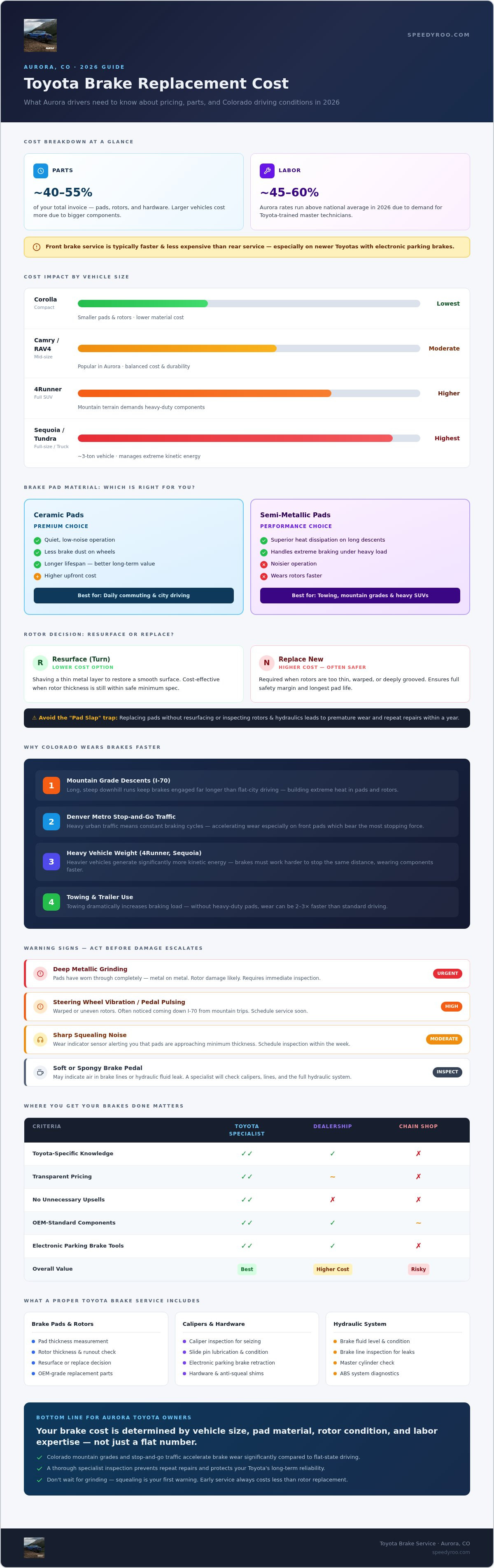
Your estimate is divided into two main categories: components and the expertise required to install them. What are brake pads? At their core, they are the friction material that presses against your rotors to stop your car. Premium ceramic pads generally cost more than basic semi-metallic options, but they offer quieter operation and produce significantly less dust. For most Toyota owners, the longevity of ceramic components provides a better long-term value.
Labor typically accounts for a significant portion of the total service. Front brake services often take less time than rear services, especially on newer Toyota models equipped with electronic parking brakes. These systems require specialized diagnostic tools to safely retract the calipers without damaging the internal motors. Aurora’s labor market in 2026 sits slightly higher than the national average due to the specialized skills needed to maintain vehicles that face our unique combination of heavy traffic and mountain grades.
The True Value of a Specialist Estimate
Many national chains lure customers with low “starting at” prices, but these often lead to hidden fees or recommendations for unnecessary parts once your car is on the lift. A dedicated Toyota specialist Aurora drivers trust will provide a comprehensive inspection first. This ensures you aren’t just getting a “pad slap,” which is the risky practice of replacing pads without resurfacing rotors or checking the hydraulic system for leaks.
Choosing a specialist means your estimate includes a meticulous check of the calipers and brake lines. If a caliper is seized or a slide pin is stuck, a generalist might miss it. This oversight leads to premature wear and another replacement within a year. Investing in a thorough, expert service now prevents the cycle of frequent, low-quality repairs that end up costing more over the life of your vehicle. We focus on getting the job done correctly the first time, ensuring your Toyota remains reliable for years to come.
Factors That Influence Your Toyota Brake Repair Estimate
Your specific vehicle model is the most significant variable in any repair estimate. While industry data often highlights the low maintenance costs for Toyota vehicles, the physical size of the components matters. A compact Corolla uses smaller, more affordable pads and rotors than a heavy Sequoia or a Tundra designed for towing. These larger vehicles require heavy-duty components to manage the kinetic energy of a three-ton truck. This physical requirement naturally influences the Toyota brake replacement cost Aurora drivers will see on their final invoice because of the increased material costs for larger parts.
Choosing the Right Brake Pad Material
Choosing the right brake pad material is equally important for both performance and budget. Ceramic pads are the preferred choice for many Aurora commuters because they operate quietly and keep your wheels cleaner. However, if you frequently tow a trailer or drive through the Rockies, semi-metallic pads might be necessary. They handle extreme heat better during long descents, though they tend to be noisier and wear rotors faster. At Speedy Roo Motorsports & Repair Inc, we select specific formulations that match Toyota’s original equipment standards to maintain that factory performance and safety.
Rotors: To Turn or to Replace?
When calculating the Toyota brake replacement cost Aurora shops provide, the choice between resurfacing and replacement is often the biggest variable. Deciding whether to resurface or replace your rotors is a balance of safety and cost. Resurfacing, or turning, involves shaving a thin layer of metal off the rotor to create a smooth surface. This is only possible if the rotor meets Toyota’s strict minimum thickness requirements. By 2026, many newer Toyota models use lighter, thinner rotors designed for better fuel efficiency. These components often don’t have enough material to be safely turned, making full replacement the standard for optimal heat management. If you’re concerned about your stopping distance, you can consult with a specialist to determine the best path forward for your vehicle.
Finally, a complete system overhaul should include a brake fluid flush. Brake fluid is hygroscopic, meaning it absorbs moisture over time. In Colorado’s climate, this moisture can lead to internal corrosion or even fluid boiling during heavy braking on I-70 descents. Replacing the fluid protects your ABS pump and calipers, ensuring the entire system works as intended. This preventative step is a core part of our longevity-focused approach to Toyota maintenance.
Aurora Driving Conditions: Why Brakes Wear Faster in Colorado
Aurora’s geography isn’t just a backdrop; it’s a primary factor in how your vehicle ages. While Toyota builds some of the most resilient vehicles on the road, the specific environmental stressors in the Denver metro area often lead to accelerated wear. This environmental reality is a key reason why the Toyota brake replacement cost Aurora residents plan for should include a focus on high-quality, heat-resistant components. Driving here demands more from your stopping power than almost anywhere else in the country.
Heavy Traffic and Friction Heat
The “I-225 Effect” is a term local mechanics use to describe the intense stop-and-go cycles typical of our daily commutes. Every time you creep forward in traffic, your brake pads generate friction heat. In our thinner mile-high air, your rotors can’t shed this heat as efficiently as they would at sea level. This leads to “heat soak,” where the temperature of the entire braking system remains elevated for long periods. If you frequently head into the Rockies, this effect is magnified during long descents where sustained braking is necessary. We recommend high-boiling-point brake fluid to prevent the “spongy” pedal feel that occurs when old fluid begins to boil under these extreme conditions. Interestingly, many drivers find that AWD system maintenance Aurora providers offer often reveals brake wear during a comprehensive drivetrain check, as these systems work in tandem to maintain traction and stability.
Corrosion and Winter Maintenance
Winter brings its own set of challenges through the heavy use of magnesium chloride and road salt. These chemicals are excellent for melting ice but are incredibly corrosive to metal components. It’s common for us to see “stuck” brake sliders or seized calipers on Toyotas that have survived several Colorado winters. When sliders seize, one pad stays pressed against the rotor even when you aren’t braking. This leads to uneven wear, reduced fuel economy, and a higher Toyota brake replacement cost Aurora owners must eventually face when components fail prematurely.
During every service, we meticulously clean and lubricate all hardware to prevent this chemical binding. Being proactive about these details is a core part of understanding your rights as a consumer when it comes to vehicle safety. You deserve an estimate that accounts for the cleaning and lubrication necessary to survive our local climate, rather than just a quick part swap. Washing your undercarriage frequently during the winter months can also help rinse away these harsh chemicals, extending the life of your calipers and preventing expensive repairs down the road.
Warning Signs Your Toyota Needs Immediate Brake Service
Your Toyota communicates its health through sound and feel long before a major failure occurs. If you listen closely, you can often identify a braking issue before it leaves you stranded on the shoulder of E-470. Catching these signals early is the best way to keep the Toyota brake replacement cost Aurora motorists face within a manageable range. When you ignore a minor squeal, you’re often moving from a simple pad replacement to a more involved service that includes rotors and calipers.
Noises You Shouldn’t Ignore
Toyota engineers include a built-in early warning system in their brake pads. Small metal tabs, known as wear indicators, are designed to touch the rotor when the pad material becomes dangerously thin. This creates a consistent, high-pitched squeal that disappears when you aren’t braking. If this sound evolves into a deep, metallic grinding, the friction material is completely gone. At this stage, the metal backing plate of the pad is carving grooves into your rotor. This metal-on-metal contact generates extreme heat and significantly increases your stopping distance. You might also notice:
- Clicking or Rattling: This often suggests loose hardware or worn caliper pins that allow the brake components to shift.
- Squealing while moving: If the squeal happens while driving but stops when you hit the brakes, a wear indicator is likely making constant contact.
- Loud thumping: This can indicate a physical defect in the rotor or a mounting issue that requires immediate inspection.
Vibration and Pedal Feel
Tactile feedback through the steering wheel or pedal is a clear indicator of mechanical distress. If you feel a vibration in the wheel while slowing down, it usually points to “warped” front rotors or uneven pad deposits. A pulsing sensation through the brake pedal often indicates the rear rotors have exceeded their safety tolerances. These vibrations aren’t just a nuisance; they compromise your vehicle’s stability during emergency maneuvers. A soft or “spongy” pedal feel is even more critical. This often signals air in the hydraulic lines or a master cylinder that’s beginning to fail. A professional Japanese car inspection Aurora specialists provide can identify these specific failures before they become dangerous emergencies.
Don’t ignore the “Brake” dashboard light or a car that “pulls” to one side during stops. These visual and performance cues often point to low fluid levels or a seized caliper that’s dragging on the rotor. If you’ve noticed any change in how your vehicle stops, it’s time for an expert evaluation. You can consult with our Toyota specialist team to ensure your braking system is restored to its original, safe performance standards.
Why Choose Speedy Roo Over an Aurora Toyota Dealership?
Choosing where to service your vehicle is a decision that impacts both your safety and your long-term maintenance budget. Many drivers assume the dealership is the only place for “factory-level” care, but the reality in 2026 is that independent specialists offer the same technical precision with a more personalized touch. At Speedy Roo, we’ve focused exclusively on Japanese imports since 2002, building a reputation for meticulous care that rivals any corporate service department in the Denver metro area.
The Independent Specialist Advantage
One of the primary differences you’ll notice is the transparency of our process. Unlike large dealerships where you’re often separated from the technician by several layers of service advisors, we prioritize direct communication. This ensures that the person actually working on your brakes is the one explaining the specific wear patterns and necessary repairs. Because we operate with lower overhead than a massive showroom, those savings are reflected in more competitive labor rates. This makes us the preferred Toyota dealer service alternative Aurora drivers rely on for honest, high-quality work without the “upsell” pressure often found at national chains.
Quality You Can Trust
Maintaining the Toyota brake replacement cost Aurora families budget for requires flexibility without compromising on safety. Dealerships are typically restricted to a single part line, but we offer a curated selection of both OEM and high-quality aftermarket options. Whether you need the ultra-quiet performance of factory ceramic pads or a heavy-duty rotor upgrade for mountain towing, we tailor the components to your specific driving habits. This expertise is especially critical for the complex regenerative braking systems found in Toyota and Lexus hybrids, which require specialized diagnostic procedures that generalist shops often overlook.
Our roots in the Aurora community run deep. We don’t view our customers as just another VIN on a service ticket; we know many of you by name and have supported the longevity of your vehicles for over two decades. This longevity-focused approach is what sets a local specialist apart from a transaction-heavy dealership. We are committed to keeping your Toyota safe and reliable for every Colorado adventure, from the daily commute on I-225 to weekend trips into the high country. Schedule your Toyota brake inspection at Speedy Roo today! and experience the difference that specialized, local expertise makes for your vehicle’s health.
Secure Your Stopping Power for the Road Ahead
Your Toyota is built to last, but Colorado’s demanding terrain and Aurora’s stop-and-go traffic mean your brakes work harder than average. By choosing specialized care, you ensure that every component is optimized for our unique climate and altitude. Understanding the various factors that influence the Toyota brake replacement cost Aurora residents pay allows you to make an informed investment in your vehicle’s long-term safety.
Since 2002, Speedy Roo has provided A+ rated service as a dedicated Japanese import specialist. We use specialized Toyota and Lexus diagnostic equipment to deliver dealership-level precision with the honest, neighborly warmth of a local business. Don’t wait for a warning sign to become an emergency. Book Your Toyota Brake Service at Speedy Roo today. We look forward to helping you stay safe on the road for years to come.
Frequently Asked Questions
How much does it cost to replace brakes on a Toyota in Aurora?
The total Toyota brake replacement cost Aurora drivers encounter depends on your specific model and whether you need pads, rotors, or both. A heavy Tundra requires larger, more expensive components than a compact Corolla. Labor rates in the Denver metro area for 2026 reflect the high demand for specialized Japanese technicians. We provide comprehensive estimates that cover high-quality parts and the meticulous labor required to keep your braking system safe and reliable.
How long do Toyota brake pads typically last in Colorado?
In Colorado, Toyota brake pads generally last between 30,000 and 60,000 miles. However, Aurora’s intense stop-and-go traffic on I-225 and frequent mountain trips can accelerate this wear. Thinner air at our altitude also affects how quickly brakes cool down after heavy use. We recommend an annual inspection for drivers in Centennial and Parker to ensure your pads have enough friction material to handle sudden stops and steep descents safely.
Can I just replace my brake pads and not the rotors?
You can replace just the pads if your rotors are within Toyota’s safety thickness limits and aren’t warped or scored. This is often called a “pad slap,” but it’s not always the best long-term value. By 2026, many Toyota models use lighter rotors that don’t have enough material for resurfacing. Replacing the rotors alongside the pads ensures a perfectly smooth mating surface, which prevents vibrations and extends the life of your new braking components.
Is it better to go to a Toyota dealer or an independent shop for brakes?
While dealerships offer factory training, independent specialists like Speedy Roo have focused exclusively on Japanese imports since 2002. We use the same specialized diagnostic tools but offer a more transparent, personalized experience. Our lower overhead often leads to a more favorable Toyota brake replacement cost Aurora owners value. We prioritize your vehicle’s longevity over high-pressure sales, ensuring you only pay for the services your Toyota actually needs to stay safe on Colorado roads.
Why are my Toyota brakes squeaking even though they are new?
New brakes might squeak due to a thin layer of oxidation from Aurora’s humid or snowy weather. This surface rust usually wears off after a few stops. If the noise persists, it could be a lack of proper lubrication on the caliper slide pins or the back of the pads. Choosing high-quality ceramic materials and ensuring all hardware is meticulously cleaned during installation is the best way to prevent annoying brake noise in our local climate.
Does a Toyota hybrid require different brake service than a gas model?
Toyota hybrids like the Prius or RAV4 Hybrid use regenerative braking, which captures energy to charge the battery. While this reduces physical wear on the pads, the system is much more complex. It requires specialized diagnostic equipment to safely bleed the lines and service the electronic brake actuators. Our technicians are experts in these hybrid systems, ensuring your regenerative and traditional friction brakes work together seamlessly for maximum safety and efficiency.
How often should I have my brake fluid flushed in Aurora?
We recommend a brake fluid flush every two years or 30,000 miles for vehicles in the Denver metro area. Brake fluid naturally absorbs moisture, which can lead to internal corrosion and a “spongy” pedal feel. This is especially dangerous during long descents from the Rockies, where moisture in the fluid can boil and cause a sudden loss of braking power. Fresh fluid protects your ABS components and ensures consistent performance in all weather conditions.
What is the difference between OEM and aftermarket Toyota brake pads?
OEM pads are designed to match the original factory specifications for noise and dust. High-quality aftermarket options can sometimes offer better performance for specific needs, such as heavy towing or aggressive mountain driving. We select parts that meet or exceed Toyota’s standards, focusing on durability and safety. Whether you live in Lone Tree or Aurora, we’ll help you choose the right friction material based on your specific vehicle and daily driving habits.