
Imagine you’re climbing toward the foothills on a hot afternoon when that dreaded red temperature light flickers on your dashboard. It isn’t just an inconvenience. For a Subaru owner, it’s a moment of genuine anxiety about the health of your Boxer engine and the potential for a breakdown on I-225. You’ve likely heard the stories about head gasket issues, and it’s frustrating to get conflicting advice from general mechanics who don’t understand the unique needs of a horizontal engine. Finding reliable Subaru cooling system repair Aurora residents can count on shouldn’t feel like a gamble when your car’s longevity is at stake.
We understand that you want to keep your vehicle on the road without the constant fear of overheating. This guide will show you how to identify, troubleshoot, and prevent the cooling issues that are specific to the Colorado climate. You’ll learn the subtle signs of a failing water pump or radiator and gain a clear understanding of why the Boxer engine requires a specialized approach. By the end of this article, you’ll have the knowledge to make informed decisions and the confidence to choose an independent specialist who treats your car with meticulous care—much like how discerning pet owners rely on the specialized grooming expertise of Bohemian Spaw for their companions.
Key Takeaways
- Understand how the unique horizontal layout of the Subaru Boxer engine creates specific cooling challenges that differ from standard vertical engines.
- Learn to identify early warning signs like the “sweet smell” of coolant or the specific meaning behind your dashboard’s blue and red temperature lights.
- Discover why specialized Subaru cooling system repair Aurora drivers rely on includes proactive pressure tests and strict maintenance at 30k, 60k, and 90k mile intervals.
- Follow a simple 5-step visual inspection guide to check your radiator and thermostat housing for leaks or residue safely from your own driveway.
- Find out how partnering with an independent Japanese specialty shop ensures your cooling system is handled with technical precision and localized expertise.
Understanding the Subaru Boxer Engine Cooling Challenges
The Subaru Boxer Engine is a masterpiece of balance and low center of gravity, but its horizontal layout introduces unique thermal hurdles. Unlike traditional vertical engines, the Boxer’s cylinders lie flat. This means coolant must travel horizontally to reach the cylinder heads, which are the hottest parts of the engine. If the system isn’t perfectly bled, air pockets can settle in these heads, creating dangerous hot spots that a standard temperature gauge might not catch immediately. Maintaining your vehicle often starts with the specialized Subaru cooling system repair Aurora owners need to prevent long-term damage.
The constant expansion and contraction of the aluminum components during the thermal cycle places immense stress on seals and gaskets. Over time, this repetitive movement can compromise the integrity of the cooling jacket, leading to internal or external leaks. Because of this horizontal architecture, Subaru cooling systems require a more meticulous maintenance schedule than standard inline engines to prevent catastrophic head gasket failure.
The Impact of Aurora’s Elevation and Climate
Living in Aurora presents its own set of variables. At our elevation, the atmospheric pressure is lower, which naturally reduces the boiling point of your engine coolant. If your system isn’t holding the correct pressure, you risk a boil-over even during a routine commute on East Colfax. Our local climate is also famous for 40-degree temperature swings in a single afternoon. These rapid changes cause rubber hoses and plastic radiator tanks to expand and contract aggressively, eventually leading to hairline cracks and slow leaks. Professional Subaru cooling system repair Aurora specialists focus on these nuances to ensure your car handles the climb to the foothills with ease.
Subaru-Specific Components: More Than Just a Radiator
A standard thermostat won’t suffice for these vehicles. Subaru uses a bottom-mount thermostat designed to react to the temperature of the coolant returning from the radiator, rather than the coolant leaving the block. Additionally, the water pump is driven by the timing belt. This is why we always suggest a Subaru timing belt service Aurora drivers can use to replace both components at once. Finally, using genuine Subaru-approved Blue or Green Super Coolant is vital; it contains the specific anti-corrosion additives required for the Boxer’s internal alloys.
Warning Signs Your Subaru Cooling System Needs Repair
Catching a cooling issue early can be the difference between a simple hose replacement and a complete engine overhaul. One of the most common early warnings is a faint, maple-syrup-like scent lingering around the front of your car after a drive. This “sweet smell” is actually evaporated coolant. Because the Subaru system operates under high pressure, even a microscopic pinhole in a hose can mist fluid onto hot engine components. You might also notice “crusty” white, blue, or green residue accumulating around the radiator cap or hose connections. These deposits are dried coolant additives and serve as a clear roadmap for a technician performing Subaru cooling system repair Aurora services.
Your dashboard provides the next set of clues. Many modern Subaru models have replaced the traditional needle gauge with colored icons. A blue light simply means the engine is still reaching operating temperature; you should drive moderately until it disappears. However, a flashing or solid red light is an emergency. If that red light appears while you’re driving, pull over safely and turn off the engine immediately. Continuing to drive with a red temperature light for even a few blocks can cause the aluminum Boxer heads to warp, leading to much more expensive repairs.
Perhaps the most deceptive sign is the “overflow tank mystery.” You might glance at the plastic reservoir and see that it’s full, leading you to believe the system is healthy. However, if the radiator cap is failing or there’s an air pocket in the block, the engine cannot siphon that fluid back in when it cools down. This results in a full overflow tank but a dangerously empty radiator. Regularly verifying the fluid level inside the radiator itself, only when the engine is completely cold, is a vital part of Essential Subaru Cooling Maintenance.
The Infamous Head Gasket vs. Simple Leaks
Many owners fear that any cooling issue is a sign of head gasket failure, but that isn’t always the case. An external leak from a plastic radiator tank or a water pump is a common, manageable repair. A more serious red flag is the presence of bubbles in the overflow tank while the engine is idling. This often indicates that combustion gases are leaking into the cooling jackets. If you see these bubbles or notice an oily film in your coolant, it’s time for a professional diagnostic to determine if the seals have been compromised. Our Subaru head gasket replacement Aurora FAQ guide covers exactly what to expect if your diagnostic points toward a failed seal.
When the Heater Stops Blowing Hot Air
During a typical Aurora winter, a functioning heater is a necessity. Just as you might rely on RMI Heating and Air Conditioning to keep your home comfortable during a freeze, your Subaru’s interior heat depends on a healthy cooling system. If your vents are blowing cold air even after the engine has warmed up, your coolant level is likely low. The heater core is often one of the highest points in the plumbing. When the fluid level drops, air pockets move into the core first, preventing hot coolant from circulating. This loss of heat is a reliable early warning that your system has a leak that needs immediate attention before the engine itself begins to overheat.
Essential Subaru Cooling Maintenance for Colorado Drivers
Preventative care is the foundation of vehicle longevity, especially for the unique horizontal layout of a Boxer engine. While many generic shops suggest a “wait and see” approach, we advocate for a strict 30/60/90k-mile maintenance schedule. By the time your odometer hits 90,000 miles, the chemical protection in your coolant has typically degraded, and plastic components have endured thousands of heat cycles. Transitioning from simple visual inspections to proactive component replacement at these intervals is the most effective way to avoid the need for emergency Subaru cooling system repair Aurora drivers often face during peak summer or winter months. Because Colorado’s altitude and temperature extremes push your vehicle harder than standard conditions, following a Subaru maintenance schedule Aurora owners use for severe service conditions is the smartest way to stay ahead of cooling system failures.
Every time you visit us for a Subaru repair Aurora CO, we recommend a cooling system pressure test. This diagnostic step allows us to find tiny leaks that only appear when the system is hot and under load. It’s a transparent way to ensure your radiator, hoses, and heater core are holding the 13 to 15 PSI required to keep your engine safe. Understanding the basics of how these parts work together can help you appreciate why these tests are so vital; you can learn more about these fundamentals by reviewing Warning Signs Your Subaru Cooling System Needs Repair.
One specific detail often overlooked by general mechanics is the Subaru Coolant Conditioner. This specialized additive was designed to prevent external head gasket seepage in older models and remains a recommended part of the service for many vehicles. It works by sealing microscopic pores in the gaskets before they become major leaks. Additionally, we pay close attention to radiator fan operation. In the thin air of the Colorado high country, your fans must work harder to pull heat away from the radiator, making their health a top priority for mountain travelers.
The Radiator and Hose Lifespan
Most modern radiators utilize plastic end-tanks crimped onto an aluminum core. These plastic components tend to become brittle and fail around the 100,000-mile mark. We suggest a “squeeze test” for your radiator hoses during every oil change. If the rubber feels crunchy, overly soft, or stays deformed after you let go, it’s a candidate for replacement. Choosing to replace a $40 hose now is significantly more affordable than a tow from Parker or Castle Rock after a burst hose leaves you stranded.
Water Pump and Thermostat Synergy
The water pump is a critical “while you are in there” repair. Since it’s driven by the timing belt, replacing it during a belt service saves you hours of labor costs later. We also caution against using “fail-safe” thermostats found at big-box auto parts stores. These often don’t match the specific flow requirements of a Subaru and can lead to erratic temperature readings. Our specialists ensure the bypass valve is oriented correctly during installation, which is essential for “burping” air out of the Boxer engine’s flat cooling jackets.
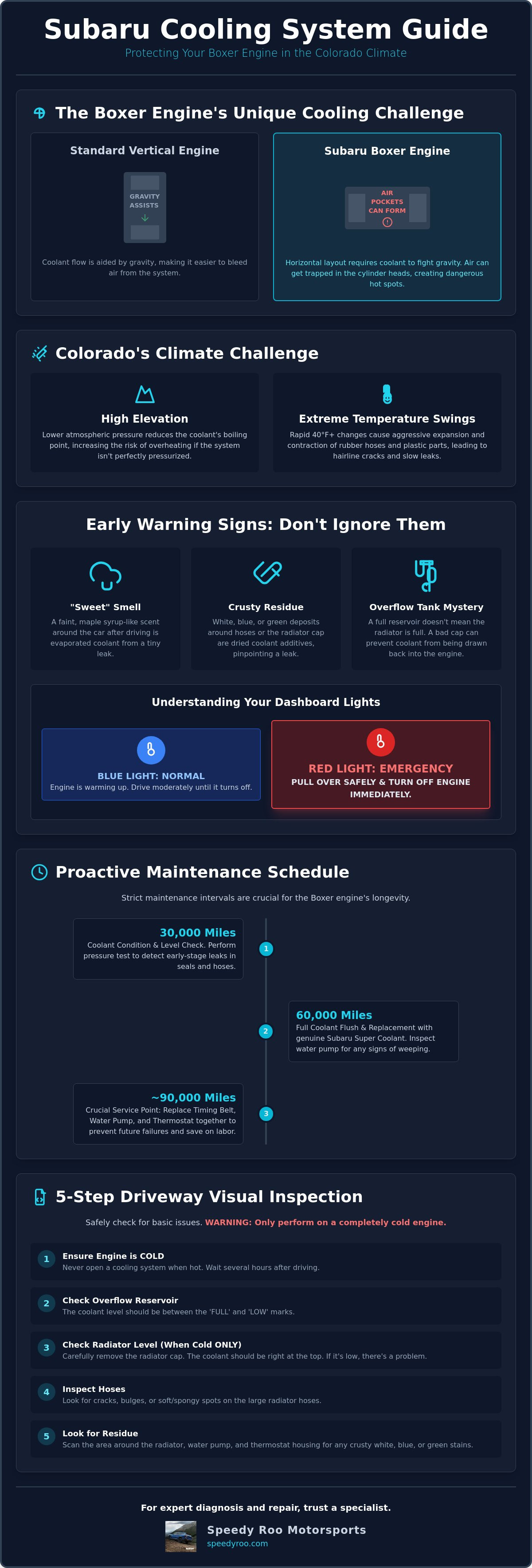
Troubleshooting Your Subaru: A 5-Step Inspection Guide
When you suspect a cooling issue, a methodical inspection can help you determine the severity of the problem. This guide allows you to gather facts before you ever step foot in a shop. By performing these checks, you provide your technician with valuable data that speeds up the diagnostic process for your Subaru cooling system repair Aurora service.
- Step 1: Check the Radiator Level (Cold Engine Only). Never open a hot radiator. Once the engine is completely cold, remove the radiator cap. The fluid should be visible right at the top. If the radiator is low but the overflow tank is full, your system isn’t cycling correctly.
- Step 2: Inspect the Thermostat Housing. Locate the lower radiator hose where it meets the engine. Look for any “crusty” white or blue residue around this housing. This is a common spot for slow leaks that only occur when the engine is under pressure.
- Step 3: Verify Fan Operation. Start your engine and let it reach operating temperature while parked. Both radiator fans should eventually kick on. If they remain still while the engine gets hot, you’ve found a primary cause for overheating in Aurora’s summer heat.
- Step 4: The Oil Cap Test. Remove your oil fill cap and look at the underside. If you see a thick, “milky” residue resembling a chocolate milkshake, it’s a sign that coolant is mixing with your oil. This often points toward a compromised head gasket. If your oil cap test reveals this milky residue, review our complete Subaru head gasket replacement Aurora owner’s FAQ to understand your next steps and what the repair process involves.
- Step 5: Monitor the I-70 Stress Test. Pay close attention to your temperature gauge during a steady climb, such as heading West toward the mountains. A healthy system stays stable. If the needle begins to creep up during the ascent but drops on the way down, your radiator likely has reduced flow capacity.
When to DIY and When to Visit an Aurora Specialist
Topping off your own fluids is a perfectly safe task for most owners, provided you use the correct Subaru-approved coolant. This proactive mindset is similar to the care required for a Subaru AWD service Aurora, where matching specific components is vital for vehicle health. However, you should never use “Stop Leak” or “Sealer” products. These chemicals are the enemy of Boxer engines; they often clog the narrow passages of your heater core and radiator, turning a small leak into a major cooling failure. Additionally, “burping” air out of a Subaru system is notoriously difficult because of the flat engine design. It typically requires a specialized spill-free funnel and a specific warming cycle to ensure no air pockets remain in the cylinder heads.
The Professional Diagnostic Advantage
While a visual check is a great start, professional tools provide a level of certainty that saves you money. We use chemical block testers to check for the presence of exhaust gases in your coolant, which can rule out a head gasket failure in minutes. Our shop also utilizes cooling system pressure testers to find “ghost leaks” that only appear when the engine is under heavy load. Perhaps most importantly, we use professional scan tools to monitor real-time temperature data. Dashboard gauges are often “buffered,” meaning they stay in the middle even while the engine is technically running hotter than it should. We see the exact numbers, ensuring your repair is based on data rather than guesswork.
If your inspection reveals any of these warning signs, schedule a professional cooling system diagnostic with our specialized team today.
Specialist Subaru Cooling Repair at Speedy Roo Motorsports
Speedy Roo Motorsports has served the local community since 2002, establishing itself as a cornerstone for Japanese vehicle expertise. As an independent specialty shop, we’ve built our reputation on an “Expert Neighbor” philosophy. This approach centers on transparent diagnostics and honest repair paths, ensuring you feel empowered rather than pressured. When you entrust us with your Subaru cooling system repair Aurora, you’re choosing a team that treats your vehicle with the meticulous care it deserves. We don’t just fix parts; we solve problems at their root to ensure your car remains reliable for years to come.
Our deep roots in the performance world, specifically through Aurora Dyno Tuning, provide us with a technical edge that generic shops simply cannot match. High-performance Boxer engines generate incredible amounts of heat, and managing those temperatures requires an intimate understanding of fluid dynamics and thermal limits. We bring this same high-level precision to every repair, whether you drive a modified STI or a stock Outback. This performance-minded background ensures we catch the subtle signs of cooling failure that others might overlook, such as slight pressure variances or fan timing issues.
The Speedy Roo guarantee is rooted in a culture of pride and excellence. We understand the specific demands that Colorado’s high altitude and steep grades place on your cooling system. Our technicians are methodical in their process, from the initial pressure test to the final “burping” of the system to remove air pockets. We take the time to do the job correctly the first time, reflecting our commitment to the safety and satisfaction of our neighbors in Aurora and the surrounding foothills.
Beyond the Dealership: Personalized Care in Aurora
Many owners feel overwhelmed by the high-pressure sales tactics often found at large dealerships. We offer a sophisticated alternative that provides dealership-level expertise with a much more human touch. We use only high-quality OEM or superior-grade aftermarket parts, ensuring that every component meets our rigorous standards for durability. For drivers who use their Subarus for heavy mountain towing or have performance modifications, we can recommend and install custom cooling solutions designed to handle those increased thermal loads without breaking a sweat.
Ready for Your Next Colorado Adventure?
Your Subaru is more than just a car; it’s your ticket to the mountains and your reliable daily commuter. Maintaining a healthy cooling system is the most effective way to protect the longevity of your Boxer engine and avoid the anxiety of a roadside breakdown. A proactive pre-summer or pre-winter inspection can identify small issues before they become expensive repairs. Let us help you prepare for your next adventure with the confidence that your vehicle is in peak condition. Schedule your Subaru cooling system inspection at Speedy Roo today.
Protect Your Subaru for the Long Road Ahead
Maintaining a Subaru requires more than just generic service; it demands an understanding of the Boxer engine’s unique horizontal layout and the specific thermal stresses it faces in our high-altitude environment. By following a strict 30/60/90k-mile maintenance schedule and staying alert for warning signs like the sweet smell of evaporated coolant, you can avoid the high costs associated with major engine failure. A healthy cooling system is your best defense against the unpredictable Colorado climate, whether you’re navigating daily traffic or climbing toward the foothills.
When you need the specialized Subaru cooling system repair Aurora residents have relied on since 2002, turn to our team of experts. Our ASE Certified Technicians provide transparent diagnostics and 5-star rated service designed to keep your vehicle in peak condition for years to come. Don’t wait for a red temperature light to disrupt your plans. Book Your Subaru Cooling System Diagnostic at Speedy Roo today and ensure your car is prepared for every adventure. We’re here to help you stay on the road with confidence and peace of mind.
Frequently Asked Questions
How much does it cost to repair a Subaru cooling system in Aurora?
Repair costs depend on which component has failed. A simple hose or thermostat replacement is a minor expense, while labor-intensive tasks like a head gasket replacement are more significant. When seeking Subaru cooling system repair Aurora residents should expect a detailed written estimate. We provide these to comply with the Colorado Motor Vehicle Repair Act, ensuring you understand the path forward before any work begins.
Is it safe to drive my Subaru if the temperature light is flashing?
It’s not safe to drive with a flashing temperature light. This signal is an urgent warning that your engine is overheating. Continuing to drive for even a short distance can warp the aluminum cylinder heads of your Boxer engine, leading to catastrophic failure. If you see this light, pull over immediately and turn off the engine. This simple action can save you from avoidable engine replacement costs.
How often should I flush the coolant in my Subaru Forester or Outback?
Subaru generally recommends a first coolant flush at 11 years or 137,500 miles for vehicles using Super Coolant. However, Aurora’s high altitude and rapid temperature changes put extra stress on these fluids. We suggest a more proactive approach, inspecting the coolant every 30,000 miles. This ensures the anti-corrosion additives are still active and protecting your engine’s internal metal surfaces from the elements.
Why does my Subaru smell like maple syrup after I park it?
The sweet, sugary scent of maple syrup is the classic sign of an evaporating coolant leak. Coolant contains ethylene glycol, which releases this distinct odor when it hits a hot engine component or radiator. If you smell this after parking, it’s time to investigate. Finding the source of this misting fluid is an essential part of the Subaru cooling system repair Aurora owners need to prevent a total system failure.
Can a bad radiator cap really cause my Subaru to overheat?
A faulty radiator cap is a very common cause of overheating. The cap is a precision pressure valve that raises the boiling point of your coolant. If the seal fails, the system loses pressure and can’t pull fluid back from the overflow tank as the engine cools. This creates air pockets in the horizontal engine block, which quickly leads to hot spots and potential engine damage.
Do all Subaru cooling issues lead to head gasket replacement?
No, many cooling issues are solved by replacing external parts like a water pump, radiator, or thermostat. While Subarus are known for head gasket concerns, those failures are often the result of long-term overheating from a smaller, ignored leak. We use professional chemical block testers to rule out head gasket issues quickly. This transparent diagnostic process ensures we only recommend the repairs your vehicle actually needs.
What type of coolant does my Subaru actually need?
Your vehicle requires genuine Subaru Blue or Green Super Coolant, depending on the model year. These formulas are specifically designed without amines or borates to protect the unique alloys in the Boxer engine. Using a generic universal coolant can cause internal corrosion or damage to your water pump seals. Always use the pre-diluted OEM formula to maintain the correct chemical balance for your cooling system.